
Manufacturing Standards for 215kWh Pre-integrated PV Container: Why They Matter for Eco-Resorts
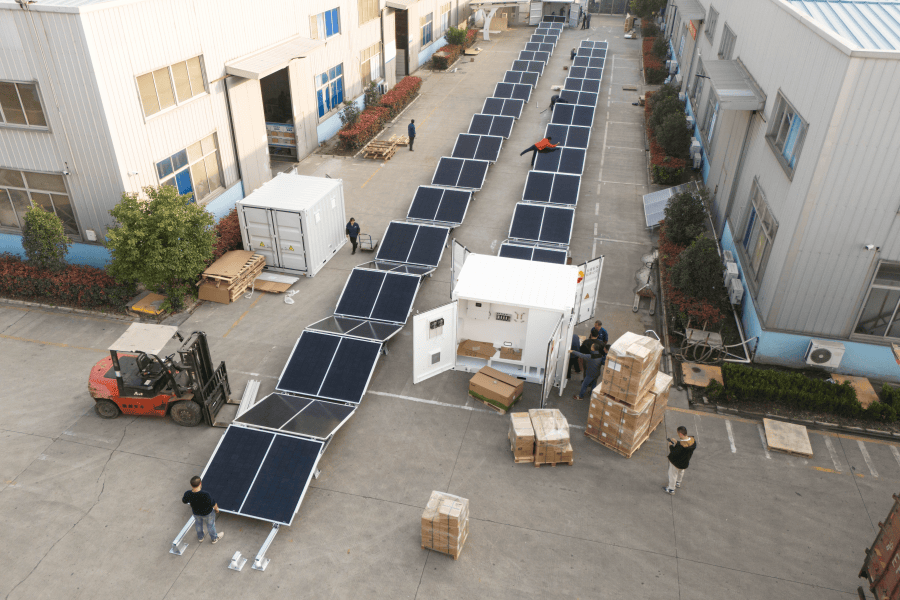
Table of Contents
- The Quiet Problem in Paradise: When "Off-Grid" Dreams Hit On-Grid Realities
- Beyond the Brochure: The Real Cost of Cutting Corners
- The Standard Solution: More Than Just a Box
- A Case in Point: Lessons from a Bavarian Alpine Lodge
- Decoding the Specs: What a Veteran Engineer Looks For
The Quiet Problem in Paradise: When "Off-Grid" Dreams Hit On-Grid Realities
Hey there. If you're looking into powering an eco-resort, you're probably passionate about sustainability, guest experience, and operational independence. Honestly, I get it. Over two decades, I've walked through dozens of sites from the Greek islands to California redwood forests, where the vision is clear: harmonize luxury with nature using solar and storage. But here's the quiet problem I've seen firsthand, too often: the container that houses the heart of this system - the battery - is treated as an afterthought. A metal box is just a metal box, right? Wrong. For a 215kWh cabinet pre-integrated PV container, the manufacturing standards aren't just paperwork; they're the blueprint for safety, longevity, and ultimately, your return on investment.
The phenomenon in the market, especially for remote and sensitive locations like eco-resorts, is a focus on the big-ticket items - solar panel wattage, battery chemistry - while the enclosure and its integration get a value-engineering pass. This creates a vulnerability. According to the National Renewable Energy Laboratory (NREL), system integration and balance-of-plant issues account for a significant portion of unexpected O&M costs in distributed storage projects. The container is your balance-of-plant.
Beyond the Brochure: The Real Cost of Cutting Corners
Let's agitate that pain point a bit. What happens when manufacturing standards are vague or not rigorously enforced? I've been on emergency calls where a "cost-effective" container in a coastal Oregon resort started showing corrosion within 18 months. The salt mist rating wasn't up to par. In another case in Arizona, inadequate thermal management design - a direct result of poor manufacturing specs - led to consistent battery throttling during peak summer demand, precisely when the resort needed the power most. The financial hit isn't just a repair bill; it's lost revenue from guest discomfort and a skyrocketing Levelized Cost of Energy (LCOE) because your asset is degrading faster or underperforming.
The core issue is that a 215kWh system isn't a small residential unit. It's a substantial energy asset. Its cabinet must be a purpose-built environment, not a generic shed. Weak standards lead to:
- Safety Gaps: Inadequate fire suppression pathways, poor electrical segregation, and subpar materials can turn a thermal runaway event into a catastrophe.
- Operational Instability: Poor sealing leads to dust and moisture ingress, causing sensor faults and shutdowns. Honestly, most downtime I troubleshoot stems from environmental factors, not the battery cells themselves.
- Compliance Nightmares: Trying to retrofit a container to meet local fire code (like NFPA 855 in the US) or grid interconnection standards after installation is a painful and expensive process.

The Standard Solution: More Than Just a Box
So, what's the solution? It's a mindset shift. You need to demand Manufacturing Standards for 215kWh Cabinet Pre-integrated PV Container for Eco-resorts that are as detailed and critical as the standards for the batteries inside. This is where the magic - and the reliability - happens. At Highjoule, we've built our containerized solutions around this principle from day one. It's not just about building to UL 9540 or IEC 62933. It's about designing the entire package - structural, thermal, electrical, and safety systems - as a unified, compliant product from the factory floor.
This means the container arrives at your site not as a collection of parts, but as a pre-commissioned power plant. The manufacturing standard dictates the marine-grade anti-corrosion coating for coastal air, the NEMA 3R/IP54 sealing for desert dust storms, the seismic bracing for geologically active zones, and the clear, maintainable layout that lets our local technicians or your staff service it safely. It's this pre-integration under one rigorous standard that slashes deployment time by weeks and eliminates those nasty on-site integration surprises that blow budgets.
A Case in Point: Lessons from a Bavarian Alpine Lodge
Let me give you a real example. We worked with a high-end, off-grid lodge in the Bavarian Alps. Their challenge was extreme: -25C winters, heavy snow loads, a pristine environment with zero tolerance for spills, and a need for absolute silence (no noisy cooling fans). Their previous solution was a hodgepodge of components in a modified shipping container. It struggled with temperature stratification, leading to uneven battery wear and reduced capacity.
Our approach was to treat the 215kWh container as the core product. The manufacturing standard included:
- Low-ambient capable HVAC with a liquid-cooled thermal system for silent, efficient operation.
- Structural calculations for 150% of the local snow load requirement.
- Secondary containment for the entire battery cabinet volume, integrated into the floor.
- Full compliance with IEC 62933-5-2 and the German VDE-AR-E 2510-50 standard, certified by a notified body.
The result? Two years in, the system has maintained 98% availability. The lodge's managers sleep well knowing the system is safe, and their LCOE is predictable. The key was solving those environmental challenges at the manufacturing stage, not on a snowy mountain side.
Decoding the Specs: What a Veteran Engineer Looks For
When I review a spec sheet for a pre-integrated container, I'm looking past the marketing fluff. Here's my insider take on what matters:
- C-rate & Thermal Management: A 215kWh system might have a 1C or 0.5C discharge rate. That's a lot of heat to manage. The standard must specify not just the HVAC capacity, but the airflow design inside the cabinet to prevent hot spots. I've seen systems where the AC was strong, but poor ducting let cells in the middle overheat.
- LCOE Drivers: The manufacturing standard directly impacts LCOE through longevity and efficiency. It should mandate top-tier, UL-listed components for inverters and transformers, and specify busbar sizes and connections that minimize electrical losses. Every watt lost as heat is a watt your solar array had to produce for free.
- The "Serviceability" Clause: This is huge. Can a technician safely isolate and replace a module? Are there clear emergency shutoffs? The standard should enforce human-factor design. Our containers at Highjoule are designed with service corridors and lift-out panels because I know what it's like to try and fix something in a cramped, dark box.
Ultimately, choosing a partner like Highjoule means you're not just buying a container. You're buying 20 years of field experience baked into a manufacturing standard that pre-solves the problems you haven't even imagined yet. It's the difference between hoping your system lasts and knowing it will.
So, what's the one environmental or regulatory challenge keeping you up at night about your resort's power project? Maybe we've already built the solution for it.
Tags: UL Standard LCOE Thermal Management Pre-integrated PV Container Eco-Resort Energy IEC Standard BESS Manufacturing Standards
Author
James Zhang
20+ years agricultural energy storage engineer / Highjoule CTO