
Beyond the Grid: How Black Start Standards Shape Reliable BESS for US & EU Markets
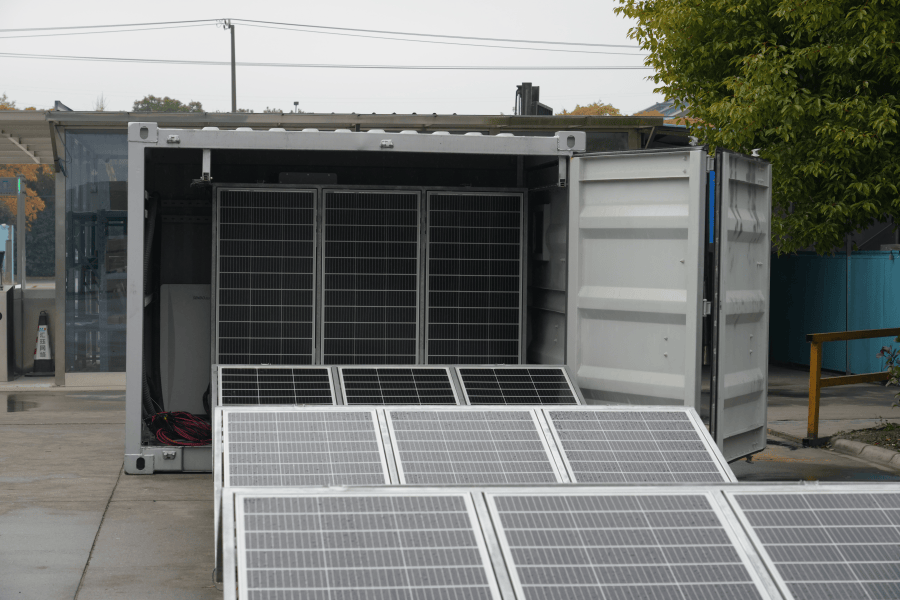
Table of Contents
- The Quiet Problem in Our "Reliable" Grids
- Why "Just a Standard" Isn't Just a Standard
- The Unexpected Teacher: A Case from the Philippines
- Translating "Rural Tough" to "Industrial Ready"
- What This Means for Your Bottom Line
The Quiet Problem in Our "Reliable" Grids
Let's be honest. Here in North America and Europe, we sometimes suffer from a bit of grid arrogance. We flip a switch, and the light comes on. Our factories hum, our data centers blink. We assume the infrastructure beneath it all is unshakable. But after 20+ years on sites from Texas to Bavaria, I can tell you: that assumption is getting shakier by the day.
The problem isn't just outages from storms or wildfires, though those are increasing. It's the quality and recoverability of power. A commercial or industrial facility with a standard grid-tied BESS might have backup power, but what happens after the grid goes down completely? Can your system reboot the local grid - a process we call "black start" - without relying on an external diesel genset or waiting for the utility? For many systems, the answer is a hard no. They're designed to follow the grid, not to lead it back to life.
This gap creates a real financial exposure. According to a 2021 NREL analysis, the economic impact of power interruptions in the US alone runs into tens of billions annually. For a food cold storage facility or a precision manufacturer, even a few hours of downtime isn't just an inconvenience; it's a direct hit to product, reputation, and profit.
Why "Just a Standard" Isn't Just a Standard
When we talk manufacturing standards, especially in our world of UL, IEC, and IEEE, it's easy to see them as a compliance checkbox. A stack of paperwork for the auditors. But I've seen this firsthand on site: a standard is a story of foresight. It codifies the lessons learned from failures we haven't even had yet. It answers the "what if" questions under extreme stress.
A system built to a standard that anticipates black start conditions is fundamentally different. Its battery management system (BMS) is more robust, capable of islanded operation and managing inrush currents from cold-starting transformers. Its power conversion system (PCS) can handle the wild frequency and voltage swings of a dead grid coming back online. Its thermal management isn't just for steady-state operation but for the intense, variable loads of a recovery sequence. Honestly, it's the difference between a car built for a smooth highway and one built for the Baja 1000.
The Unexpected Teacher: A Case from the Philippines
This brings me to a fascinating benchmark: the Manufacturing Standards for Black Start Capable Photovoltaic Storage System for Rural Electrification in Philippines. Now, you might think, "What does a rural electrification standard in Southeast Asia have to do with my industrial park in Ohio or my commercial complex in Germany?" More than you'd think.
I was involved in consulting on a project in a remote Philippine archipelago. The challenge was brutal: 100% renewable microgrids, no backup fossil fuel, typhoon-prone, with minimal technical support. The standard developed there wasn't about luxury; it was about survival and absolute reliability. It forced manufacturers to design systems that could:
- Boot from a completely dead state using only solar and stored energy.
- Withstand harsh, humid, and salty environments (corrosion ratings went beyond typical IEC).
- Operate with advanced, autonomous controls because a technician might be weeks away.
The result? Systems with incredible resilience. We're talking about C-rate capabilities that are conservative but incredibly durable, and thermal management designed for peak loads in 40C ambient heat. The Levelized Cost of Energy (LCOE) over the system's lifetime became the true metric, not just the upfront capital cost.

Translating "Rural Tough" to "Industrial Ready"
So how does this translate to the US and EU? At Highjoule, when we looked at standards like the Philippine black start spec, we didn't see a niche document. We saw a principles playbook for high-value assets in any market.
For instance, that emphasis on environmental ruggedness? It directly informs how we design our containerized systems for coastal Texas or Northern European winters. The autonomous black start logic? It's the foundation for our grid-forming inverters that provide critical "first responder" services to C&I facilities during regional grid disturbances. We bake these principles into our core design philosophy, ensuring they meet and exceed the local UL 9540 or IEC 62933 standards you require.
The key takeaway is this: a standard born from the most demanding scenarios creates a product that over-performs in less demanding ones. It builds in a safety and reliability buffer that pays dividends in reduced operational risk and lower lifetime maintenance costs.
What This Means for Your Bottom Line
Let's get practical. For a decision-maker in the US or Europe, investing in a BESS built to these heightened principles of black start and ruggedness isn't about preparing for a typhoon. It's about:
- Enhanced Resilience: Your facility can be an island of stability, potentially restarting local distribution feeders. This isn't just backup; it's active grid citizenship that can open up new revenue streams through grid services.
- Lower Lifetime Cost (LCOE): A system built for 20-year survival in the tropics is inherently over-engineered for a temperate climate. This translates to longer lifespan, fewer failures, and better warranty structures. The upfront cost might be marginally higher, but the total cost of ownership plummets.
- Future-Proofing: As grids become more decentralized and volatile, capabilities like black start and grid-forming will shift from "nice-to-have" to "mandatory" for certain applications and incentives.
At Highjoule, our experience with global standards - from the demanding environments that inspired the Philippine spec to the precise testing of UL - allows us to deliver systems that sit at that sweet spot: fully certified for your local market, but imbued with a level of robustness learned in the field where failure is not an option. We don't just sell a battery container; we deliver a guarantee of operational continuity, backed by a team that's seen what can go wrong and designed it out from the start.
The question isn't whether your next BESS project needs to meet the local standard. It's whether you want a system that merely meets it, or one that was designed by asking the harder questions that more extreme standards demand. What's the true cost of not having that extra layer of resilience?
Tags: BESS UL Standards Black Start Grid Resilience Energy Storage Manufacturing US Market European Market
Author
James Zhang
20+ years agricultural energy storage engineer / Highjoule CTO