
Scalable Modular PV Storage for Telecom: Solving Grid & Cost Challenges
Contents
- The Silent Grid Problem for Telecom Operators
- Why Old Solutions Fall Short (And Cost More)
- The Modular Answer: Flexibility Meets Future-Proofing
- Beyond the Spec Sheet: What Really Matters On-Site
- A Real-World Test: The California Case
- Your Next Logical Step
The Silent Grid Problem for Telecom Operators
Let's be honest. When you're managing a network of telecom base stations, your primary focus is uptime. Every second of outage is revenue lost and reputation damaged. But here's the quiet crisis I've seen firsthand from Texas to Bavaria: the grid is becoming the weakest link. Increased renewable penetration, aging infrastructure, and extreme weather events are making power quality and availability less predictable. For a base station, a brief voltage dip or frequency fluctuation that a home user wouldn't notice can trigger a switch to diesel gensets - or worse, cause a shutdown.
The International Energy Agency (IEA) highlights that the power sector needs massive investment in flexibility to ensure reliability. This isn't just a utility problem; it's a direct operational cost and risk for you. Pair this with ambitious corporate sustainability targets and rising energy costs, and the pressure to integrate on-site solar is huge. But solar alone isn't the answer. Without storage, you're leaving money on the table and still vulnerable to nighttime outages or cloudy days. The real question becomes: how do you add resilience and clean power without creating a complex, costly maintenance nightmare?
Why Old Solutions Fall Short (And Cost More)
For years, the default playbook was simple: oversized diesel generators and monolithic, one-size-fits-all battery banks. We've all deployed them. But they come with baggage. A giant genset is noisy, emits pollutants, and needs constant fuel logistics and maintenance. A monolithic Battery Energy Storage System (BESS) is like a giant, fragile block. If one cell fails or degrades, the entire system's performance is compromised. Scaling it? That's a major CapEx project. Replacing it in 10 years? Another massive lift.
The financials are even more telling. The Levelized Cost of Storage (LCOS) - the total lifetime cost per kWh stored and discharged - for these rigid systems is often higher than projected. Why? Because their utilization can be poor. You're paying for capacity you don't use yet, and the system can't adapt efficiently as your load grows or your solar PV array is expanded. Honestly, it's like buying a 40-ton truck when you only need to move 5 tons today, with no guarantee it'll fit in your future warehouse.
The Modular Answer: Flexibility Meets Future-Proofing
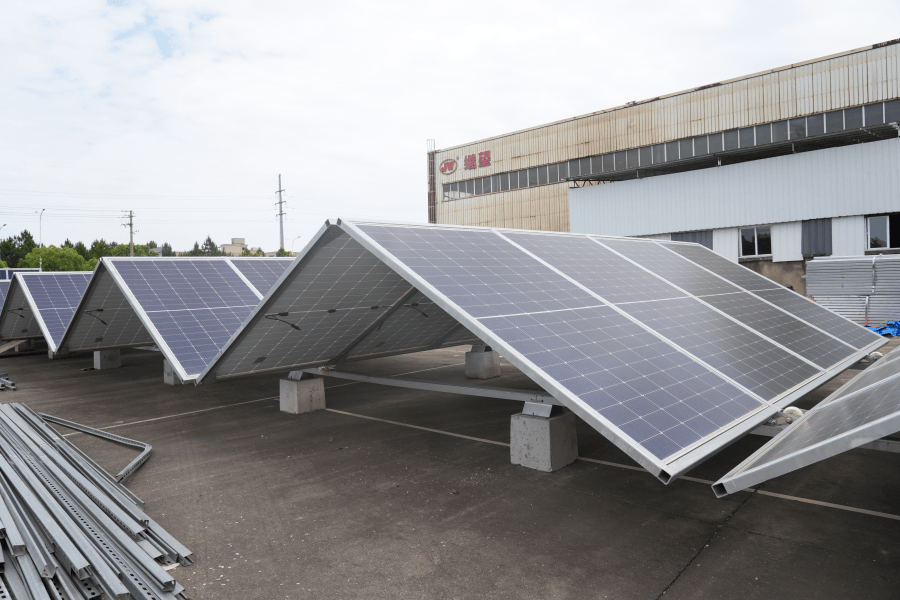
This is where the concept of a Scalable Modular Photovoltaic Storage System changes the game. Think of it like building with high-performance LEGO blocks. Instead of one giant battery, you have standardized, pre-tested power and energy modules. Each module is a self-contained unit with its own battery management, thermal controls, and safety systems.
For a telecom base station, this is a paradigm shift. You start with what you need today - say, enough storage to cover critical load for 4 hours and to smooth out your solar PV output. When you add three more transceivers next year or double your solar capacity, you simply add more storage modules to the existing rack or cabinet. No complete system redesign. No ripping and replacing. The system's brain (the master controller) automatically recognizes the new modules and integrates them. This isn't just convenient; it's a fundamental improvement in your project's Net Present Value (NPV) by deferring capital expenditure.
At Highjoule, our approach has always been to build for the real world. That's why our modular architecture is designed around the standards you trust - UL 9540 for the energy storage system, UL 1973 for the batteries, and IEC 62619 for the safety of industrial cells. Compliance isn't a checkbox for us; it's the baseline for safe, reliable deployment from the deserts of Arizona to the coastal sites in the North Sea.

Beyond the Spec Sheet: What Really Matters On-Site
Spec sheets talk about kWh and kW. But let me tell you, after 20 years on site, three things determine if a BESS succeeds or fails: thermal management, C-rate wisdom, and serviceability.
Thermal Management: Batteries hate being too hot or too cold. A poorly designed thermal system will kill cycle life faster than anything. Our modules use an active liquid cooling system that's incredibly precise. It keeps every cell within a tight, optimal temperature range even when the outdoor unit is facing 45C (113F) heat. This isn't just about longevity; it's about safety. Stable temperatures prevent thermal runaway scenarios.
Understanding C-Rate: You'll see specs like "1C" or "0.5C". Simply put, it's the rate of charge or discharge. A 1C rate means a 100 kWh battery can deliver 100 kW for one hour. A 0.5C rate means it delivers 50 kW for two hours. For telecom, you don't always need super-high C-rates (which stress the battery). You need the right C-rate for the duty cycle - covering a short grid outage vs. performing long-duration solar shifting. A modular system lets you optimize for this by configuring power and energy modules independently.
Serviceability: Imagine a module has an issue. In a monolithic system, you're looking at a costly, full-site service call. In a true modular system, a field technician can safely isolate and hot-swap the affected module in under 30 minutes, with zero downtime for the rest of the storage system. This right here is what slashes your operational expenses and maximizes uptime.
A Real-World Test: The California Case
Let me give you a concrete example. We worked with a regional telecom provider in Northern California. Their challenge was classic: a base station in a fire-prone area faced frequent Public Safety Power Shutoffs (PSPS). Their old diesel genset was unreliable and violated local emission regulations. They had roof space for solar but needed guaranteed 8-hour backup.
The solution was a scalable modular PV storage system. We started with a base configuration integrating their existing solar and a modular BESS sized for 6 hours. The system was pre-assembled and tested in a containerized solution (UL 9540 listed) before shipping, which cut on-site commissioning time by 70%. The real win came a year later. When the utility's outage patterns grew longer, they simply added two more storage modules over a weekend. No new permits for the core system, no major electrical rework. Last I heard, that site had weathered over 15 extended grid outages, maintained 100% uptime, and reduced its diesel consumption by 95%.
This is the power of a system designed not just to a specification, but for real-world adaptation.

Your Next Logical Step
The transition from rigid, single-purpose power systems to flexible, modular energy platforms isn't just a trend; it's the only sensible way to build resilient and economical telecom infrastructure for the next decades. The technology is proven, the standards are clear, and the financial logic is solid.
So, the question I'd leave you with is this: When you evaluate your next base station power upgrade or greenfield site, what's the true total cost of ownership of a static system versus a platform that can grow and adapt with your needs? We've got the data and the case studies to have that conversation. Maybe it's time we had a coffee and looked at your map.
Tags: UL Standard BESS LCOE Modular Energy Storage Renewable Energy Telecom Power
Author
James Zhang
20+ years agricultural energy storage engineer / Highjoule CTO