
Manufacturing Standards for Grid-forming Solar Container in High-altitude Regions
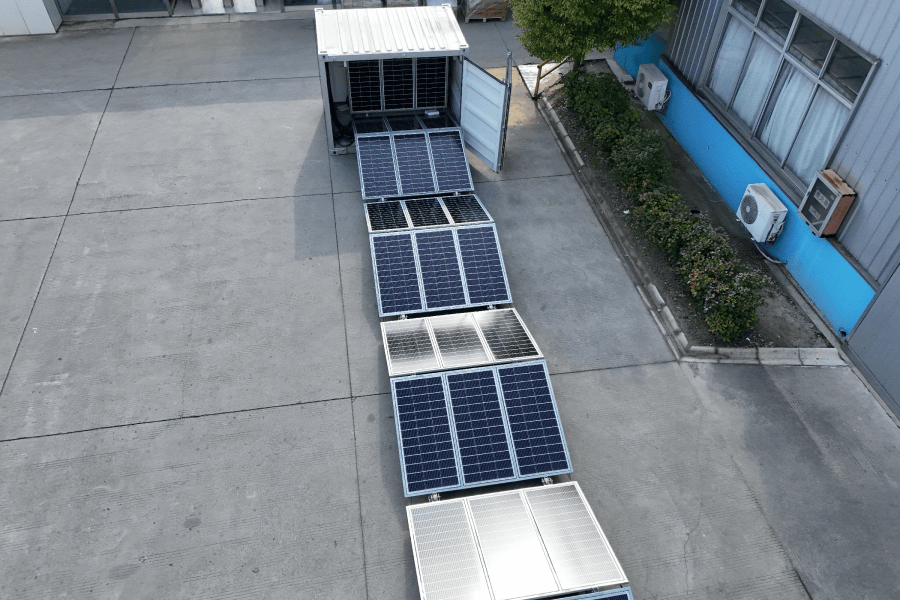
When the Air Gets Thin: Why Your High-Altitude BESS Needs a Different Blueprint
Hey there. Let's grab a virtual coffee. If you're looking at deploying a grid-forming Battery Energy Storage System (BESS), especially one paired with solar in a containerized format, you're already ahead of the curve. But here's something I've learned the hard way over two decades from the Rockies to the Alps: altitude changes everything. What works flawlessly at sea level can become a headache - or worse - a liability at 2,000 meters. Today, I want to chat about why specific, rigorous Manufacturing Standards for Grid-forming Solar Container for High-altitude Regions aren't just a nice-to-have; they're your project's non-negotiable foundation for safety, performance, and bankability.
Quick Navigation
- The Silent Problem: Assuming One Size Fits All
- The Real Cost of Ignoring Altitude
- Case in Point: A Colorado Story
- Expert Insights: Beyond the Spec Sheet
The Silent Problem: Assuming One Size Fits All
The industry push for standardization is great for scaling. But honestly, it's led to a dangerous assumption: that a BESS container certified for, say, a flat industrial park in Ohio is ready for duty in a mountainous microgrid in California or a wind-swept site in Scotland. The procurement checklist gets ticked - UL 9540, IEC 62933, maybe IEEE 1547 for grid-forming - and we think we're covered. I've seen this firsthand.
The reality? Standard certifications often reference "standard atmospheric conditions." High altitude throws a wrench in two core systems: thermal management and electrical insulation. Thinner air means less ability to cool equipment naturally. It also means lower dielectric strength - the air itself is less capable of insulating electrical components from arcing or flashover. Ignoring this isn't an oversight; it's a calculated risk on your asset's longevity and safety.
The Real Cost of Ignoring Altitude
Let's agitate that pain point a bit. What happens when you deploy a standard container up high?
- Derated Performance & Shorter Life: Batteries are sensitive to temperature. If your cooling system isn't rated for the reduced heat transfer efficiency at altitude, cells run hotter. According to a NREL study, every 10C increase above optimal temperature can halve battery life. You're not just losing cycles; you're destroying your project's Levelized Cost of Storage (LCOS).
- Safety & Compliance Gaps: This is the big one. Arc flash incident energy can be higher. Components like circuit breakers and transformers may need specific altitude ratings. A system that's UL Listed at sea level might not be fully compliant at elevation, creating insurance and liability nightmares.
- Grid-Forming Instability: The whole point of a grid-forming BESS is to be a rock-solid voltage and frequency source. If internal components are thermally stressed or if protective devices behave unpredictably, that stability crumbles. Your flagship resilience project becomes the weak link.
The Solution: A Blueprint Built for Thin Air
So, what does true "high-altitude readiness" look like? It's not a sticker; it's a deeply integrated set of manufacturing standards that go beyond the baseline. At Highjoule, when we talk about building for high-altitude, we're talking about a design philosophy that starts at the component level and is validated through the entire assembly.
The core standards - UL, IEC, IEEE - are your foundation. But the real magic is in how they're applied. For instance, we don't just use any UL-listed HVAC unit; we specify units with compressors and fans rated for continuous operation at the target altitude, ensuring they can move enough of that thin air to maintain a precise temperature band. Our electrical design increases creepage and clearance distances inside the power conversion system (PCS) as per IEC 60664-1 for altitude derating. It's these details, baked into the manufacturing process, that create a container you can truly "set and forget."

Case in Point: A Colorado Story
Let me tell you about a 4 MWh grid-forming solar container we deployed for a mining operation outside of Leadville, CO - elevation 3,100 meters. The challenge was brutal: -30C winters, intense solar irradiance, and a need for absolute off-grid reliability. The client's initial RFP was based on a lowland BESS design.
Our team pushed for a full redesign to high-altitude standards. We upsized the liquid-cooling system's heat exchangers and pumps, selected components with published altitude ratings, and used specialized sealing to maintain cabinet integrity against pressure differentials. The commissioning included dielectric tests and thermal load tests simulating peak output in low-pressure conditions. Two years on, that system's performance has a 99.8% uptime, and its thermal variance is actually lower than our sea-level benchmarks. The client's ROI is protected because the system is operating as designed, for its environment.
Expert Insights: Reading Between the Lines of a Spec Sheet
When evaluating a vendor for a high-altitude project, you need to move past marketing. Here are a few tactical questions to ask, straight from the field:
- "Can you show me the altitude derating calculations for your PCS and HVAC?" Every serious manufacturer should have these. If they don't, it's a red flag.
- "Is the entire container assembly tested, or just individual components?" A component-rated for 3000m doesn't guarantee a fully integrated system will perform at that level. Look for whole-system validation.
- "How does your BMS logic adjust for temperature and pressure?" A smart Battery Management System should account for the ambient conditions to optimize charge/discharge rates (C-rate) and cell balancing. This is key for longevity.
Honestly, the difference between a good project and a great, durable one often comes down to these granular, sometimes unsexy, engineering choices. It's what allows us at Highjoule to offer extended warranties on our high-altitude systems - we know exactly how they're built and how they'll perform.
Your Next Step
Looking at a site map with contour lines? Don't let altitude be an afterthought. The right manufacturing standards are your first and best line of defense. What's the single biggest operational risk your high-altitude energy project faces - is it uptime, safety, or total cost of ownership? Let's discuss how a container built for the peaks from day one can mitigate it.
Tags: UL Standards Grid-forming BESS IEEE 1547 High-altitude Energy Storage Manufacturing Standards
Author
James Zhang
20+ years agricultural energy storage engineer / Highjoule CTO