
ROI Analysis of Black Start Lithium Battery Storage for Construction Sites
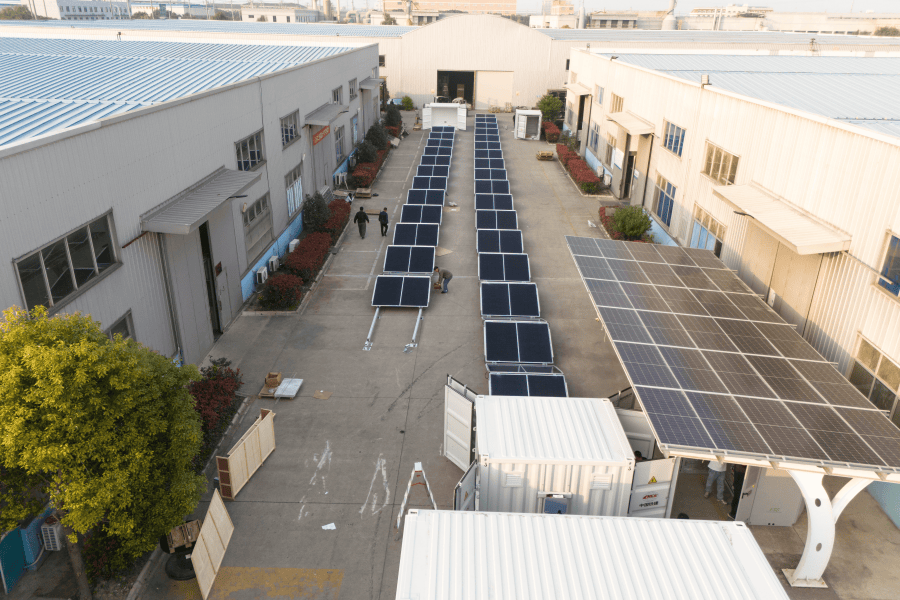
The Real-World ROI of Black Start Battery Storage for Your Next Construction Site
Honestly, if you're managing a large construction project in the US or Europe right now, you're probably dealing with two major headaches: unpredictable power costs and the sheer complexity - and cost - of getting a reliable temporary power supply. I've been on sites from Texas to North Rhine-Westphalia where the temporary diesel generator setup looked more like a small, noisy, and very smelly power plant. The fuel bills alone could make your CFO wince. But what if your temporary power source could also be a strategic asset that pays you back? Let's talk about the real return on investment (ROI) when you use a black start capable lithium battery storage container for construction site power.
Quick Navigation
- The Hidden Cost of "Business as Usual" Power
- The Black Start Battery Solution: More Than Just Backup
- The ROI Breakdown: Where the Savings Really Are
- A Case in Point: The 24/7 Site in California
- Making It Work: The Non-Negotiable Tech & Standards
- Your Next Step: What to Ask Your Team
The Hidden Cost of "Business as Usual" Power
We all know the traditional playbook. You need power for tools, site offices, lighting, and security. You order a fleet of diesel gensets, arrange for fuel delivery logistics, and factor in the noise complaints and local emissions regulations. The capital expenditure (CapEx) seems straightforward, but it's the operational expenditure (OpEx) that kills you. According to the National Renewable Energy Laboratory (NREL), fuel and maintenance can constitute over 70% of the total lifetime cost of a diesel generator in a high-usage scenario. And that's before any carbon tax penalties, which are becoming a very real factor in Europe and parts of the US.
But the bigger pain point, the one I've seen firsthand, is downtime. A traditional generator fails, and you're in the dark - literally. You're waiting on a service tech, losing labor hours, and potentially missing critical milestones. A black start capable system changes that entire equation. It's not just a battery; it's an independent power source that can self-start without an external grid, instantly. For a site that runs 24/7, that reliability isn't just convenient - it's directly tied to your project's financial viability.
The Black Start Battery Solution: More Than Just Backup
So, what is a black start capable lithium battery storage container? Think of it as a silent, self-contained power station in a steel box. It stores energy, typically from a grid connection or paired solar panels, and can dispatch it on demand. The "black start" capability is the key differentiator. It means the system can boot itself up from a completely dead state and begin supplying power to critical loads, acting as the seed for restarting other site systems. This is a game-changer for site resilience.
At Highjoule, when we design these containers for construction applications, we don't just take a standard product off the shelf. We engineer for the harsh, dusty, and dynamic environment of a construction site. This means ingress protection ratings to keep dust out, robust thermal management systems to handle summer heat and winter cold, and safety designs that exceed baseline standards. Honestly, seeing a standard commercial BESS unit on a muddy, vibration-heavy site gives me anxiety. The right solution is built for the job.
The ROI Breakdown: Where the Savings Really Are
Let's move past theory and into a practical ROI analysis. The financial benefits stack up in clear layers:
- Fuel Cost Elimination: The most obvious one. By using stored energy during peak rate periods or to avoid generator runtime, you slash your diesel bill. I've seen projects where the fuel savings alone paid for the battery lease within 18 months.
- Demand Charge Management: If you're tied to the grid, utilities charge massive fees based on your peak power draw (demand charges). A smart BESS can discharge during those short, high-power periods (like running heavy machinery), shaving that peak and cutting your monthly bill by 20-30%.
- Reduced Generator Wear & Maintenance: You can right-size your generator, run it at its optimal, efficient load to charge the batteries, and turn it off for hours. Less runtime means less maintenance, fewer oil changes, and longer generator life.
- Zero Downtime Value: How much is an hour of stalled work worth? For a large site, it can be tens of thousands. The black start capability ensures power continuity, protecting your schedule. This is often the most compelling, though hardest to quantify, part of the ROI.

A Case in Point: The 24/7 Site in California
Let me give you a real example. We worked on a large data center construction project in California. The challenge was providing uninterrupted power for critical curing processes and security, while also managing extreme peak demand charges from the utility. The site manager was skeptical - batteries were "new tech" for him.
We deployed a UL 9540-certified black start capable container, paired with a smaller, efficient generator. The system was programmed to avoid drawing grid power during the utility's peak windows (4-9 PM). The generator ran only at night to recharge the batteries at low cost. In the first year, the project saved over $180,000 in demand charges and fuel costs. But the real win came during an unexpected grid outage. The site seamlessly switched to battery power without dropping a single tool. The generator never had to kick in. The peace of mind and schedule assurance they got? Priceless. That's the full ROI picture.
Making It Work: The Non-Negotiable Tech & Standards
For this to be a safe, reliable investment, not a science project, the technology must be bulletproof. Let's demystify two key terms:
Thermal Management: This isn't just a fan. Lithium batteries need to stay in a Goldilocks temperature zone. Our systems use liquid cooling for precise control, which is crucial for both safety (preventing thermal runaway) and longevity (preventing accelerated degradation). In Arizona heat or Norwegian cold, the system self-regulates.
C-rate: Simply put, it's how fast you can charge or discharge the battery. A higher C-rate means you can pull a lot of power quickly - essential for starting large equipment or handling those demand peaks. But a consistently high C-rate stresses the battery. The magic is in the system's software (the brain) that manages this, balancing immediate power needs with long-term battery health to optimize your Levelized Cost of Energy (LCOE).
And standards aren't just paperwork. In the US, UL 9540 is the safety standard for energy storage systems. In Europe, IEC 62619 is key. Compliance isn't optional; it's your insurance policy for safe deployment and often a requirement for permits and insurance. Every Highjoule container is engineered to meet and exceed these from the ground up, because on a crowded construction site, safety is the ultimate ROI.
Your Next Step: What to Ask Your Team
The shift from diesel-dependent to battery-buffered power is happening now. The ROI is tangible, especially when you factor in resilience. The question isn't really "can we afford to try this?" but increasingly "can we afford not to, given our fuel budget and schedule risk?"
So, over your next coffee with your project team, ask: What's our true cost of power per kWh on site when we factor in all the hidden OpEx? What's the financial impact of a 4-hour power outage during a critical phase? The answers might just point you toward a smarter, quieter, and more profitable power strategy.
Tags: Construction Site Power UL Standard BESS Black Start ROI Analysis Lithium Battery Storage
Author
James Zhang
20+ years agricultural energy storage engineer / Highjoule CTO