
Manufacturing Standards for Rapid Deployment Hybrid Solar-Diesel Systems in Coastal Environments
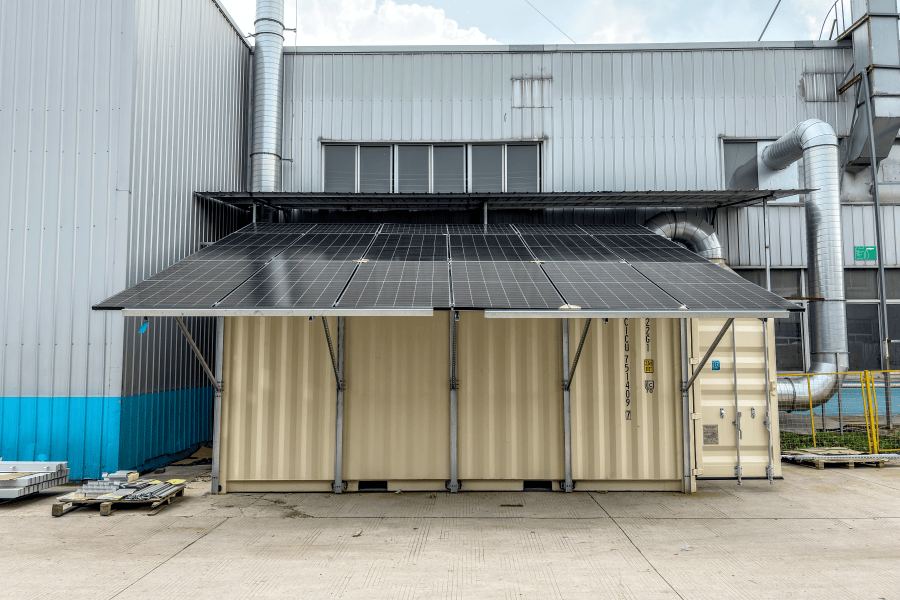
When the Ocean Breeze Meets Your Battery: Why Standards Aren't Just Paperwork for Coastal Hybrid Systems
Honestly, after two decades on sites from the Gulf Coast to the North Sea, I've learned one thing the hard way: salt air doesn't care about your project timeline or your budget. It's a relentless, invisible force that finds every weakness. I've seen control panels corrode in under six months and connector failures that took an entire microgrid offline during a peak demand period. It's a problem many of our commercial and industrial clients in coastal regions of the U.S. and Europe are facing right now as they look to integrate solar with existing diesel gensets for resilience and cost savings. The promise of a rapid-deployment hybrid system is huge - lower fuel costs, cleaner energy, backup power - but without the right foundational manufacturing standards, that promise can rust away before the system even hits its stride.
Quick Navigation
- The Hidden Cost of "Standard" Equipment
- Beyond Corrosion: The Safety & Performance Cascade
- The Framework That Actually Works: More Than Just a Coating
- Case in Point: A Portside Microgrid in Northern Germany
- Making It Real: What to Look For in Your Supplier
The Hidden Cost of "Standard" Equipment
Here's the common scenario I see. A business on a coastal site needs to add solar and storage to their diesel-powered facility, often driven by sustainability goals or simply to hedge against volatile fuel prices. The pressure is on for a fast deployment. The temptation is to take an off-the-shelf Battery Energy Storage System (BESS) container and a solar inverter, bolt them together, and hope for the best. This is where the trouble starts.
Standard industrial or even utility-scale BESS units are typically built for relatively benign environments. A salt-spray environment, as defined by standards like IEC 60068-2-52, is a different beast entirely. It accelerates corrosion by orders of magnitude. According to a NREL report on durability, corrosion in electrical components is a leading cause of performance degradation and safety incidents in coastal renewable installations. The financial impact isn't just repair costs; it's unplanned downtime, lost revenue, and a total cost of ownership (LCOE) that spirals out of control because your asset life might be halved.
Beyond Corrosion: The Safety & Performance Cascade
Let's get into the nitty-gritty. It's not just about rusty cabinets. Corrosion on electrical busbars increases resistance. Increased resistance means heat. In a battery system, managing thermal runaway is job number one for safety. Unexpected heat sources from corroded connections compromise the entire thermal management system, pushing components beyond their design C-rate (the rate at which a battery is charged or discharged relative to its capacity) and creating hotspots.
Furthermore, rapid deployment often means these systems are designed for modularity and quick interconnection. If those plug-and-play connectors aren't built to a standard that specifies salt-spray resistance, you're introducing failure points at every interface. I've been on site where a simple communication fault, traced back to a corroded RJ45 port on a weatherized (but not marine-weatherized) switch, prevented the hybrid controller from synchronizing with the diesel genset. The system defaulted to diesel-only mode for weeks, wiping out the financial and environmental benefits.
The Framework That Actually Works: More Than Just a Coating
So, what does a robust set of Manufacturing Standards for Rapid Deployment Hybrid Solar-Diesel System for Coastal Salt-spray Environments actually look like? It's a holistic design philosophy, not a single checkbox.
- Material Science is Key: It starts with the specs for stainless-steel grades (think 316L or better for external hardware), aluminum alloys with appropriate anodization, and conformal coating on PCBs that exceeds typical industrial ratings. The standard must dictate not just what material, but the testing protocol - like prolonged salt fog chamber testing per ASTM B117.
- Sealing & Filtration: The enclosure integrity rating (like IP66 or IP67) is a minimum. For a breathable container, the standard must specify corrosion-resistant air filters and a positive pressure system to keep salty, humid air from being drawn inside during thermal cycles.
- Electrical Design for Reality: This means specifying protective measures like:
- Increased creepage and clearance distances on PCBs to account for salt deposit buildup.
- Dielectric coatings on high-voltage connections.
- Corrosion-inhibiting compounds on all external electrical joints.
- Integration by Design: The standard must cover the entire hybrid system interface. How are the PV array combiners (themselves salt-spray rated) connected? What about the genset control interface? The communication cabling between units? A true rapid-deployment standard pre-defines these interfaces so that on-site work is minimal and reliable.
At Highjoule, our engineering team builds this philosophy into products like our SeaLINK containerized BESS from the ground up. We don't just add a coating; we design for the environment. This upfront investment in the manufacturing standard is what keeps the Levelized Cost of Energy (LCOE) low over 15+ years - because the system is running, not being repaired.

Case in Point: A Portside Microgrid in Northern Germany
Let me share a project that really drove this home. We were involved in a retrofit for a medium-sized fishing port and cold storage facility in Schleswig-Holstein. They had old, inefficient diesel generators and wanted to add solar across warehouse roofs and integrate a BESS for peak shaving and backup. The site is windswept and saturated with salt spray.
The initial bids used standard industrial equipment. Our proposal centered on a system built to the enhanced coastal standards we're discussing. The upfront cost was about 8% higher. The decision came down to trust in the standards. Fast forward 18 months post-deployment: a major storm caused flooding and grid outage. While the port was operational on its hybrid microgrid, a neighboring facility using a "standard" system had a critical fault - investigation found salt-induced tracking on a main inverter PCB, causing a short. Their downtime lasted 11 days for a replacement and remediation. Our client's system? It performed flawlessly, keeping the cold storage online. That single event validated the entire investment. The reliability, the safety, the continuity of operations - that's the real ROI of proper manufacturing standards.
Making It Real: What to Look For in Your Supplier
When you're evaluating partners for a coastal hybrid project, move beyond marketing brochures. Get technical. Ask these questions:
- "Can you show me the specific clauses in your manufacturing standards that address salt-spray corrosion protection for all external and internal components?"
- "What third-party certifications (like UL or specific IEC marine environment standards) does your container and power conversion system carry related to corrosive atmospheres?"
- "How is your thermal management system designed to compensate for potential external corrosion on heat exchangers?"
- "Can you provide a documented rapid-deployment sequence that shows how the hybrid interfaces (solar, diesel, grid) are pre-tested and validated to work in my environment?"
Your supplier should be able to walk you through this like a seasoned engineer who's been on site, not just a salesperson. They should talk about gasket materials, fastener types, and coating thicknesses with the same ease as they talk about battery chemistry and inverter efficiency.
The shift to hybrid energy is one of the smartest moves a business can make. But in a coastal environment, the foundation of that move isn't concrete - it's the manufacturing standard on paper that becomes the reliability in steel and silicon. It's what ensures your project is a resilient asset, not a recurring maintenance nightmare. What's the one component in your planned system you're most concerned about standing up to the salt?
Tags: Rapid Deployment UL Standards Coastal Energy Storage Microgrid Salt-Spray Protection Hybrid Solar-Diesel BESS Manufacturing Standards
Author
James Zhang
20+ years agricultural energy storage engineer / Highjoule CTO