
Off-grid Solar Generator for Farm Irrigation: A Real-world 20ft Container Case Study
Contents
- The Silent Crisis in Modern Agriculture
- Beyond the Grid: Why Farms Are Turning to Self-Generation
- The 20ft Container Revolution: More Than Just a Box
- A Case in Point: The California Central Valley Project
- Making It Work: The Tech You Need to Understand
- What Could This Look Like on Your Land?
The Silent Crisis in Modern Agriculture
Let's be honest. When you're managing hundreds of acres, the last thing you need is another variable you can't control. Yet, for so many farms I've visited across the US Midwest and Southern Europe, that's exactly what grid power has become - an unpredictable cost center and a operational risk. You plan your irrigation cycles around optimal growing conditions, not around peak utility rates or the threat of a rolling blackout during a heatwave. I've stood in fields with farmers where the anxiety isn't just about rain; it's about whether the power will stay on long enough to pump the water that replaces it.
The data backs up this pain. According to the International Energy Agency (IEA), the agriculture sector accounts for a significant portion of electricity demand in rural areas, and this demand is becoming more critical with precision irrigation. When the grid fails or prices spike, the impact isn't just a bill - it's a potential crop loss.
Beyond the Grid: Why Farms Are Turning to Self-Generation
So, the problem is clear: unreliable or expensive grid power jeopardizes water security, which in turn jeopardizes your entire season's investment. This agitation leads to a fundamental question: how do you decouple your essential operations from a system you don't own?
The initial answer was often solar panels alone. But anyone who's tried that knows the limitation. The sun doesn't shine when you need to irrigate at night or during cloudy days. That mismatch creates a huge gap. What you really need is a way to time-shift that solar energy. You need to capture the midday surplus and bank it for the exact moment your pumps need to kick in. That's where a purpose-built Battery Energy Storage System (BESS) changes everything.

The 20ft Container Revolution: More Than Just a Box
This is where our real-world case study comes in. We're talking about a 20ft High Cube containerized off-grid solar generator. Now, "containerized" is the key word here. It's not a random assembly of parts; it's a fully integrated, plug-and-play power plant. Think of it like a data center for energy - everything inside, from the lithium-ion battery racks and the thermal management system to the inverters and fire suppression, is pre-engineered to work in harmony. This approach solves a myriad of on-site headaches.
For you, the farm owner or manager, it means predictable deployment. The unit is fabricated and tested under controlled factory conditions, adhering to strict standards like UL 9540 for the overall system and UL 1973 for the batteries. It shows up on a flatbed truck, is placed on a simple concrete pad, and is connected. The complexity is contained within the walls of that container. From my 20+ years on site, this drastically reduces installation risk, cost overruns, and gets your system producing revenue - or, in this case, saving costs - much, much faster.
A Case in Point: The California Central Valley Project
Let me walk you through a project we completed last year that really highlights this. A 500-acre almond orchard in California's Central Valley was facing crippling demand charges and wanted to achieve full water independence. Their challenge was to run a 125-horsepower irrigation pump for 6-8 hours nightly, completely off-grid.
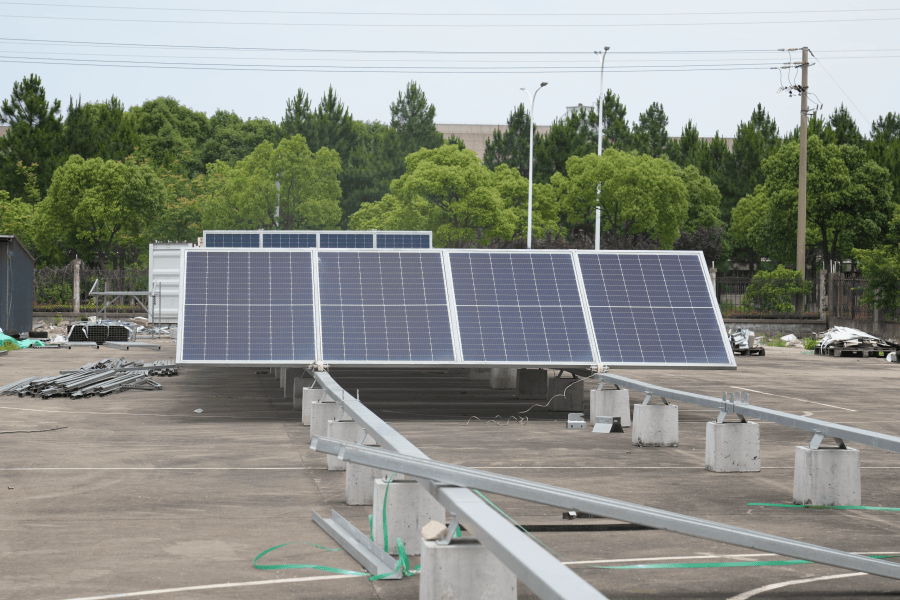
The solution was a single 20ft High Cube unit equipped with a high-density battery stack and an integrated solar PV canopy. The system was designed for a specific C-rate - that's basically the speed of charge and discharge - that matched the pump's load profile without stressing the batteries. The thermal management system was spec'd for the Valley's 110F+ summers, actively cooling the battery cells to ensure longevity and safety.
The outcome? The farm eliminated its grid dependency for irrigation. They now use solar to charge the battery bank during the day and discharge it at night to run the pump. The Levelized Cost of Energy (LCOE) - the total lifetime cost divided by energy produced - for this off-grid system became lower than their previous grid rate when factoring in demand charges and reliability. The containerized format meant the entire system was commissioned in under three days.
Making It Work: The Tech You Need to Understand
When we sit down for coffee, I know you don't want a doctorate in electrochemistry. But you should understand three key things about a system like this:
- Thermal Management: This isn't just a fan. It's a dedicated HVAC system for the batteries. Lithium-ion cells perform best and last longest within a tight temperature range. A proper system actively heats or cools them. I've seen systems fail prematurely because this was an afterthought. Ours is integral.
- C-rate & Load Matching: Your irrigation pump has a specific power draw. We design the battery system's C-rate - its power capability - to meet that smoothly. It's like matching the engine to the load; you don't want a system straining at max output every day. A right-sized C-rate extends battery life.
- LCOE is Your True North: Don't just look at upfront cost. Look at the Levelized Cost of Energy over 10-15 years. A well-built, UL-certified system might have a higher initial price but a significantly lower LCOE because it lasts longer, is more efficient, and requires less maintenance. That's the number that tells you your true cost per gallon of pumped water.

At Highjoule, our focus is engineering this balance. We don't just sell a box; we model your load profile, your solar resource, and your financial goals to configure a system that delivers the lowest possible LCOE with uncompromising safety, backed by local service teams who understand agri-energy needs.
What Could This Look Like on Your Land?
The beauty of the 20ft container model is its scalability and clarity. You get a defined footprint, a predictable outcome, and a known set of standards protecting your investment. It moves the conversation from theoretical energy concepts to a tangible asset on your property - an asset that directly controls one of your biggest operational risks.
So, the next time you look at your irrigation schedule and then at the volatile grid tariff sheet, ask yourself: what's the true cost of that dependency? The technology to break free isn't futuristic; it's arriving on a flatbed truck. The question is, when will you be ready to pour the pad?
Tags: UL Standard BESS LCOE Agricultural Irrigation Renewable Energy Off-grid Solar
Author
James Zhang
20+ years agricultural energy storage engineer / Highjoule CTO