
215kWh Cabinet & 1MWh Solar Storage for Telecom Base Stations: A Real-World Case Study
Table of Contents
- The Silent Challenge: Powering Telecoms in the Age of Renewables
- Why This Matters More Than You Think: Cost, Carbon, and Continuity
- A Practical Solution: The 215kWh Cabinet & 1MWh Solar Storage Blueprint
- Case Study Deconstructed: A European Telecom's Journey
- The Technical Edge: What Makes This System Tick (And Last)
- Beyond the Battery: Making It Work in Your Market
The Silent Challenge: Powering Telecoms in the Age of Renewables
Let's be honest. When we talk about the energy transition, big solar farms and grid-scale batteries get all the headlines. But some of the toughest, most critical work is happening far from the spotlight. I'm talking about telecom base stations. These unsung heroes of our connected world have a massive, quiet problem: they need absolutely reliable, 24/7 power, but they're often in locations with weak grids, crazy-high commercial electricity rates, or no grid at all. Relying solely on diesel gensets? That's a cost and carbon nightmare I've seen cripple operational budgets firsthand on site.
The dream, of course, is to pair these sites with solar. But here's the rub solar is intermittent. A cloud passes over, production dips, and if the grid is unstable, you're staring at a potential service outage. That's a risk no telecom operator can take. The challenge isn't just adding solar; it's creating a truly resilient, cost-optimized hybrid system that can think for itself.

Why This Matters More Than You Think: Cost, Carbon, and Continuity
This isn't a niche issue. The International Energy Agency (IEA) notes that the telecom sector is a significant and growing energy consumer, with power costs often being a top-three operational expense. In regions like California or parts of the EU where Time-of-Use (TOU) rates are brutal, that afternoon peak can devour profits. And let's not forget sustainability mandates. Corporate boards are demanding carbon footprint reductions, and diesel simply doesn't cut it anymore.
The agitation is real. You have:
- Sky-High OPEX: Paying peak rates or constantly refueling diesel.
- Regulatory Pressure: Needing to meet local standards like UL 9540 for energy storage safety and IEC 62443 for system cybersecurity.
- Reputation Risk: A single outage can make headlines and erode customer trust.
I've walked sites where the diesel bill was more than the site's lease. It's unsustainable.
A Practical Solution: The 215kWh Cabinet & 1MWh Solar Storage Blueprint
So, what's the answer? It's not a one-size-fits-all magic box. It's a smart, modular architecture. The model we've seen work brilliantly especially for medium to large base stations or clusters of sites is a 1MWh solar PV array coupled with a 215kWh battery energy storage system (BESS) in a cabinetized format.
Think of it like this: the solar array is your primary fuel station. The 215kWh cabinet is the intelligent buffer and backup generator, all in one. It stores excess solar, shaves peak grid demand, provides seamless backup during grid failures, and ensures every kilowatt-hour is used in the most economical way possible. Honestly, it turns a cost center into a manageable, predictable asset.
Case Study Deconstructed: A European Telecom's Journey
Let me give you a real example from a project we were involved with in Northern Germany. A major telecom operator had a cluster of base stations in an area with a good, but not great, grid connection. Their goals were classic: cut energy costs, ensure 99.99% uptime, and reduce diesel use by over 90%.
The Setup:
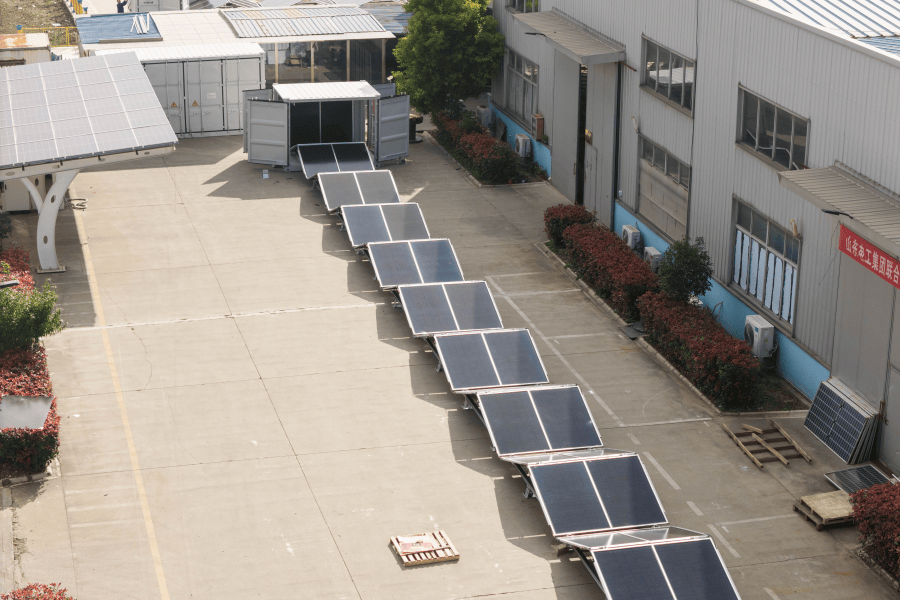
- Solar PV Capacity: ~1.1 MWp (ground-mounted adjacent to sites).
- Storage: Four of our Highjoule 215kWh UL 9540-certified cabinet units, totaling 860kWh, with scalable architecture.
- Control: An advanced energy management system (EMS) that prioritizes solar consumption, performs peak shaving, and manages state-of-charge for backup readiness.
The Outcome: Within the first year, the system achieved a 72% reduction in grid energy draw during peak periods and completely eliminated routine diesel use. The EMS's clever algorithms, which consider weather forecasts and tariff schedules, optimized the system's Levelized Cost of Energy (LCOE). For the non-engineers in the room, LCOE is just a fancy way of saying the total lifetime cost of the energy you produce and store. Getting this right is what delivers the ROI.
The cabinets' compact footprint and pre-fab design meant deployment was fast, with minimal on-site civil work a huge plus in terms of cost and disruption.
The Technical Edge: What Makes This System Tick (And Last)
Anyone can slap batteries next to solar panels. The magic is in the details that ensure safety, longevity, and performance. Here's what we've learned from two decades in the field:
- C-rate Isn't Just a Spec: It's about balance. A moderate C-rate (the speed of charge/discharge) for these telecom applications reduces stress on the battery cells, extending life. We're not racing here; we're marathon-running for 15+ years.
- Thermal Management is Non-Negotiable: I've opened cabinets on a Texas summer day where the ambient was 110F. Without liquid-cooled or advanced forced-air thermal management, battery degradation accelerates wildly. Our systems are designed to maintain optimal temperature, a critical factor for both safety (meeting UL standards) and lifespan.
- Grid-Friendly Compliance: In the EU and parts of the US, your system needs to "talk" to the grid properly think IEEE 1547 for interconnection. The inverter and EMS must provide voltage and frequency support, not just take or dump power. This grid-forming capability is becoming a must-have.
These aren't just checkboxes. They're the difference between a project that delivers value for a decade and one that becomes a maintenance headache in year three.
Beyond the Battery: Making It Work in Your Market
The technology is proven. The real question for a decision-maker is: how do I get this done reliably in my region? This is where choosing a partner with local deployment experience matters.
For instance, a 215kWh cabinet in California needs to navigate CA Title 24, have UL 9540 certification, and possibly qualify for SGIP incentives. In Germany, it's about meeting BDEW standards and navigating grid connection codes. The paperwork and compliance are as crucial as the hardware.
At Highjoule, our approach has always been to provide more than a container. We provide a localized solution the right certifications, the engineering support for interconnection studies, and the service network for long-term health checks and maintenance. Because the best system in the world is only as good as the team that stands behind it.
So, what's the biggest hurdle you're seeing in making your telecom sites more resilient and cost-effective? Is it the upfront CapEx, the regulatory maze, or something else entirely? Let's discuss over a (virtual) coffee.
Tags: UL Standard BESS Solar Storage IEC Standard Telecom Base Station Energy Storage Case Study
Author
James Zhang
20+ years agricultural energy storage engineer / Highjoule CTO