
Remote Island Microgrids: A Real-World Case Study of 215kWh Cabinet Lithium Battery Storage
Contents
- The Isolated Grid Problem: More Than Just an Inconvenience
- Why Many "Off-the-Shelf" Battery Solutions Fail in Harsh Environments
- A Real-World Solution: The 215kWh Cabinet-as-a-Microgrid
- Beyond the Spec Sheet: The Engineering That Makes It Work
- The Future Is Modular and Compliant
The Isolated Grid Problem: More Than Just an Inconvenience
Let's be honest. If you're responsible for power on a remote island, a mining site, or an off-grid community, you're not just managing electricity - you're managing risk, cost, and sometimes, community survival. The dream of 100% renewable energy from solar and wind crashes into a hard reality: intermittency. I've been on sites where a passing cloud or a calm day doesn't just mean a slight dip in power; it means shutting down essential operations or firing up a diesel genset that guzzles $6/gallon fuel. The International Energy Agency (IEA) notes that over 10 million people in developed regions still rely on expensive, polluting fossil fuels for off-grid power. That's not just an environmental issue; it's a massive economic drain.
The real pain point? Legacy systems that patch together components without a unified, resilient plan. You might have solar panels, an old diesel generator, and maybe a small battery bank that wasn't designed for the daily cycling it now endures. The result is sky-high Levelized Cost of Energy (LCOE), unpredictable outages, and a maintenance nightmare. I've seen firsthand on site how a single point of failure in a makeshift system can lead to days without power, waiting for a specialist to arrive by boat or helicopter.
Why Many "Off-the-Shelf" Battery Solutions Fail in Harsh Environments
This is where the agitation truly sets in. Many decision-makers think, "We'll just add a big battery." But not all Battery Energy Storage Systems (BESS) are created equal, especially for island conditions. Salt spray corrosion, wide ambient temperature swings, and limited technical staff on-site create a perfect storm for failure.
A standard commercial battery cabinet designed for a temperature-controlled warehouse in California will struggle - and likely fail prematurely - in the humid, salty air of the Caribbean or the freezing winters of a Northern European island. Thermal management is the unsung hero (or the silent killer) of BESS longevity. Inefficient cooling or heating doesn't just hurt performance; it accelerates aging and, in worst-case scenarios, creates safety hazards. Furthermore, many integrated systems lack the grid-forming capabilities needed to act as the stable "heart" of a microgrid, instead of just a supplemental device. They can't "black start" the system after an outage without a generator.

A Real-World Solution: The 215kWh Cabinet-as-a-Microgrid
This brings me to a project that really embodies the solution we champion at Highjoule. We were approached by a community on a remote island off the coast of Scotland. Their challenge was classic: reduce diesel consumption by 80% for their 50-home microgrid, integrate existing wind turbines, and ensure 24/7 reliability with minimal hands-on maintenance. Their existing lead-acid battery bank was failing after just 3 years.
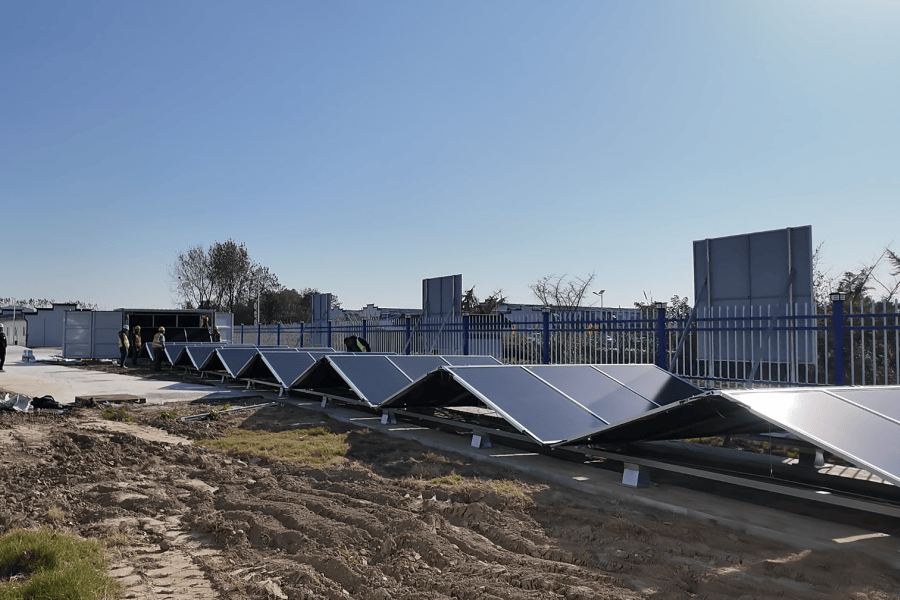
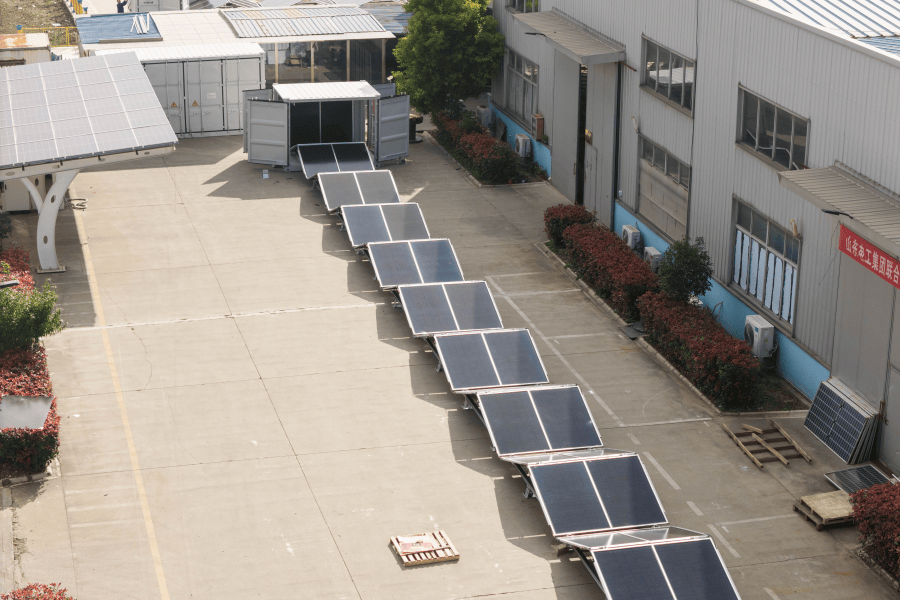
Our solution was a pre-integrated, containerized 215kWh lithium iron phosphate (LFP) battery storage system. But calling it just a "battery container" sells it short. It was a plug-and-play power station. The container itself was a key player - it provided an IP55-rated, corrosion-resistant environment, with a built-in, liquid-based thermal management system that actively heated or cooled the battery racks independently of the outside air. Honestly, this last part is critical. By maintaining the batteries at their optimal temperature window, we extended their cycle life dramatically, directly impacting the project's LCOE.
The system was pre-configured with UL 9540 and IEC 62933 certifications in mind, and its grid-forming inverters allowed it to seamlessly integrate with the diesel gensets (which became mere backups) and the wind turbines, stabilizing voltage and frequency in real-time. Deployment took weeks, not months, because it arrived on a barge, was placed on a simple concrete pad, and was connected via pre-designed interfaces.
Beyond the Spec Sheet: The Engineering That Makes It Work
Let's break down the "expert insight" on what makes such a deployment successful, in plain language.
- C-rate Isn't Just a Number: It's about the "pace" of energy flow. A high C-rate means you can discharge fast (good for grid services), but it can stress the battery. For island microgrids, a moderate, sustainable C-rate optimized for daily solar/wind cycling is often more important than peak power. We engineered the 215kWh system's power electronics for the right balance, maximizing battery life.
- Thermal Management = Asset Life: Think of it like this: a battery cycling at 95F (35C) will lose usable life about twice as fast as one at 77F (25C). Our active liquid cooling/heating system is like a precision climate control for each battery module, ensuring they work in their "comfort zone" year-round. This is non-negotiable for a 10+ year asset.
- The LCOE Winner: The ultimate metric. By combining long-life LFP chemistry, intelligent thermal management, and reducing diesel fuel by over 80% in that Scottish case, the levelized cost of energy over the system's lifetime plummeted. The initial capex is higher than a simple battery rack, but the 20-year total cost of ownership tells the true story.
At Highjoule, our approach is to engineer this resilience and LCOE optimization in from the start. It's not an add-on. It's baked into the container's design, the battery management system algorithms, and the choice of UL and IEC-compliant components that give developers and financiers in the US and Europe the confidence to deploy.
The Future Is Modular and Compliant
The lesson from dozens of sites like this is clear: the future of remote and microgrid energy is modular, containerized, and intelligently managed. The 215kWh unit isn't a one-size-fits-all; it's a building block. Need 1 MWh? Deploy four containers. This scalability removes massive complexity from the planning phase.
But the foundation is compliance and safety. Navigating UL, IEC, and local fire codes isn't a distraction - it's the bedrock of a bankable, insurable, and safe project. My two decades in this field have taught me that cutting corners on standards is the fastest way to a stranded asset.
So, what's the biggest operational headache your current microgrid or off-grid plan is facing? Is it the fuel bill, the maintenance complexity, or the uncertainty of your equipment's lifespan in a tough environment?
Tags: UL Standard BESS LCOE Microgrid Energy Storage Case Study Remote Island Energy
Author
James Zhang
20+ years agricultural energy storage engineer / Highjoule CTO