
Step-by-step Installation of LFP Pre-integrated PV Container for Remote Island Microgrids
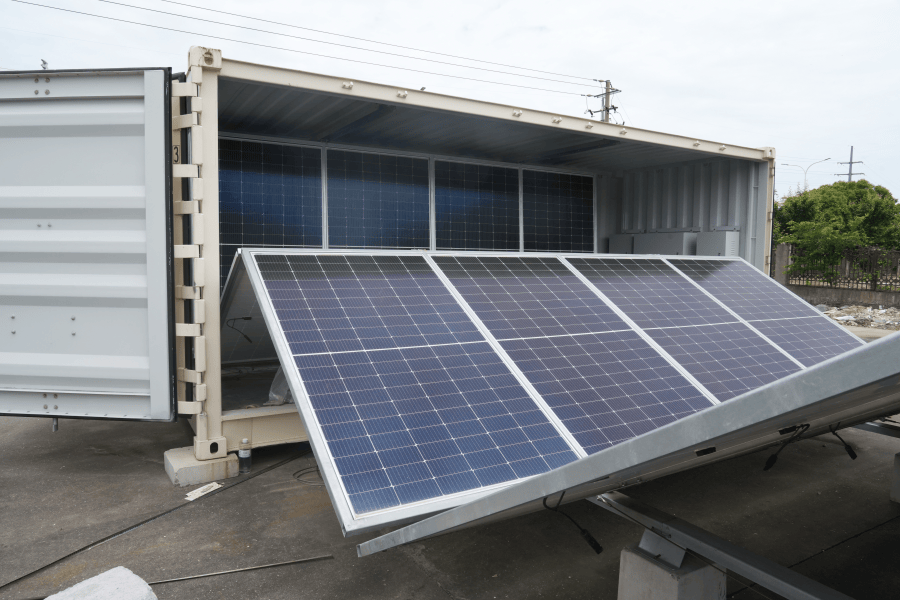
The Real-World Guide to Powering Islands: Installing Your LFP Battery Container Right
Honestly, if I had a coffee for every time I've heard a project manager on a remote island site say, "This should have been simpler," I'd be wired for a month. Deploying energy storage in these locations isn't your standard warehouse retrofit. It's a high-stakes puzzle where logistics, safety, and long-term reliability collide. Over two decades, from the Greek Isles to communities off the Maine coast, I've seen the gap between a promising spec sheet and a system that actually works for 20 years. The difference often comes down to the installation process itself.
Quick Navigation
- The Remote Power Problem: More Than Just a Logistics Headache
- Why the Installation Process is Your Make-or-Break Moment
- The Highjoule Method: A Pragmatic, Step-by-Step Approach
- Beyond the Manual: Insights from the Field
- A Real Island Story: From Blueprint to Reliable Power
The Remote Power Problem: More Than Just a Logistics Headache
We all know remote islands and microgrids need resilient, clean power. The challenge isn't the "why," it's the "how." You're dealing with limited skilled labor, unpredictable weather windows for shipping and installation, and the sheer cost of a return service visit if something goes wrong. A study by the National Renewable Energy Laboratory (NREL) highlighted that balance-of-system costs and installation complexities can contribute up to 30% of the total Levelized Cost of Energy (LCOE) for remote microgrids. That's huge. It means the economics of your entire project can be made or broken not by the battery chemistry you chose, but by how smoothly it gets off the boat and online.
Why the Installation Process is Your Make-or-Break Moment
Let's agitate that point a bit. You've selected a robust Lithium Iron Phosphate (LFP) system for its safety and longevity - a smart move. But a container sitting in a yard isn't a microgrid. The moment it hits the dock, real-world variables take over. I've seen containers delayed by tides, installation crews puzzled by unclear wiring diagrams, and critical communication cables routed where they'll get crushed. Each hiccup isn't just a day lost; it's budget erosion and risk introduction. The promise of LFP's 6000+ cycle life means nothing if the thermal management system isn't leveled correctly on day one, creating hot spots that accelerate degradation. Your bankable asset suddenly isn't so bankable.
The Highjoule Method: A Pragmatic, Step-by-Step Approach
This is where a true pre-integrated, step-by-step philosophy changes the game. At Highjoule, we don't just build containers; we engineer the deployment process. Our solution for remote microgrids is designed to turn complexity into a checklist. Here's how we break it down:
Phase 1: Pre-Deployment C The "Measure Twice" Phase
Long before the ship sails, our team works with yours. We're not just sending a manual; we're co-developing a site-specific installation playbook. This covers:
- Site Foundation Review: We verify the design for your specific soil and seismic conditions, ensuring the pad is ready to receive a 20-ton container with zero on-site modification needed.
- Logistics Coordination: Based on port limitations, we plan the unloading sequence. Our containers are designed with standardized lifting points and often include pre-fitted skids for roll-off deployment.
- Utility Interface Lock-in: All settings for grid-forming or grid-following modes, voltage, and frequency are pre-configured per your interconnection agreement, tested at our factory under simulated conditions.
Phase 2: Installation & Commissioning C The "Cut Once" Phase
This is the critical path. Our systems are built for connection, not construction.
- Step 1: Positioning and Grounding. The container is placed on the pre-built foundation. The first task isn't power-up - it's establishing a massive, low-resistance grounding grid. I've seen firsthand how proper grounding in coastal, high-corrosion environments prevents a world of future faults.
- Step 2: Mechanical and Thermal Hookup. We connect the pre-routed, labeled cooling lines (if liquid-cooled) or verify airflow paths. This isn't an afterthought; it's core to maintaining that optimal 25C 3C cell temperature for max lifespan.
- Step 3: Electrical Connection. Here, the pre-integration shines. Instead of hundreds of individual cables, you're connecting a handful of pre-assembled, UL 9540-certified busbar runs between the battery racks, PCS, and MV transformer. It's like Lego for high-power engineers - color-coded, foolproof, and drastically reducing arc-flash risk during installation.
- Step 4: Digital Commissioning. We power up the control system. Using secure remote access, our engineers guide your local crew through the startup sequence. We verify every safety relay, calibrate every sensor, and run the first full system diagnostics together.

Phase 3: Handover and Training C The "Self-Sufficiency" Phase
We leave you with more than keys. We provide a simplified local operator dashboard and hands-on training focused on daily checks and basic diagnostics. The goal is to make your team confident and self-reliant for 95% of operations, with our remote monitoring and support acting as your always-on backup.
Beyond the Manual: Insights from the Field
Any good guide gives you steps, but experience gives you the "why" behind them. Let's talk about two technical concepts that matter immensely during installation.
C-rate Isn't Just a Number on a Datasheet. When you're commissioning, you might be tempted to do a full-power test immediately. With LFP, that's often safe, but think about the entire system. That high C-rate discharge test pulls massive current through every connection you just made. It's the ultimate stress test for torque on every lug. We schedule these tests deliberately, using them not just to validate performance, but the quality of the installation itself. A slight resistance heating at a terminal becomes immediately apparent.
Thermal Management is a Spatial Puzzle. The manuals show a schematic. On site, you find air intakes facing the prevailing wind full of sea spray, or exhausts too close to a PV inverter's own heat dump. We design with this in mind, but installation is about verifying the real-world environment. Proper spacing and ducting alignment are non-negotiable for hitting that LCOE target - poor cooling can slice cycle life by 20%.
A Real Island Story: From Blueprint to Reliable Power
Let me tell you about a project off the coast of Scotland. A community microgrid needed to integrate a new 2 MW solar array and shut down an old diesel genset. The challenge? A tiny pier, a crew more familiar with fishing boats than battery containers, and a brutal, salty environment.
We shipped a pre-integrated 1.5 MWh LFP container with our "Microgrid-in-a-Box" configuration. Because we had done the pre-deployment work, the foundation was perfect. The roll-off skids let them move the container into place with a modified tractor, no heavy crane needed. The electrical connection used our plug-and-play busbar system - the local electrician later said it was "harder to wire my house's cooker."
The real win was in the digital handover. Through a satellite link, we co-ran the commissioning from our office. Within 48 hours of the container being placed, it was forming the grid, syncing with the solar, and the diesel engine was off. A year on, our remote monitoring shows the system performing within 99% of its expected efficiency. That's the power of getting the installation process right.
So, when you're evaluating storage for a remote site, look past the energy density specs. Ask, "How does this get from the port to producing power, and who makes sure it's done right?" The most elegant engineering fails if it can't survive the installation. What's the one site condition keeping you up at night for your next microgrid project?
Tags: UL Standard BESS LCOE Renewable Energy US Market Europe Market Microgrid LiFePO4 Battery Remote Power
Author
James Zhang
20+ years agricultural energy storage engineer / Highjoule CTO