
Air-Cooled BESS for Industrial Parks: Cutting Costs & Boosting Reliability
Contents
- The Silent Challenge in Your Energy Bill
- Beyond the Price Tag: The Real Cost of Complexity
- A Breath of Fresh Air: Simplifying Industrial Storage
- Case Study: A Midwest Manufacturing Hub's Turnaround
- Why This Works: The Tech Behind the Simplicity
- Your Next Step: What to Look For
The Silent Challenge in Your Energy Bill
Hey there. If you're managing energy for an industrial park or a large facility in the US or Europe, we need to talk about something that doesn't get enough airtime. It's not just about installing solar panels or buying green power. Honestly, the real puzzle C and the real opportunity C is what happens after you generate that power. How do you store it reliably, safely, and without creating a massive new operational headache? I've been on sites from California to North Rhine-Westphalia, and the story is often the same: the promise of energy independence meets the gritty reality of infrastructure.
The core problem isn't a lack of technology. It's about deploying technology that fits the practical reality of an industrial site. You need a system that your team can understand, that doesn't demand a PhD in thermodynamics to maintain, and that local fire marshals and permitting offices will nod approvingly at. According to the National Renewable Energy Laboratory (NREL), a key barrier to broader BESS adoption, especially for C&I applications, is the perceived operational complexity and balance-of-system costs. That's a fancy way of saying: the stuff around the batteries can scare people off.
Beyond the Price Tag: The Real Cost of Complexity
Let's agitate that pain point a bit. You might be looking at a sleek, high-performance battery storage system. The sales rep talks about incredible C-rates (that's the charge/discharge speed, by the way) and round-trip efficiency. But then you see the fine print: it requires a complex liquid cooling loop, specialized coolant, pumps, chillers, and a dedicated service contract. Suddenly, you're not just buying a battery; you're installing a miniature chemical plant.
The cost isn't just upfront. I've seen this firsthand on site. A minor leak in a liquid-cooling manifold, which happens more than you'd think with vibration and thermal cycling, can shut down the entire container. You're looking at downtime, specialized hazmat cleanup, and a repair that can't be done by your local electrician. The International Energy Agency (IEA) highlights that minimizing Levelized Cost of Storage (LCOS) is critical, and a huge part of that "O" is Operations and Maintenance. A system that's difficult to maintain erodes your financial returns quietly but surely.

A Breath of Fresh Air: Simplifying Industrial Storage
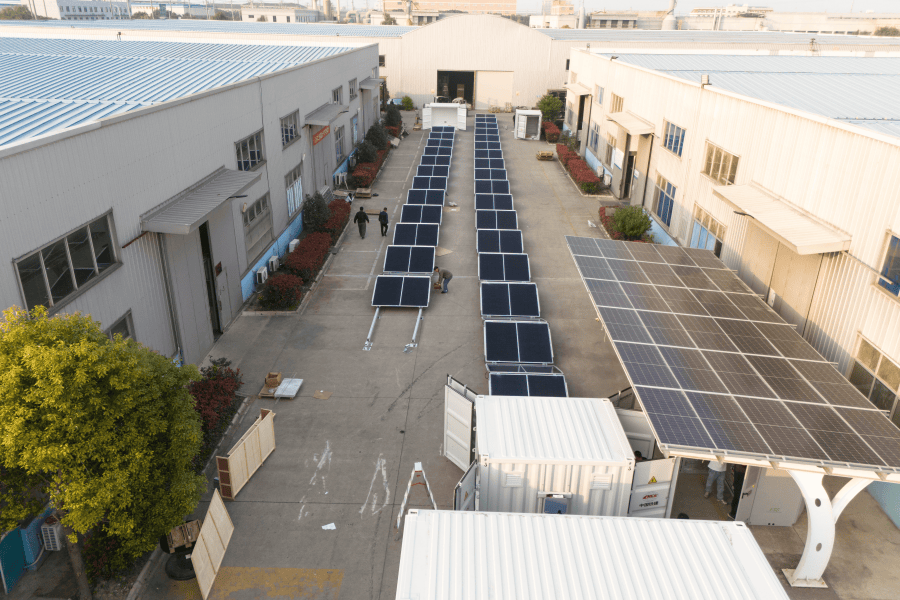
This is where the real-world case for modern air-cooled industrial ESS containers comes in, and it's a solution that's gaining serious traction. Think of it as the pragmatic, tough-as-nails cousin to the high-maintenance superstar. The philosophy is straightforward: leverage advanced, thermally stable lithium-iron-phosphate (LFP) battery chemistry that simply doesn't get as stressed during operation, and then manage its temperature with a robust, intelligent air-cooling system.
At Highjoule, we've built our industrial line around this principle. It's not about being low-tech; it's about being right-tech. Our containers use high-efficiency, variable-speed fans and smart airflow design to keep every battery module in its happy zone. The goal is maximum reliability and the lowest possible lifetime cost (that LCOE/LCOS we talked about), not just a flashy spec sheet. And because it's air, permitting is often simpler C you're dealing with familiar electrical and ventilation codes, not complex fluid systems.
Case Study: A Midwest Manufacturing Hub's Turnaround
Let me tell you about a project in Ohio. A multi-tenant industrial park with peak demand charges that were crippling small manufacturers. They had rooftop solar, but the duck curve was real C they were exporting cheap power at noon and buying expensive power at 4 PM. They needed storage.
The challenge? Limited on-site technical staff, a tight budget, and a requirement from the property owner that the system must be "set-and-forget." A liquid-cooled system was proposed initially, but the ongoing maintenance costs and complexity killed it.
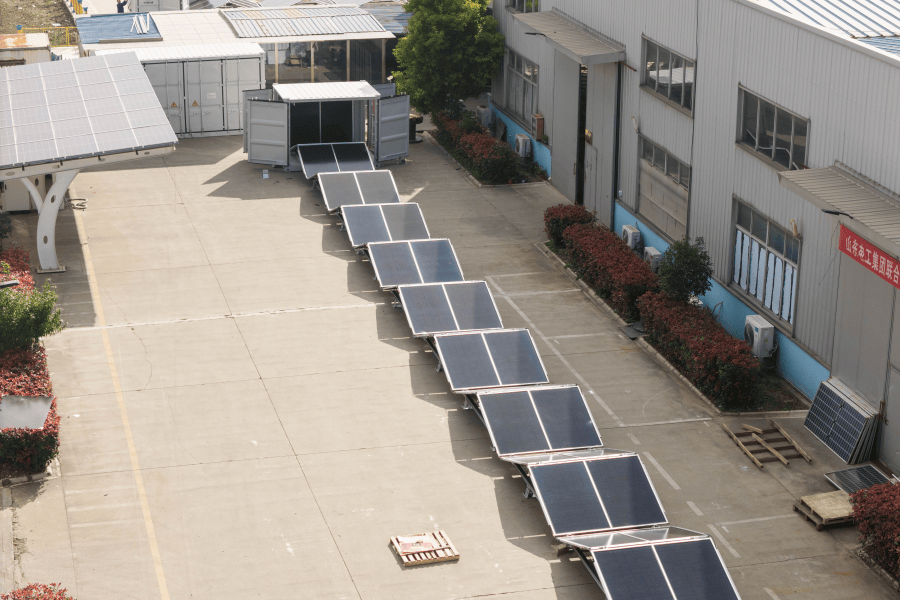
We deployed a 1.5 MWh Highjoule air-cooled BESS container. The installation was, honestly, refreshingly simple. No coolant lines to run, no secondary containment for fluids. It was positioned on a concrete pad, connected to the main distribution panel, and that was largely it. The system is programmed for peak shaving and solar self-consumption optimization.
The result? A 30% reduction in their monthly demand charges from day one. The property manager's team can do a visual inspection themselves, and the filtered air-cooling system has needed nothing more than scheduled filter changes. The ROI timeline shrank by nearly two years because the "O" in LCOS was so low. That's the real-world impact.
Why This Works: The Tech Behind the Simplicity
You might be thinking, "Is air-cooling really enough?" It's a fair question. Here's my insight from the field: with LFP chemistry, which is inherently safer and more thermally stable, it absolutely is. The key is in the system design.
We're not talking about a box fan in a shed. It's a engineered climate system inside that container. Advanced battery management systems (BMS) monitor the temperature of each cell rack. The cooling isn't just on/off; it modulates. On a cool spring day, it might barely run. During a high-power discharge on a hot afternoon, it ramps up. This intelligence minimizes its own energy use (parasitic load), which boosts the overall system efficiency.
And on the safety front, which is non-negotiable, this simplicity is a strength. Our containers are built to UL 9540 and IEC 62933 standards from the ground up. Without complex liquid loops, the potential failure points are reduced. The thermal propagation risk is managed by the cell chemistry and the physical compartmentalization within the container. For a site safety manager, this is a much easier story to get behind.
Your Next Step: What to Look For
So, if you're evaluating storage for an industrial park, what should you ask? Don't just focus on the nameplate energy and power. Dig into the thermal management. Ask about the parasitic load C how much energy the system uses to keep itself cool. Request the 10-year projected O&M cost breakdown. Insist on seeing the UL or IEC certification documents for the entire energy storage system, not just the components.
The market is moving towards solutions that are durable, simple, and financially transparent. The real-world case for air-cooled containers in industrial settings is built on that foundation. It's about getting the job done reliably, so you can focus on your core business, not on babysitting your energy storage.
What's the single biggest operational worry your team has about adding storage to your site? Is it maintenance, safety, or something else? That's usually where this conversation needs to start.
Tags: UL Standard BESS LCOE Europe US Market Industrial Energy Storage Renewable Energy Air-cooled ESS
Author
James Zhang
20+ years agricultural energy storage engineer / Highjoule CTO