
Safety Regulations for All-in-one Integrated PV Container: A Must for Industrial Parks
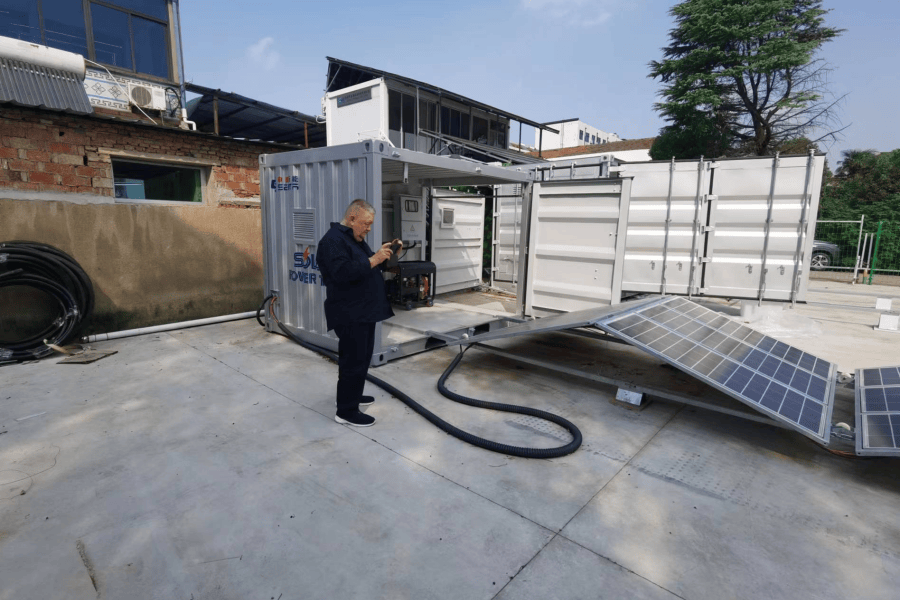
Beyond the Box: Why Safety Regulations for Your All-in-One PV Container Aren't Just Red Tape
Hey there. Grab your coffee. Let's talk about something that keeps project managers and plant operators up at night: putting a massive, energy-dense battery system right in the middle of a busy industrial park. It's not just about kilowatt-hours anymore; it's about trust, liability, and sleeping soundly knowing your asset is as safe as it is profitable. Over my 20+ years hopping from sites in California to factories in North Rhine-Westphalia, I've seen the landscape shift. The rush to deploy All-in-one Integrated Pre-integrated PV Containers is real, but honestly, the conversation around their Safety Regulations is often an afterthought. That's a costly mistake. Today, I want to walk you through why these regulations are your project's best friend, not its enemy.
Quick Navigation
- The Real Cost of "Just Getting It Done"
- Navigating the Regulation Maze: UL, IEC & Beyond
- A Tale of Two Containers: A Project Story
- Safety Beyond the Checklist: The Engineer's Perspective
- Making Safety Actionable for Your Project
The Real Cost of "Just Getting It Done"
The pressure is immense. Energy prices are volatile, sustainability targets are looming, and that grid connection upgrade quote just came in way over budget. The all-in-one containerized solution looks like a lifesaver: solar, storage, inverters, all pre-wired in a sleek box. It promises speed. And speed is what everyone wants.
But here's the on-site reality I've witnessed: when the focus is solely on deployment timeline, Safety Regulations for the All-in-one Integrated Pre-integrated PV Container get compressed. They become a box-ticking exercise for the permit, not a foundational design principle. I've walked into parks where thermal management was an afterthought, where fire suppression systems were specified based on cost, not on the specific electrochemical profile of the cells inside, and where accessibility for maintenance... well, let's just say it was optimistic.
The aggravation? It compounds. A system that runs too hot degrades faster, silently eating into your projected LCOE (Levelized Cost of Energy). A ventilation design that doesn't account for local dust or humidity can lead to corrosion or sensor failures. And in a worst-case scenario, an incident at an industrial park isn't just a financial loss; it's a reputational catastrophe that can halt operations and invite regulatory scrutiny for years. According to a National Renewable Energy Laboratory (NREL) analysis, integrating safety and reliability considerations from day one is the single biggest factor in long-term BESS project bankability.
Navigating the Regulation Maze: UL, IEC & Beyond
So, what are we actually talking about? It's not one rule, but a framework. In the US, UL 9540 is the benchmark for energy storage system safety, and UL 9540A is the crucial test method for evaluating thermal runaway fire propagation. For the container itself, building codes and the International Fire Code (IFC) chapters are your local authorities having their say. In Europe, the IEC 62933 series provides the overarching framework, with specifics often drilled down into national standards like VDE-AR-E 2510-50 in Germany.
The key insight from the field? Compliance isn't about picking one. It's about a system designed to meet the intersection of the toughest standards. A container built only for IEC might hit a wall with a local US fire marshal insisting on UL 9540A data. We at Highjoule Technologies learned this early. Our integrated containers are engineered from the ground up to be certified to both UL and IEC families of standards. This isn't just a paperwork exercise; it means selecting cell chemistries, designing busbar layouts, and specifying cooling loops with these dual certification paths in mind from the first CAD drawing.

A Tale of Two Containers: A Project Story
Let me give you a concrete example from a project we were involved in, supporting a major automotive parts supplier in the Midwest US. They had two sites with similar energy profiles. Site A went with a low-cost, hastily integrated container solution. The vendor's pitch was all about price per kWh. Site B (our partner) took a different approach, prioritizing a design that explicitly met Safety Regulations for an All-in-one Integrated Pre-integrated PV Container as a core deliverable.
The challenges at Site A emerged quickly: nuisance alarms from poorly placed gas sensors, difficulty accessing battery racks for mandatory inspections, and a thermal management system that couldn't keep up during a heatwave, triggering derating and lost revenue. The retrofit costs were staggering.
At Site B, the upfront engineering conversation was longer. We modeled thermal loads, planned for safe service corridors, and integrated a multi-stage fire suppression system with dedicated containment. The "container" was more than a box; it was a designed environment. The result? Smoother permitting (the fire marshal loved the clear documentation), zero unscheduled downtime in the first 18 months, and, honestly, a site team that feels confident about the asset next to their production line. The LCOE is already tracking lower than Site A's because it's operating at optimal C-rate consistently.
Safety Beyond the Checklist: The Engineer's Perspective
Okay, so regulations give us a checklist. But true safety comes from understanding the "why." Let's break down two critical areas:
Thermal Management Isn't Just Cooling: It's about uniformity and control. A high C-rate (the speed of charge/discharge) transaction creates heat. If that heat isn't evenly pulled away from every single cell, you create hot spots. Hot spots accelerate aging and are the precursors to thermal runaway. Our approach uses a liquid cooling system with dynamic control that responds not just to ambient temperature, but to the real-time operational load profile of the battery. This precision is what extends life and keeps you safely within the cell manufacturer's specifications.
The System is a Living Ecosystem: A pre-integrated container isn't a "set it and forget it" appliance. Safety is maintained through data. How do you monitor cell-level voltages and temperatures? Is there a clear protocol for isolating a faulty module? At Highjoule, our platform provides granular visibility, but more importantly, it translates that data into actionable insights for the on-site team - turning complex Safety Regulations into simple, daily operational procedures.

Making Safety Actionable for Your Project
So, what should you do? First, shift your mindset. Frame safety compliance not as a cost, but as the core feature that protects every other financial and operational benefit of your storage asset. When evaluating a solution, dig deeper than the marketing sheet.
- Ask for the Certificates, Not Just the Claims: "Designed to meet UL 9540" is not the same as "UL 9540 Certified." Request the certification numbers and the scope listed on them.
- Demand the Installation & O&M Manual Early: The quality and clarity of this document is a direct window into the vendor's safety philosophy. If the maintenance instructions are vague, the safety integration likely is too.
- Think Local from Day One: Engage your local Authority Having Jurisdiction (AHJ) or fire safety officer in the design phase. A vendor with global deployment experience, like our teams at Highjoule, should be able to facilitate this conversation based on precedent.
The goal isn't to become a standards expert yourself. It's to partner with a provider whose DNA is engineered around these principles. Because at the end of the day, that container in your industrial park needs to be the most reliable, safest, and most predictable piece of equipment on site. It's what allows you to capture those energy savings with total peace of mind.
What's the one safety question about containerized storage that's been on your mind for your next project?
Tags: UL Standard BESS Europe US Market Industrial Energy Storage IEC Standard Project Deployment Solar Container Safety
Author
James Zhang
20+ years agricultural energy storage engineer / Highjoule CTO