
Black Start BESS for Grid Resilience: A Real-World Case Study from the Philippines
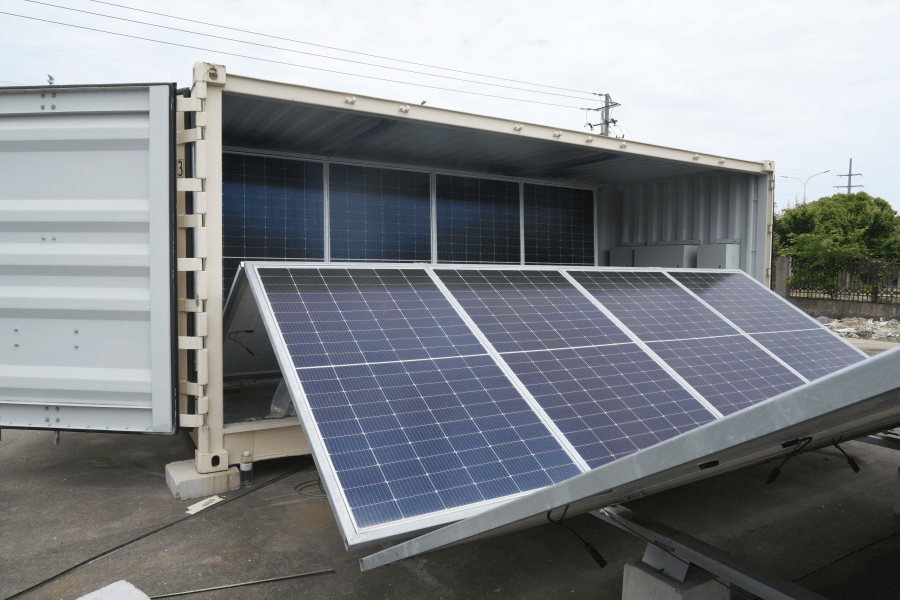
Table of Contents
- The Silent Problem in Our "Reliable" Grids
- The Real Cost of Downtime: It's More Than Lights Out
- A Blueprint from the Philippines: Black Start in a Box
- Why This Matters for US & EU Markets
- The Tech Behind the Magic (Without the Jargon)
- Your Next Steps Towards Unbreakable Power
The Silent Problem in Our "Reliable" Grids
Let's be honest. When we talk about energy storage in commercial and industrial settings here in the US or Europe, the conversation is almost always about peak shaving and energy arbitrage. We're optimizing for cost, which is smart business. But we're quietly ignoring a massive, lurking vulnerability: what happens when the grid goes down completely? Not a brownout, but a full blackout. Most of our advanced, grid-tied BESS installations are designed to shut down for safety when the grid fails. They wait, passively, for the grid to come back online. But what if it doesn't come back quickly? Or what if you need to be the one to restart it?
The Real Cost of Downtime: It's More Than Lights Out
I've seen this firsthand on site. A manufacturing plant with a sizable solar-plus-storage system. The grid fails due to a storm. Their storage system, compliant with all local codes, disconnects. The sun is shining, but the factory is dark. They're losing tens of thousands of dollars per hour in halted production, spoiling materials, and missed deadlines. The financial models we built for their ROI? They assumed occasional brief outages, not a 12-hour black start scenario.
This isn't just an emerging market problem. The National Renewable Energy Laboratory (NREL) has been intensively studying black start capabilities as grid resilience becomes a national priority. Think about data centers, water treatment plants, hospitals, or even large commercial complexes aiming for true energy independence. Their core challenge isn't just storing energy; it's being able to reboot an islanded microgrid from a dead start without relying on a diesel genset. That's the real agitation point - the hidden risk in our decarbonization plans.
A Blueprint from the Philippines: Black Start in a Box
This is where a real-world project from a remote island in the Philippines becomes incredibly relevant to us. The challenge was classic rural electrification: an unreliable, diesel-dependent mini-grid prone to collapse. The solution deployed wasn't just a battery; it was a self-contained, black start capable lithium battery storage container.
The system was designed to do something remarkable: after a total grid failure, it could initiate a voltage and frequency waveform from a state of zero - creating a stable "grid" from nothing. Once established, it could sequentially re-energize the local distribution lines and safely reconnect solar PV generation, creating a stable, renewable-powered island. It essentially acts as the beating heart that restarts the entire system. Honestly, seeing this in operation is more impressive than any spec sheet.

Why This Matters for US & EU Markets
You might think, "We have robust grids here." But do we? Wildfires in California, winter storms in Texas, and aging infrastructure across the EU have proven otherwise. The core technology principle from the Philippines case - a pre-integrated, containerized BESS with black start logic hardened for tough environments - is directly transferable.
Consider a project we at Highjoule Technologies supported in Northern Germany. An industrial food processing facility wanted to island themselves from grid disturbances while maximizing their wind power. The key requirement wasn't just backup; it was the ability to restart their sensitive processing lines autonomously after an outage. By applying the same black-start architecture principles - focusing on high C-rate discharge for initial surge power and meticulous power electronics control - we delivered a system that provided both daily optimization and ultimate resilience. It's about designing for the worst day, not just the average day.
The Tech Behind the Magic (Without the Jargon)
So, how does this work in practice? Let's break down two critical pieces:
- C-rate & The Surge Capacity: Think of C-rate as how fast you can safely drain the battery. A typical storage system might have a 0.5C rate (drain in 2 hours). Black start requires a much higher burst - often 1C or more - to energize transformers and cables and overcome the initial inrush currents of connected equipment. It's the difference between a gentle ramp-up and needing a strong, immediate push.
- Thermal Management Under Stress: This high-power burst generates heat. A poorly managed system would throttle power or shut down to protect itself - right when you need it most. The design lesson from field deployments in tropical climates is that the thermal management system (liquid cooling is often key) must be oversized for these peak, infrequent events, not just daily cycling. It's a non-negotiable for reliability.
The beauty of a containerized solution is that this complex dance of power electronics, battery management, and thermal control is pre-engineered, factory-tested, and certified to standards like UL 9540 and IEC 62933. It arrives on your site as a known quantity, drastically reducing on-site integration risk and timeline.

Beyond the Hardware: The Intelligence Layer
The real secret sauce isn't just the lithium cells. It's the control software that executes the black start sequence: energizing a segment, checking stability, closing the next switch, managing the inrush. This logic, validated against IEEE 1547 standards for interconnection, is what turns a battery into a grid-forming asset. At Highjoule, we've spent years refining this software layer based on lessons from diverse grids, from Southeast Asian islands to European industrial parks, ensuring it's both robust and adaptable to local utility requirements.
Your Next Steps Towards Unbreakable Power
The case study from the Philippines isn't just a story about powering a remote village. It's a proof point for a technology that closes the last gap in renewable-driven energy security. As you evaluate your next storage project, ask yourself and your vendors: "Can this system restart my facility, or does it just wait for the grid?"
The economics are evolving. When you factor in the avoided losses from a prolonged outage - the true Levelized Cost of Outage (LCOO) - the value proposition of a black-start-capable system shifts dramatically. It's no longer just an energy asset; it's a business continuity insurance policy with a measurable ROI.
Does your current resilience strategy have a single point of failure? What's the plan for minute one after a total blackout?
Tags: UL Standard BESS Energy Storage Black Start Grid Resilience Rural Electrification IEEE Standard
Author
James Zhang
20+ years agricultural energy storage engineer / Highjoule CTO