
ROI Analysis of a 20ft High Cube 1MWh Solar Storage for Industrial Parks
Contents
- The Real Problem Isn't Just Power, It's Predictability
- The Staggering Cost of Doing Nothing
- The 20ft Container: Your Turnkey ROI Machine
- Crunching the Numbers: A Pragmatic ROI Model
- Beyond the Spreadsheet: The Field-Proven Factors
The Real Problem Isn't Just Power, It's Predictability
Let's be honest. When I sit down with facility managers in Ohio or plant directors in Bavaria, the conversation starts with electricity bills, sure. But within ten minutes, we're always talking about something more fundamental: control. Or rather, the lack of it. You're dealing with volatile time-of-use rates that can spike 300% on a hot afternoon, demand charges that punish you for a single 15-minute peak, and the ever-present anxiety of a grid disturbance shutting down a sensitive production line. Renewable energy from onsite solar helps, but honestly, without storage, it's only a partial fix. You're still at the mercy of the sunset.
The Staggering Cost of Doing Nothing
I've seen this firsthand. A food processing plant in California was paying over $180,000 annually just in demand charges. A single, unexpected equipment startup could cost them thousands. According to the National Renewable Energy Laboratory (NREL), commercial and industrial electricity rates in the U.S. have risen by over 15% on average in the last five years. In Europe, with the energy market's recent turbulence, that volatility is even more pronounced.
The pain goes beyond the invoice. There's the operational risk. A voltage dip that lasts less than a second can ruin a batch of pharmaceuticals or cause robotic assembly lines to fault. The traditional "solution"? Diesel generators. But between fuel costs, maintenance, emissions regulations, and the sheer noise, they're becoming a liability, not an asset. You're essentially paying a premium for a dirty, unreliable insurance policy.
The 20ft Container: Your Turnkey ROI Machine
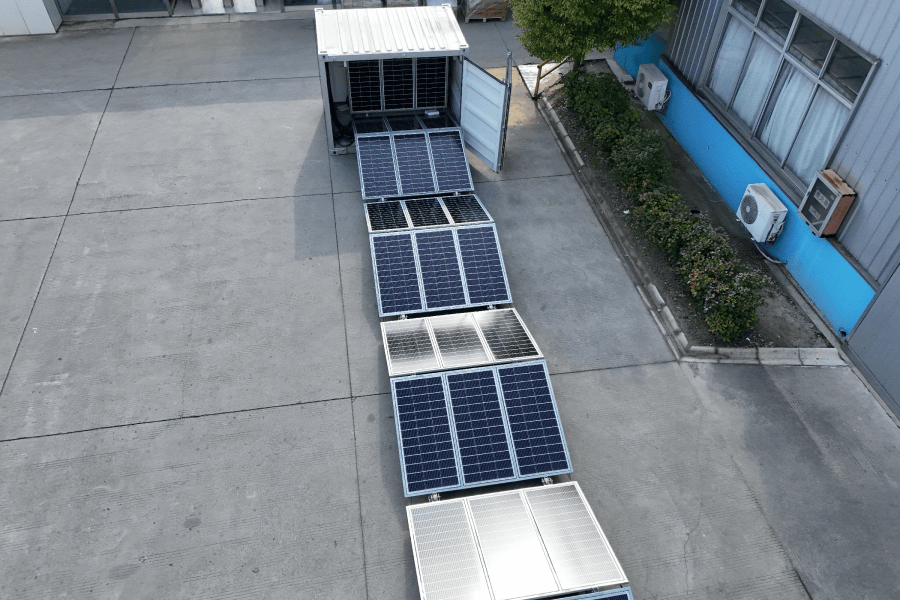
This is where the pre-integrated, containerized battery energy storage system (BESS) changes the game. Think of a standard 20ft High Cube shipping container. Now, imagine it arrives at your industrial park with 1 MWh of storage capacity, a UL 9540/UL 9540A listed system inside, all the thermal management and safety systems pre-tested, and it's essentially plug-and-play. This isn't a science project; it's an industrial asset.
At Highjoule, we've moved beyond just selling batteries. We deliver a predictable financial outcome packaged in a steel box. The core value proposition of this 1MWh unit is its multi-functionality, which is what drives the real ROI:
- Demand Charge Management: It automatically discharges during your facility's peak usage windows, shaving that expensive top 5-10% off your load.
- Solar Self-Consumption Optimization: It stores excess solar generation from your rooftop at noon and releases it in the evening, increasing your onsite clean energy use from maybe 40% to over 80%.
- Backup Power & Grid Services: It provides seamless transitional power for critical loads during outages. In some markets, it can even generate small revenue streams by providing grid services (like frequency regulation), though that's a bonus, not the primary driver for most industrial users.

Crunching the Numbers: A Pragmatic ROI Model
Let's talk brass tacks. A 1MWh system is a significant capital investment. The ROI analysis isn't magic, but it is powerful in its simplicity. Here's a simplified, real-world framework we use with clients:
Now, the system's lifespan is typically 15-20 years. So after the payback period, you're looking at 10+ years of nearly pure cost avoidance, which drastically lowers your Levelized Cost of Energy (LCOE) for that stored kWh. That's where the real value compounds. The International Renewable Energy Agency (IRENA) notes that the global LCOE for stationary battery storage fell by over 60% between 2015 and 2022, making this calculus more attractive every year.
A Quick Case Study from the Field: North Rhine-Westphalia
We deployed a 1MWh system for a mid-sized automotive parts manufacturer. Their challenge? High grid fees and a need for flawless power quality for CNC machines. The system was integrated with their existing 500 kWp rooftop solar. The result? A 22% reduction in their total monthly electricity costs from day one. The demand charge savings were immediate. But the manager told me the "unquantifiable" benefit was the peace of mind. During a brief grid fault last winter, the BESS kept their quality control lab online without a blink. That saved a day's worth of production and testing data - a value far beyond the kilowatt-hours.
Beyond the Spreadsheet: The Field-Proven Factors
This is where my two decades on site come in. Any vendor can give you a spreadsheet. You need to ask about what happens after the container is set down.
- Thermal Management is Everything: A battery's life is dictated by its temperature. Our container uses a dedicated, N+1 redundant cooling system. It's not just about preventing thermal runaway; it's about maintaining optimal 25C (3C) cell temperature in Arizona heat or Danish cold to guarantee cycle life and performance. Poor thermal design is a silent ROI killer.
- The "C-Rate" Sweet Spot: You'll hear specs like 1C or 0.5C. Simply put, it's the rate of charge/discharge. A 1MWh system at 1C can deliver 1MW of power. For industrial load-shifting, you don't always need super-high C-rates, which stress the battery. We often design for a 0.5C-0.75C range. It's the sweet spot for longevity and cost, matching perfectly to typical 4-6 hour peak shaving windows.
- Safety as a Non-Negotiable: This isn't consumer electronics. Every Highjoule system is built to UL/IEC/IEEE standards, with compartmentalized battery modules, continuous gas detection, and passive fire protection. The local fire marshal will want to see this. We make sure the documentation and design are pre-approved.

So, What's the Next Step for Your Park?
The ROI analysis for a 20ft High Cube 1MWh system is compelling, but it's not a one-size-fits-all document. It depends entirely on your specific load profile, tariff structure, solar generation, and local incentives. The first step is always a detailed energy assessment. We often help clients with this - looking at a year of utility bills and SCADA data to model the exact savings.
The question isn't really if battery storage makes sense for industrial energy consumers anymore. The data is too clear. The real question is how to deploy it in a way that is safe, reliable, and delivers the ROI promised on paper. That comes down to the engineering details and the partner you choose. What does your last year of utility bills tell you about your biggest cost driver?
Tags: UL Standard BESS LCOE Industrial Energy Storage Solar Plus Storage Microgrid ROI Analysis
Author
James Zhang
20+ years agricultural energy storage engineer / Highjoule CTO