
C5-M Anti-Corrosion Solar Container for Agricultural Irrigation: A Real-World Case Study on Solving Farm BESS Challenges
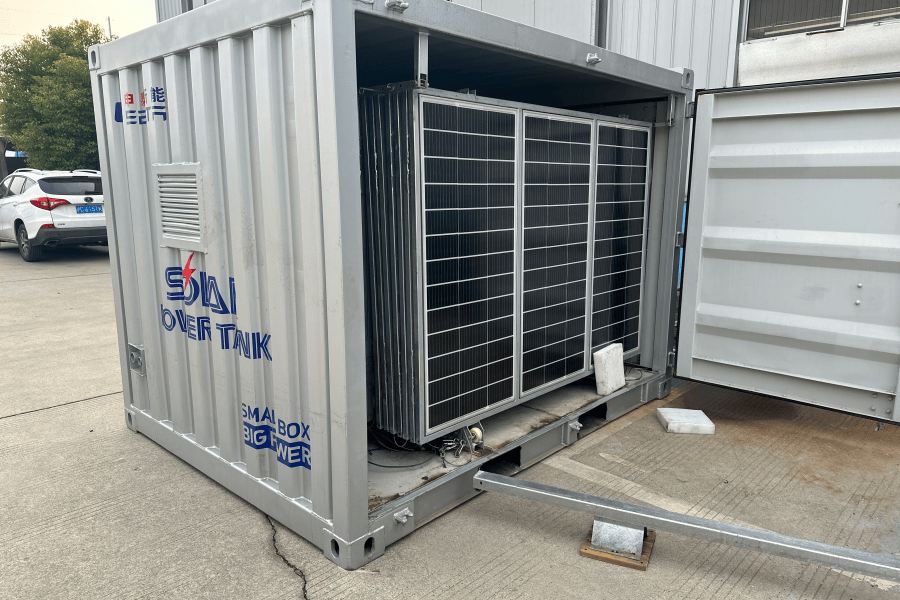
Table of Contents
- The Hidden Cost of "Standard" Storage on the Farm
- Why Corrosion is a Multi-Million Dollar Problem for Energy Storage
- Meet the Solution: The C5-M Rated Container
- A Real-World Case Study: California's Central Valley
- Expert Insight: What Makes This Work (Beyond the Steel)
- Thinking Beyond the Box: Total Cost of Ownership for Your Farm
The Hidden Cost of "Standard" Storage on the Farm
Honestly, if I had a dollar for every time I've walked onto a farm or an industrial site and seen a battery storage unit that's clearly struggling with its environment, I'd be writing this from my own private island. We in the industry get so focused on the core specs C capacity, power rating, cycle life C that we sometimes forget where this equipment actually has to live. For agricultural applications, especially for critical operations like irrigation, that "where" is everything. It's a world of dust, chemical sprays, fertilizer particulates in the air, and dramatic humidity swings. Deploying a standard commercial battery energy storage system (BESS) there is like wearing a fine wool suit to work in a field. It might look good on paper, but it's going to fail, and fail expensively.
Why Corrosion is a Multi-Million Dollar Problem for Energy Storage
Let's agitate that pain point a bit. Corrosion isn't just a cosmetic issue. On site, I've seen firsthand how corrosive particles settle on electrical busbars, battery module connectors, and cooling system components. This leads to increased electrical resistance, which creates hot spots. Those hot spots accelerate battery degradation and, in worst-case scenarios, become safety hazards. The National Renewable Energy Lab (NREL) has highlighted that improper environmental management can slash battery lifespan by 30% or more. For a farmer relying on solar and storage to power irrigation pumps, a 30% shorter system life doesn't just hurt the ROI; it threatens the viability of the entire season's crop. The operational downtime for unscheduled maintenance? That's a direct hit to productivity.

Meet the Solution: The C5-M Rated Container
This is where the real-world application of a purpose-built, C5-M anti-corrosion solar container for agricultural irrigation changes the game. The "C5-M" classification isn't just marketing jargon. It's a specific ISO standard (12944-2) for environments with very high corrosivity, which includes agricultural and coastal areas. It dictates the type of steel preparation, coating systems, and dry film thickness required to withstand decades of harsh exposure. At Highjoule, when we design a containerized BESS for these settings, we start with this standard as the non-negotiable baseline. It's not an add-on; it's the foundation. The container becomes a protective fortress, not just a metal box.
A Real-World Case Study: California's Central Valley
Let me tell you about a project we completed last year in California's Central Valley, a massive agricultural region that's also deeply invested in solar. The client, a large almond grower, had a 1.2 MW solar array but needed reliable, off-grid power for a remote irrigation pump station. Their challenge was triple: extreme summer heat (thermal management), pervasive dust and agro-chemical spray (corrosion), and the need for flawless, autonomous operation (system reliability).
We deployed a 500 kWh / 250 kW C5-M rated solar container. Here's what that meant on the ground:
- The Shell: The container underwent a specialized multi-stage coating process, including a zinc-rich primer and a chemical-resistant topcoat, far exceeding standard paint jobs.
- The Internal Climate: We used a N+1 redundant HVAC system designed for high ambient temperatures and equipped with ISO Class 8 particulate filtration to keep the internal environment clean, cool, and stable. This is critical for managing the battery's C-rate (the speed of charge/discharge) safely under load without overheating.
- The Outcome: After one full season, including the punishing harvest period, the internal inspection showed zero signs of corrosion ingress. The battery's thermal data showed consistent optimal operating temperatures, which is the single biggest factor in preserving long-term cycle life and safety. The farmer got predictable, clean power for irrigation without diesel genset noise, cost, or emissions.
Expert Insight: What Makes This Work (Beyond the Steel)
As an engineer who's commissioned dozens of these systems, the container is just the start. The real magic is in the system-level design that the protective shell enables. Think of thermal management not as running an A/C unit, but as a precise science of heat rejection. In a C5-M sealed environment, we can precisely control airflow and cooling, which allows us to optimize the battery's performance and longevity. This directly impacts the Levelized Cost of Energy Storage (LCOE) C the true metric that matters for your business case. A lower LCOE means your cost per stored kWh over the system's lifetime is lower. How? By extending the system's life (more years of service) and maintaining its efficiency (less energy wasted on cooling and more delivered to your pumps).
Furthermore, every component we integrate, from the battery racks to the power conversion system (PCS), is selected and tested for compatibility with this controlled environment and complies with the relevant UL 9540 and IEC 62485 safety standards. It's a holistic, engineered ecosystem.

Thinking Beyond the Box: Total Cost of Ownership for Your Farm
So, when you're evaluating storage for agricultural irrigation, the question shouldn't just be "what's the price per kWh?" The real question is, "what is the total cost of ownership in my environment over 15 years?" A cheaper, standard unit might have a lower upfront cost, but the risk of premature failure, costly mid-life repairs, and safety incidents makes it a risky bet.
Our approach at Highjoule is to engineer that risk out from day one. The C5-M container is the most visible part of that strategy, but it's backed by a design philosophy that prioritizes long-term resilience and includes local service partnerships for maintenance. The goal is to make the system the most reliable, forgettable piece of equipment on your farm - you just set it and trust it to work, season after season.
What's the one environmental challenge at your site that keeps you up at night when thinking about energy storage? Is it dust, humidity, salt spray, or temperature extremes? Designing the right solution starts with understanding that specific reality.
Tags: UL Standard BESS LCOE Solar Container Renewable Energy US Market Agricultural Energy Storage Anti-corrosion C5-M Standard
Author
James Zhang
20+ years agricultural energy storage engineer / Highjoule CTO