
Grid-forming BESS for Military Microgrids: A Case Study in Resilience
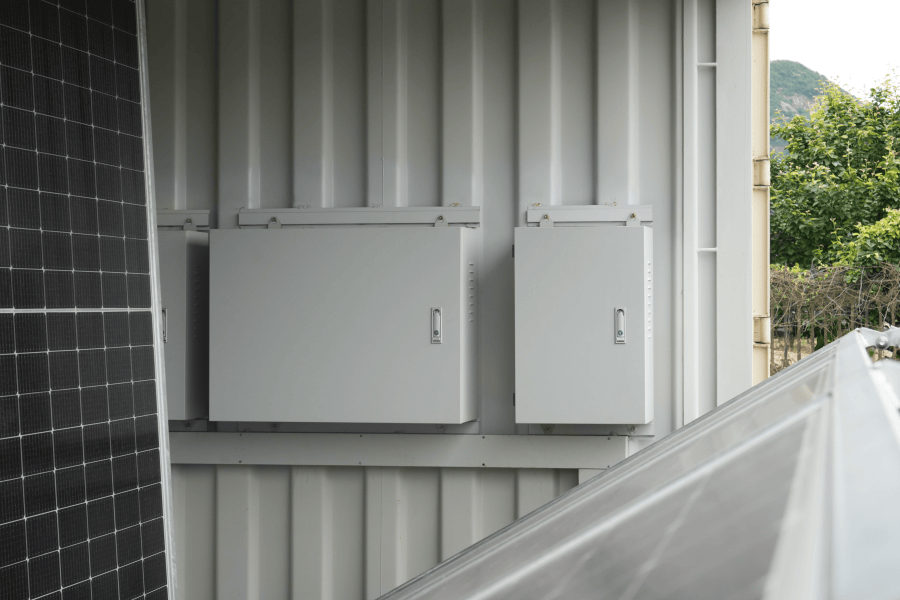
Table of Contents
- The Silent Vulnerability: When the Grid is a Single Point of Failure
- Beyond Backup Power: The Real Cost of Downtime and Complexity
- The All-in-One Answer: Pre-Integrated, Grid-Forming Containers
- Case Study: Building a Self-Healing Energy Island
- The Tech Behind the Scenes: Why the Details Matter
- A New Standard for Resilience
The Silent Vulnerability: When the Grid is a Single Point of Failure
Let's be honest. For critical facilities like military bases, relying solely on the commercial grid and diesel generators is a strategy that feels increasingly?- fragile. I've been on-site during exercises where the "what-if" scenario of a prolonged grid outage wasn't just a tabletop discussion - it was a palpable risk. The phenomenon across both the U.S. and Europe is a push for energy sovereignty. It's not just about having power; it's about controlling your power, ensuring its quality, and knowing it's there regardless of what happens outside the fence line.
The data backs this urgency. The National Renewable Energy Laboratory (NREL) has extensively documented the vulnerability of critical infrastructure to grid disruptions, highlighting microgrids as a key resilience solution. Meanwhile, the International Energy Agency (IEA) notes the rapid growth of solar PV as the lowest-cost new electricity source in most markets, making it a logical cornerstone for any modern energy security plan. The pieces of the puzzle - solar, storage, control - are all there. The real challenge has been putting them together in a way that's robust, simple, and fast to deploy.
Beyond Backup Power: The Real Cost of Downtime and Complexity
Here's the agitation point I see all too often. Traditional approaches involve stitching together components from multiple vendors: a solar array here, a battery system from another supplier, a separate inverter/controller, and a complex switchgear setup to manage grid connection. It becomes an integration nightmare. Every interface is a potential point of failure. The commissioning timeline stretches from weeks to months. And honestly, the Levelized Cost of Energy (LCOE) - the true total cost of ownership - skyrockets when you factor in that extended design-integrating-testing cycle and ongoing maintenance complexity.
The safety and standards compliance piece is another layer. A military base in Texas needs to meet UL 9540 and IEEE 1547. A NATO facility in Germany must comply with IEC 62933 and local grid codes. Managing this across a disparate system is a full-time job for engineers. I've seen firsthand on site how a minor firmware mismatch between a battery rack and its inverter can derail a whole week's testing schedule. This complexity isn't just an engineering headache; it's a direct threat to operational readiness and budget.
The All-in-One Answer: Pre-Integrated, Grid-Forming Containers
This is where the solution crystallizes: the pre-integrated, grid-forming PV and battery energy storage system (BESS) container. Think of it as a "power plant in a box." We're not just talking about a battery in a shipping container. This is a fully engineered system where high-efficiency solar inverters, a lithium-ion BESS with advanced thermal management, a grid-forming capable inverter, and the power conversion and control systems are all pre-wired, pre-tested, and pre-certified in a single, secure enclosure.
The magic word here is grid-forming. Unlike traditional grid-following inverters that need a stable grid signal to sync to, grid-forming inverters can create that stable voltage and frequency signal from scratch. They act as the bedrock for a microgrid, allowing the solar array and battery to seamlessly form a "grid" that critical loads can run on, whether the main grid is present or not. This is a game-changer for black-start capabilities and maintaining power quality for sensitive equipment.
At Highjoule, our approach has been to engineer these containers not just for performance, but for peace of mind. That means building safety into the DNA - from cell-level fusing and passive fire suppression to the overall system design that's validated against UL 9540 from the get-go. It means optimizing the LCOE not just with high-cycle life batteries, but by drastically cutting the soft costs: the engineering, the permitting, the commissioning time. We deliver a known, tested quantity.

Case Study: Building a Self-Healing Energy Island
Let me walk you through a recent, real-world deployment for a forward-operating base in Europe. The challenge was stark: enhance energy resilience, integrate existing and new solar PV, reduce diesel consumption, and do it all with a minimal on-site footprint and crew. The existing setup was a classic patchwork.
Our solution was a 1.5 MW/3 MWh GridForm? Pro containerized system. The "pre-integrated" aspect was key. The container arrived on a flatbed, complete with its own climate-controlled battery compartment, power conversion bay, and control room. It was connected to the point of common coupling, the existing solar farm, and the critical load distribution panel. Because it was pre-commissioned at our facility, on-site commissioning was measured in days, not months.
The outcome? The system now operates in multiple modes. During normal operation, it performs peak shaving and solar time-shift, improving economics. During a simulated grid outage, its grid-forming capability instantly establishes a stable microgrid. The critical load never sees a blip. The solar PV, which would normally be forced offline in a blackout (for safety reasons with grid-following inverters), continues to power the base and recharge the batteries. This self-healing energy island cuts projected diesel use by over 70% for typical outages. For the base commander, it translated to one less critical vulnerability to manage.
The Tech Behind the Scenes: Why the Details Matter
For the non-technical decision-maker, understanding a few key terms is crucial to evaluating these systems:
- Grid-forming vs. Grid-following: This is the core capability. Think of grid-following as a dancer needing a partner (the main grid). Grid-forming is the dancer who can also be the partner, leading the performance independently.
- C-rate: Simply put, it's how fast you can charge or discharge the battery safely. A higher C-rate means the BESS can deliver more power quickly - essential for handling large motor starts or sudden load spikes on a microgrid. But it must be managed carefully to avoid overheating.
- Thermal Management: This is the unsung hero of safety and longevity. Lithium-ion batteries degrade fast if they get too hot or too cold. A liquid-cooled thermal system, like we use, actively maintains each battery module at its ideal temperature. This extends the system's life by years and virtually eliminates thermal runaway risk, which is a non-negotiable for UL and IEC certification.
- LCOE (Levelized Cost of Energy): The true metric. A pre-integrated system attacks LCOE from all angles: lower capital cost via integration, lower installation cost, higher efficiency (more kWh out per kWh in), and longer lifespan via superior thermal management.

A New Standard for Resilience
The conversation is shifting. It's no longer "if" but "how" to deploy resilient energy. The case for pre-integrated, grid-forming solutions - especially for mission-critical applications - is compelling because it solves for the real-world constraints of time, budget, and complexity, not just the theoretical need for power.
So, what's the biggest energy security vulnerability you're trying to solve for? Is it the timeline for deployment, the uncertainty of system integration, or the long-term operational cost? The technology to address it, with the robustness and certifications required for the most demanding sites, is here and proven. Maybe it's time we looked at your site's blueprint over a coffee.
Tags: UL Standard BESS LCOE Renewable Energy Grid-forming Military Microgrid
Author
James Zhang
20+ years agricultural energy storage engineer / Highjoule CTO