
High-voltage DC BESS for Rural Electrification: A Scalable Model for US & EU Markets
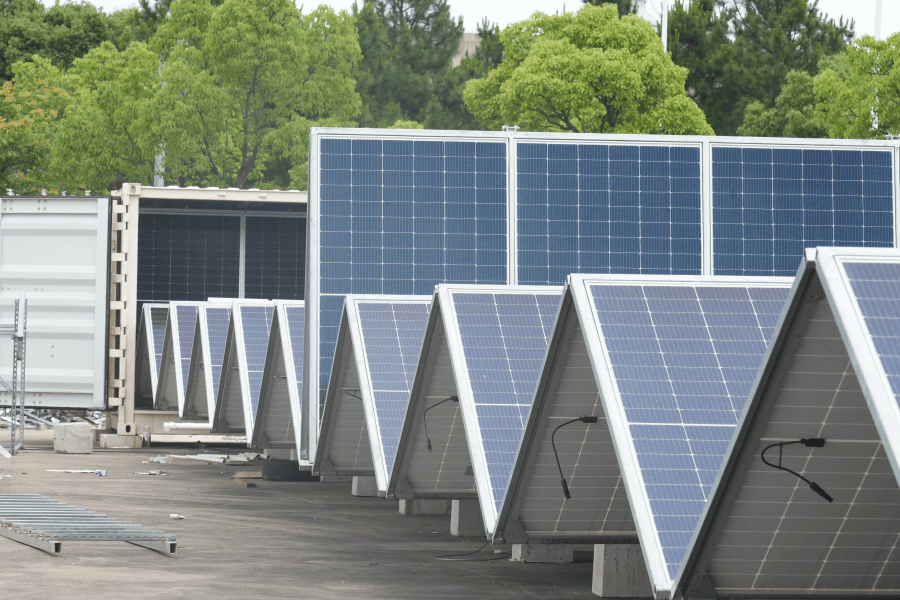
From Island Grids to Mainland Challenges: What a Philippines BESS Project Teaches Us About Scalable Storage
Honestly, after two decades on sites from Texas to Thailand, you start seeing patterns. A challenge in a remote Philippine village often mirrors a core pain point for a commercial operator in California or a microgrid developer in Germany. It's all about delivering reliable, safe, and economically sane power where and when it's needed. Recently, I've been reflecting on a high-voltage DC lithium battery storage container project we supported for rural electrification in the Philippines. The lessons? They're incredibly relevant for decision-makers here in the US and Europe staring down their own grid resilience and cost challenges.
Jump to Section
- The Core Problem: More Than Just Keeping the Lights On
- Why It Hurts: The Real Cost of Inefficient Storage
- A Blueprint from the Islands: The Philippines Case Study
- Bringing the Lessons Home: Applications for US & EU Markets
- The Expert View: C-rate, Thermal Runaway, and Real-World LCOE
The Core Problem: More Than Just Keeping the Lights On
In both emerging and mature markets, the problem isn't a lack of renewable generation anymore. It's about what happens after the solar panels stop producing or the wind dies down. For off-grid and weak-grid communities, it's existential - no storage means no power at night. For utilities in places like California or grid operators in Germany, it's about stability: managing the infamous "duck curve," providing frequency regulation, and deferring astronomically expensive grid upgrades.
The common thread? You need a storage system that's not just a battery in a box. It needs to be robust, seamlessly integrated, and above all, cost-effective over its entire lifespan (that's the Levelized Cost of Storage, or LCOS, talking). I've seen too many projects where the upfront cost looks good, but the operational headaches and limited cycle life bleed the budget dry.
Why It Hurts: The Real Cost of Inefficient Storage
Let's agitate that pain point a bit. Deploying a standard, low-voltage AC-coupled system in a remote or demanding environment often leads to three big headaches:
- Efficiency Losses: Multiple power conversions (DC to AC, then back to DC for battery charging) can waste 8-15% of your energy right off the top. In a commercial application, that's pure profit vanishing.
- Scalability Limits: When you need to scale up, low-voltage systems require massive, expensive copper busbars and complex paralleling. It gets messy, fast.
- Grid Stress: For on-grid applications, a system that can't respond quickly or provide robust grid-forming capabilities is a band-aid, not a solution. The National Renewable Energy Laboratory (NREL) has highlighted how advanced storage is critical for integrating high penetrations of renewables.
The International Energy Agency (IEA) notes that global battery storage capacity needs to expand massively to meet net-zero goals. But expanding with the wrong technology is just wasted capital.
A Blueprint from the Islands: The Philippines Case Study
This brings me to our project in a coastal region of the Philippines. The goal was simple on paper: provide 24/7 reliable power for a community reliant on a diesel generator, using a new solar PV farm. The challenge was brutal: high ambient temperatures, salty air, and zero tolerance for downtime.
The solution was a containerized high-voltage DC lithium battery system. Here's what that meant on the ground:
- High-Voltage DC Architecture: The battery rack itself operates at a system voltage over 800V DC. This allows it to connect directly to the solar array's DC output with minimal conversion losses. Honestly, the efficiency gains were immediately visible - more usable kWh from the same sun.
- Containerized & Fortified: We shipped a pre-integrated, 40-foot container. This wasn't just a shell; it housed a full Battery Management System (BMS), climate control, and fire suppression built to UL 9540 and IEC 62933 standards. It landed site-ready, slashing installation time from weeks to days.
- The Outcome: Diesel fuel consumption dropped by over 90%. The community gained predictable, clean power. And from a maintenance perspective, the centralized, high-voltage design meant fewer components to monitor and manage.

Bringing the Lessons Home: Applications for US & EU Markets
You might think, "That's for off-grid islands." But let's translate. I see direct parallels to:
- Commercial & Industrial (C&I) Sites: A manufacturing plant in Ohio with on-site solar wants to maximize self-consumption and demand charge management. A high-voltage DC container minimizes efficiency loss, maximizing every dollar of avoided grid power.
- Microgrids & Critical Infrastructure: Think of a hospital in Northern Europe or a data center in Texas. The need for seamless, resilient power is identical to that Philippine village. The containerized, pre-tested solution ensures rapid, compliant deployment. Highjoule's approach here is to treat every container as its own self-contained power plant, with all the safety and grid-interactive smarts built-in to meet local UL or IEC codes.
- Utility-Scale Edge-of-Grid: Utilities are using storage to shore up weak points on the distribution grid. A standardized, high-voltage container is a modular "grid asset in a box" that can be deployed without reinventing the wheel each time.
The Expert View: C-rate, Thermal Runaway, and Real-World LCOE
Let's get technical for a minute, over our virtual coffee. The "C-rate" you hear about is basically how fast you can charge or discharge the battery. A 1C rate means discharging the full capacity in one hour. For grid support, you often need a higher C-rate (like 0.5C to 1C) for quick bursts of power. The Philippines system was designed with a C-rate that balanced fast response for load shifting with long cycle life.
Then there's thermal management. Heat is the enemy. I've seen firsthand on site how a poorly managed thermal system can lead to premature aging and, in worst-case scenarios, thermal runaway. Our design philosophy at Highjoule is obsessive here: liquid cooling for precise cell temperature control, combined with passive fire-resistant materials and early detection gas sensors. It's not just about meeting UL 9540A; it's about sleeping soundly knowing the asset is safe.
Finally, it all circles back to LCOE/LCOS. By focusing on high-voltage DC efficiency (saving energy), robust thermal management (extending calendar life), and a simplified, containerized design (reducing installation and O&M costs), we drive down the total cost of ownership. That's the real metric that matters to a CFO in Frankfurt or a project developer in Arizona.
So, the next time you evaluate a storage solution, ask yourself: Is this just a battery in a box, or is it a power plant designed for the real world's heat, cold, and economic pressures? The answer might just be found in the lessons from a remote shore halfway across the globe.
What's the biggest operational hurdle you're facing with storage at your sites - is it interconnection, longevity, or total project economics?
Tags: Energy Storage Container UL Standard BESS LCOE Rural Electrification High-voltage DC
Author
James Zhang
20+ years agricultural energy storage engineer / Highjoule CTO