
LFP Hybrid Solar-Diesel Systems for Military & Commercial Resilience: A Case Study
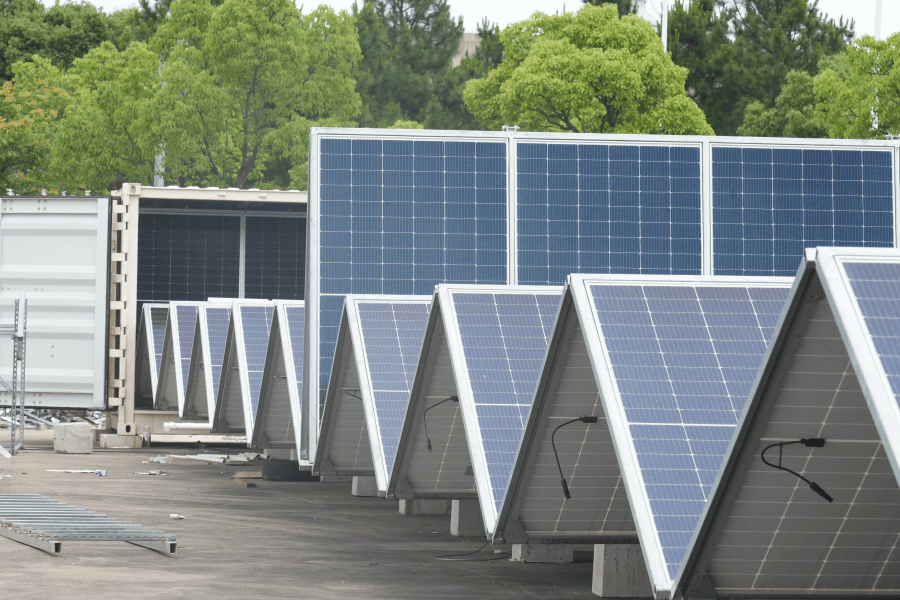
Table of Contents
- The Silent (and Expensive) Problem: Over-Reliance on Diesel
- Why This Hurts More Than Just the Budget
- The Proven Solution: LFP Hybrid Systems Aren't Just Theory
- Case Study Deconstructed: From Blueprint to Battle-Ready Power
- Key Tech Takeaways for Your Decision-Making
- Beyond the Fence: What This Means for Your Commercial Operation
The Silent (and Expensive) Problem: Over-Reliance on Diesel
Let's be honest. For decades, if you needed absolutely reliable, off-grid power for a critical site C a remote military base, a mining operation, a data hub C the answer was simple: diesel generators. And lots of them. You'd have your primary gensets running 24/7, and backups for the backups. The logic was straightforward, but honestly, it's become a massive, smelly, and costly anchor.
The real-world pain point I've seen firsthand from Texas to Tanzania isn't just the fuel bill, which is staggering. It's the entire logistics tail: the vulnerable supply convoys, the constant maintenance cycles, the noise signature, and the sheer operational rigidity. You're essentially chained to a fuel tanker. In commercial terms, this translates to unpredictable operational expenditure (OpEx) and a single point of failure that keeps facility managers up at night.
Why This Hurts More Than Just the Budget
Agitation time. This over-reliance creates a triple-threat:
- Cost Volatility: Your core operating cost is tied to global diesel prices. The U.S. Energy Information Administration (EIA) constantly charts these fluctuations, which make long-term budgeting a nightmare.
- Operational Risk: Every refueling mission is a risk. In military contexts, it's a tactical vulnerability. In industrial settings, think of remote mines or telecom towers where getting fuel is difficult and dangerous.
- Inefficiency & Wear: Diesel gensets running at low load are terribly inefficient and cause premature engine wear. You're burning money and shortening asset life simultaneously.
The push for sustainability adds a fourth pressure: carbon reduction targets. You can't meet those with diesels alone.
The Proven Solution: LFP Hybrid Systems Aren't Just Theory
This is where the real-world case for Lithium Iron Phosphate (LFP) battery-based hybrid systems enters, not as a green luxury, but as a hard-nosed operational upgrade. The solution is a smart, integrated microgrid: solar PV arrays + LFP battery energy storage (BESS) + existing diesel gensets, all managed by a sophisticated controller.
The genius is in the logic shift. Instead of diesel being the constant "baseload," it becomes the "backup." Solar generation, paired with a high-cycle-life LFP battery bank, covers the majority of daily load. The generator only kicks in during prolonged bad weather or for peak demands that exceed battery capacity. This slashes runtime from 24/7 to maybe a few hours a week.

Case Study Deconstructed: From Blueprint to Battle-Ready Power
Let's talk about a not-uncommon project profile in the U.S. Southwest: a forward-operating military base. The goal was energy resilience, fuel reduction, and silent watch capability.
The Challenge: A base relying on 2MW of diesel generation, requiring daily fuel resupply at high cost and risk. They needed to cut fuel use by >50% and maintain 72 hours of critical operation without resupply.
The Deployment: A 1.5MW solar canopy was installed over parking and storage areas. The core was a 3MWh LFP battery storage system, housed in two UL 9540-certified containerized units. The existing generators were retained but integrated as backup. The entire system was designed to meet stringent MIL-STD and IEEE 1547 standards for grid interconnection and islanding.
The Outcome (The Good Stuff): Within the first year, diesel fuel consumption dropped by 68%. The generators' maintenance intervals extended dramatically. During routine operations, the base could run on "silent watch" C solar and batteries only C for most of the daylight hours and well into the night, enhancing security. The LFP chemistry was chosen explicitly for its safety profile (superior thermal and chemical stability) and its longevity in high-temperature environments.
This isn't a one-off. The principles mirror what we at Highjoule Technologies deployed for an industrial microgrid in Nevada, where LCOE (Levelized Cost of Energy) was reduced by 40% against the pure-diesel baseline. The core requirements are the same: safety (non-negotiable), longevity, and intelligent energy management.
Key Tech Takeaways for Your Decision-Making
As an engineer who's commissioned these systems, here's what matters in plain English:
- LFP Safety is Real: Compared to other lithium-ion chemistries, LFP batteries are far more resistant to thermal runaway. This isn't marketing; it's chemistry. For any site, especially secure or remote facilities, this is the first box to check. It's why all our Highjoule BESS units are built with LFP cells and have UL 1973, UL 9540, and IEC 62619 certifications as standard C it de-risks the entire project for insurers and operators.
- C-rate Isn't Just a Number: It's about power personality. A 1C battery delivers its full energy over an hour. A higher C-rate (like 2C) can deliver that power faster, which is great for smoothing generator starts or handling big motor loads. For a hybrid system, you often don't need an ultra-high C-rate; you need sustained, reliable energy (a high kWh rating). This keeps costs down. Matching the C-rate to the actual load profile is where engineering experience saves capital.
- Thermal Management is the Lifespan Governor: Batteries age faster when hot. Period. A top-tier BESS isn't just about the cells; it's about the climate control system surrounding them. I've seen systems where the thermal management design was an afterthought, and it cost the owner in degraded capacity within a few years. Our approach uses active liquid cooling for precise temperature control, ensuring that 10-year performance warranty is a promise, not a prayer.
- The Brain is the Controller: The hardware is vital, but the system intelligence is what maximizes savings. A good controller uses predictive algorithms (looking at weather, load patterns) to decide when to charge from solar, when to discharge, and when to signal the generator to start C all while keeping the batteries in their healthiest state of charge.

Beyond the Fence: What This Means for Your Commercial Operation
The military case study is extreme, but the lessons are universal for any commercial or industrial operation with reliability concerns, high energy costs, or sustainability goals.
Think about a manufacturing plant facing demand charges from the utility. A correctly sized LFP BESS can discharge during those peak price windows, slashing the bill. A hospital needing backup power can use a hybrid system to ensure seamless transition during an outage, with the batteries bridging the few seconds before generators come online, all while filtering power quality.
The move to LFP hybrid systems is a move from passive power consumption to active energy management. It's about turning a cost center (energy) into a strategic, controllable asset. The technology is proven, the standards (UL, IEC, IEEE) are in place to ensure safety, and the financial case, when you factor in total cost of ownership and risk mitigation, is stronger than ever.
So, the question isn't really "can this technology work?" The real-world case studies answer that. The question for you is, what's the first load you'd like to make more resilient and less costly to run?
Tags: UL Standard BESS Europe US Market LFP Battery Microgrid Hybrid Power System Solar-Diesel Military Energy Resilience
Author
James Zhang
20+ years agricultural energy storage engineer / Highjoule CTO