
Scalable Modular Solar Container: Powering Construction Sites Off-Grid

Contents
- The Diesel Dilemma on Modern Construction Sites
- Why "Scaling" Your Site Power Is Harder Than It Looks
- A Real-World Solution: The Solar Container That Grew With the Project
- The Tech That Makes It Work (Without Needing a PhD)
- Thinking Beyond the Construction Site
The Diesel Dilemma on Modern Construction Sites
Let's be honest. If you're managing a construction project in the US or Europe right now, especially a remote one, your relationship with diesel generators is?- complicated. You rely on them, but boy, do they make you pay. I've been on sites where the roar of the genset is the constant background soundtrack, and the monthly fuel delivery is the single biggest line item that's completely out of your control. It's not just about cost volatility, though. Think about the carbon footprint you're locking in for the project's duration, the noise complaints from nearby communities, and the sheer logistical headache of keeping those tanks filled.
This isn't a niche problem. The International Energy Agency (IEA) highlights that diesel still powers a vast majority of off-grid industrial operations, with construction being a major contributor. The financial and environmental pain is real, and it's pushing project managers to look for alternatives. But here's the catch: solar and batteries sound great in a boardroom presentation, but the thought of deploying them on a dynamic, muddy, and constantly evolving construction site can feel daunting. Is it even practical?
Why "Scaling" Your Site Power Is Harder Than It Looks
This is where I want to agitate the pain a little, based on what I've seen firsthand. The dream is a clean, quiet, scalable power source. The reality often hits these snags:
- The "Fixed Plant" Fallacy: Traditional solar-plus-storage setups are designed to be, well, traditional. They're planned for a fixed load and location. A construction site is the opposite. Phase 1 needs 50kW for trailers and small tools. Phase 3 needs 250kW for heavy machinery and curing. A fixed system is either undersized on day one or oversized (and overpaid for) for months.
- The Standards Quagmire: In the US, anything that plugs into a worksite needs to be bulletproof from a safety perspective. We're talking UL 9540 for the energy storage system, UL 1741 for inverters, and meeting NEC (National Electrical Code) requirements for temporary power. Sourcing components that meet these standards is one thing; getting a pre-integrated, site-ready solution that's certified is another.
- The Operational Risk: No site manager wants to be the guinea pig. If your experimental solar setup fails on a Tuesday, you're not just losing power; you're losing hundreds of worker-hours and blowing the schedule. Reliability isn't a nice-to-have; it's the only thing that matters.
A Real-World Solution: The Solar Container That Grew With the Project
Okay, enough about the problems. Let me tell you about a project in Colorado that really stuck with me. A crew was building a new alpine resort facility, miles from the nearest reliable grid connection. The initial plan was diesel, full stop. But the fuel logistics were a nightmare, and the environmental permits were getting sticky.
They turned to a scalable modular solar container solution. Here's how it worked on the ground:
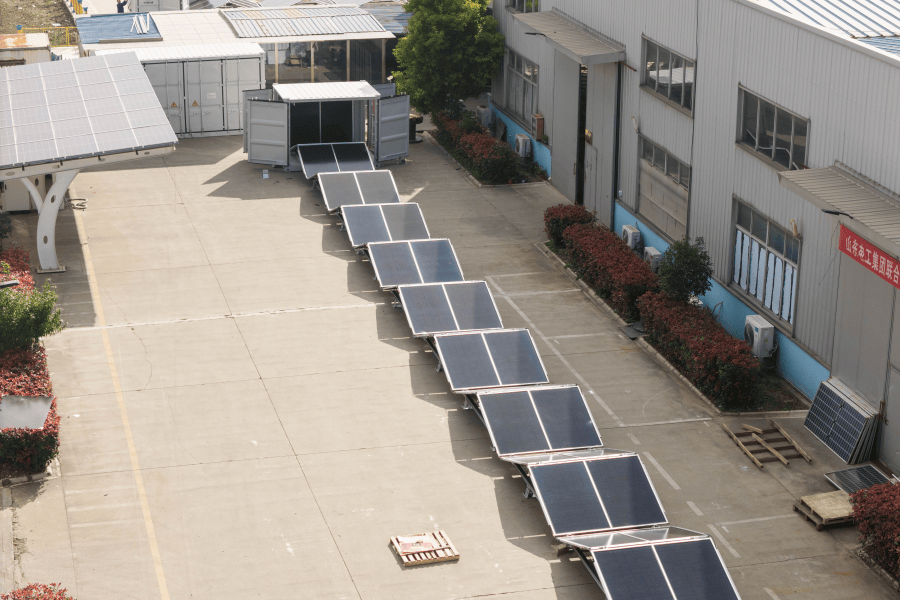
- Phase 1 - Site Establishment: A single 20-foot container arrived on a flatbed. It had integrated solar canopies (folded for transport), a 200 kWh battery rack (with room for more), and all power electronics pre-wired and tested. Within a day, it was powering the office trailers, lighting, and small tools. It ran silent at night on batteries charged by the sun.
- Phase 2 - Ramp Up: When heavy machinery arrived, they didn't need a new system. They simply added two more battery modules into the existing racks in the container, boosting capacity to 400 kWh. They also unfolded two additional solar canopy wings from the container's sides. No major electrical work, no re-engineering.
- The Result: Diesel generator runtime was cut by over 70%. The fuel savings paid for the rental of the container system in under 14 months. But just as crucial, the site manager told me the reduction in noise and fumes was a "game-changer" for worker morale and community relations.
This is the core of the Real-world Case Study of Scalable Modular Solar Container for Construction Site Power. It's not a concept; it's a plug-and-play power plant that scales in discrete, manageable steps.

The Tech That Makes It Work (Without Needing a PhD)
So, what's inside the box that makes this reliable and safe? Let's break down the key bits in plain English.
1. The "C-Rate" Sweet Spot: Batteries have a C-rate, which is basically how fast you can charge or discharge them relative to their size. A high C-rate is like a sports car - powerful but stressed. For construction, you need a workhorse. Our systems use cells with a moderate C-rate, optimized for the long, variable draws of tools and equipment. This reduces heat and dramatically extends the battery's life, which is a huge part of lowering the overall LCOE (Levelized Cost of Energy) - fancy term for your total cost of power over the system's life.
2. Thermal Management That Doesn't Quit: I've seen battery cabinets in desert sites where ambient cooling just fails. Our containers use a closed-loop liquid cooling system. It's like having a dedicated, precise air-conditioning system for the battery racks, keeping every cell within a 2-3 degree optimal range. This is non-negotiable for safety (prevents thermal runaway) and performance, especially under the midday sun when you need power most.
3. Built for the Real World (and the Inspector): Every Highjoule container that ships to North America is built as a UL 9540 recognized energy storage system. The inverters are UL 1741 SB certified. This isn't an afterthought. It's designed in from the start. It means your site manager isn't wrestling with inspection approvals; the system arrives as a certified appliance. For European projects, we mirror this with full IEC 62619 and local grid code compliance.
Thinking Beyond the Construction Site
Here's the interesting insight from 20 years in this game: the construction site is just the beginning. That same container, after 18 months powering a build, gets redeployed. I've seen them become the permanent microgrid for the finished facility, or get shipped to the next project. Or, they get used for disaster relief power, or as temporary charging hubs for electric equipment. The modularity means the asset has a long, valuable life beyond a single project phase.
The scalability isn't just about adding more batteries. It's about scaling your confidence in moving away from diesel. You start with one container to cover your base load, prove the concept on your site, and then scale the clean power as your project - and your budget - grows.
So, what's the one constant pain point on your current or upcoming project that a "power plant in a box" could solve? Is it the fuel bill, the noise, or the sheer uncertainty of remote power?
Tags: Construction Site Power UL Standards Off-grid Power Solar Container Modular BESS
Author
James Zhang
20+ years agricultural energy storage engineer / Highjoule CTO