
Smart BMS for Off-grid Solar: A Real-World Island Microgrid Case Study
Beyond the Grid: How a Smart BMS Unlocked a Remote Island's Energy Future
Hey there. Let's talk about something that doesn't get enough airtime in our industry: what happens after you deploy an off-grid solar and battery system in a truly remote location. You know, the ones on islands, mountain communities, or remote research stations. The sales pitch is all about clean energy independence, and that's great. But honestly, having spent over two decades on sites from the Scottish Isles to the Pacific Northwest, I've seen the real challenge isn't just installation - it's sustainable, safe, and cost-effective operation. That's where the real story begins.
Quick Navigation
- The Real Problem: More Than Just Keeping the Lights On
- Why It Hurts: The High Cost of "Set-and-Forget"
- The Game-Changer: It's All About the Brain, Not Just the Brawn
- A Case in Point: The Alaskan Island Microgrid
- Beyond the Basics: What a Smart BMS Really Monitors
- Making It Work for Your Project
The Real Problem: More Than Just Keeping the Lights On
When we talk about off-grid solar generators for remote microgrids, the initial focus is always on capacity: how many solar panels, how many megawatt-hours of storage. But the core problem we face - especially in harsh, inaccessible environments - is a profound lack of visibility and control. You're dealing with a critical asset that's expensive to visit, operating in conditions that stress batteries (think salt spray, wide temperature swings, and highly variable loads from tourism or fishing seasons). Without deep, real-time insight into each battery cell's health, you're essentially flying blind.
Why It Hurts: The High Cost of "Set-and-Forget"
Let me agitate this a bit, because I've seen this firsthand on site. A basic battery management system (BMS) might tell you state-of-charge, but it won't warn you about the slow, thermal-driven capacity fade in cell #47 of rack #3. The consequences?
- Catastrophic Failure Risk: Thermal runaway doesn't announce itself. Without per-cell monitoring and predictive analytics, you're relying on luck. Compliance with UL 9540 and IEC 62619 is your baseline, not your finish line for safety.
- Sky-High Operational Costs: Sending a crew by boat or helicopter for "diagnostics" can blow your operational budget. The National Renewable Energy Lab (NREL) has shown that O&M costs for remote microgrids can be 200-300% higher than for grid-tied systems. A failed battery string can mean resorting to diesel generators, spiking your Levelized Cost of Energy (LCOE).
- Wasted Asset Potential: You're likely oversizing your system just to build in a safety buffer for unknowns. That's dead capital. Or, you're underutilizing the asset because you're afraid to push it without knowing its true limits.
The Game-Changer: It's All About the Brain, Not Just the Brawn
The solution isn't a bigger battery. It's a smarter one. This is where a Smart BMS Monitored Off-grid Solar Generator system becomes non-negotiable. We're talking about a system that goes far beyond voltage limits. It's an integrated platform where the power conversion, solar MPPT, and battery management speak the same language, with the Smart BMS acting as the central nervous system.
At Highjoule, when we design for these scenarios, the BMS is the heart of the project. It's not a component we source; it's a core intelligence we engineer around. This allows for what we call "Condition-Based Operation," not just protection.
A Case in Point: The Alaskan Island Microgrid
Let me give you a real-world example from a project we were involved in. A small, seasonal community in Alaska (let's keep the exact name confidential) relied on a solar-diesel hybrid system. Their old battery bank was failing unpredictably, and diesel shipments were a logistical and financial nightmare.
The Challenge: Provide 24/7 reliability through long, dark winters, minimize diesel use, and ensure the system could run unattended for months. Any failure meant a very expensive emergency response.
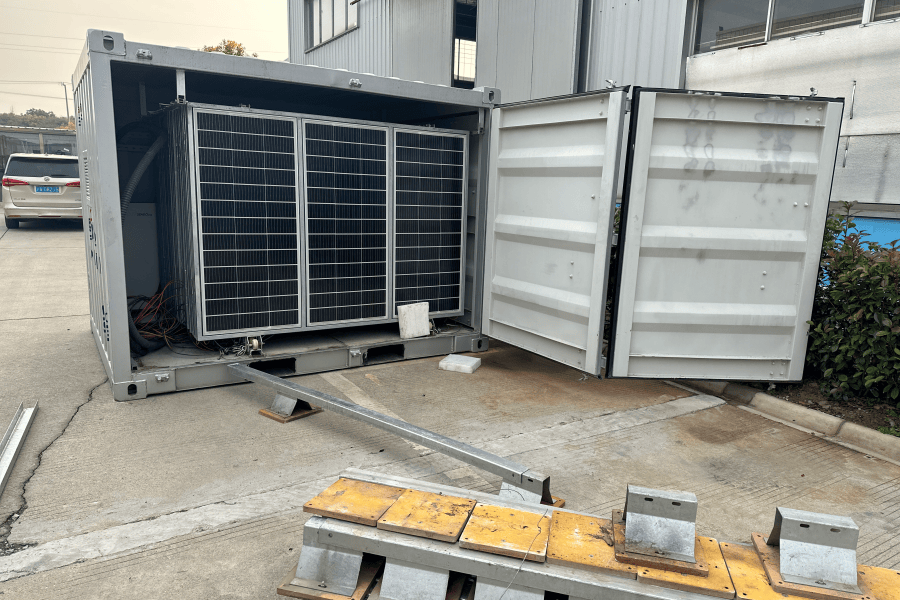
The Highjoule-Enabled Solution: We deployed a containerized BESS with our integrated Smart BMS platform as the core. Here's what that meant on the ground:
- The BMS monitored cell-level voltage, temperature, and impedance for every single cell in the lithium iron phosphate (LFP) bank.
- It dynamically adjusted charge/discharge C-rates (the speed of charging/discharging) based on real-time cell temperatures and health, not just a fixed, conservative limit. This safely squeezed more usable energy out of the same physical batteries.
- It integrated weather forecast data to orchestrate charging cycles. Knowing a storm was coming, it would proactively charge to 95% instead of the usual 90%, adding crucial hours of autonomy.
- All this data was telemetered to our 24/7 NOC (Network Operations Center) and to the local operator via a simple dashboard.

The Outcome: In the first year, diesel consumption dropped by over 70%. There was one instance where the BMS flagged a growing temperature delta in one module. We analyzed the data remotely, guided a local technician (not a battery expert) to check a cooling fan connection, and the issue was resolved in an afternoon - avoiding a potential $50k+ failure and service mission. That's the power of Smart BMS monitoring made tangible.
Beyond the Basics: What a Smart BMS Really Monitors
For a non-technical decision-maker, here's the simple breakdown of what this "smart" system looks at that a basic one doesn't:
| Parameter | Basic BMS | Smart BMS (In a Highjoule System) |
|---|---|---|
| Thermal Management | Trips if too hot/cold | Maps cell temperatures, predicts hotspots, and actively manages cooling/heating to prevent trips. |
| State of Health (SOH) | Rough estimate | Tracks capacity fade and resistance growth for each cell, giving a precise remaining lifespan forecast. This is critical for your financial planning. |
| Load Adaptation | Fixed limits | Understands your load patterns (e.g., fish processing plant starting up) and prepares the battery for sudden surges without stress. |
| Grid (or Generator) Interaction | On/Off switching | Seamlessly blends solar, battery, and backup diesel, optimizing for lowest LCOE and fuel use. |
Making It Work for Your Project
So, what should you look for? Whether you're in the Caribbean, the Mediterranean, or off the coast of Maine, the principles are the same. Your off-grid solar generator system needs a Smart BMS that is:
- Built to Your Region's Standards: For the US, that's UL 9540 and IEEE 1547. For the EU and many island nations, it's IEC 62619 and IEC 62477. This isn't just paperwork - it's a blueprint for safety.
- Designed for Remote Diagnostics: Can your vendor access the system securely, diagnose an issue, and often fix it via software - or at least provide crystal-clear instructions to local staff?
- Open Yet Secure: It should provide clear data you own (OEM-agnostic where possible) but be locked down against cyber threats. The International Energy Agency (IEA) consistently highlights cybersecurity as a key pillar for modern energy infrastructure.
Our approach at Highjoule has always been to engineer the complexity in, so the experience is simple out on site. The goal is to give you the confidence that your remote energy asset is working optimally, safely, and cost-effectively - every single day, even when you can't lay eyes on it.
What's the one operational headache in your remote or off-grid project that keeps you up at night? Is it the fear of an unseen battery issue, or the cost of a routine service call? Let's discuss - the solution is probably already in the data you're not yet collecting.
Tags: UL Standard BESS LCOE Renewable Energy Off-grid Solar Microgrid Smart BMS IEC Standard Remote Island
Author
James Zhang
20+ years agricultural energy storage engineer / Highjoule CTO