
Coastal BESS Deployment: Salt-Spray Challenges & Tier 1 Cell Container Solutions
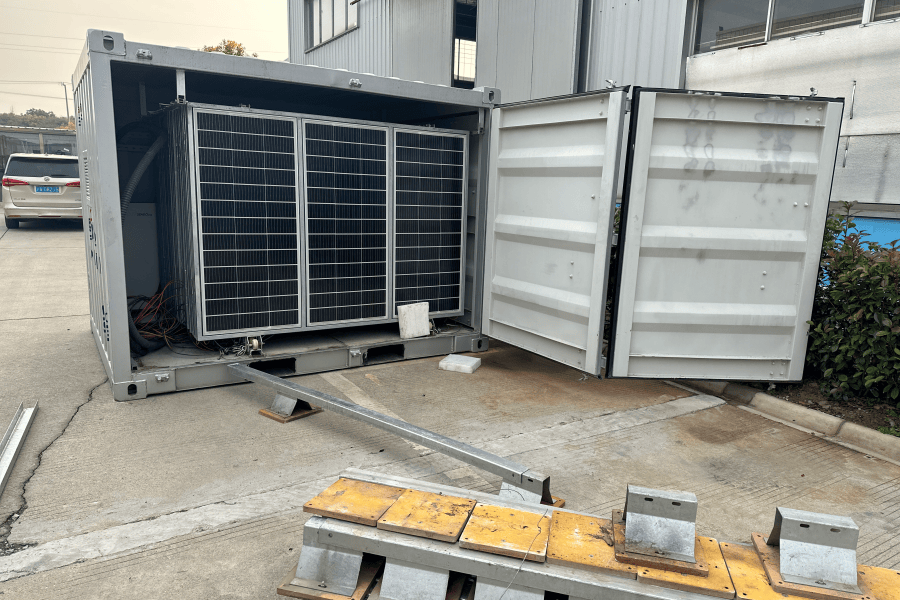
When the Sea Breeze Meets Your Megawatt: The Unseen Battle for Coastal BESS Longevity
Hey there. Let's be honest, when you're planning a large-scale BESS deployment, especially near the coast, the big numbers - megawatt-hours, CAPEX, ROI - tend to steal the show. But having spent over two decades on sites from the North Sea to the Gulf of Mexico, I can tell you the real make-or-break factor often comes down to something much smaller: salt. Not in a shaker, but in the air. That pervasive, corrosive salt-spray environment is a silent budget killer and a reliability nightmare. Today, I want to walk you through why standard containers often fail here, and how a purpose-built solution using Tier 1 battery cells changes the game.
Quick Navigation
- The Invisible Cost: Corrosion in Coastal ESS
- Beyond Rust: How Salt Erodes Your Project's Bottom Line
- The Defense Strategy: Engineering for the Corrosive Reality
- Real-World Proof: A Container That Breathes Differently
- From Spec Sheet to Sea Spray: An Engineer's Take
The Invisible Cost: Corrosion in Coastal ESS
Picture this: you've secured the perfect site for your industrial or utility-scale BESS - close to load centers, with great grid interconnection, maybe even co-located with a solar farm. It's also, inevitably, within a few miles of the coast. The business case looks solid. But here's the rub. The International Electrotechnical Commission (IEC) classifies these environments as "Category C5-M: Very High salinity, Marine." That's not just a label; it's a warning. Standard industrial enclosures, even those with a decent paint job, are simply not designed for this constant, microscopic assault. I've seen firsthand on site how salt aerosols penetrate, leading to accelerated corrosion on electrical connections, busbars, and even the battery module housings themselves. It starts small, often hidden from routine visual inspections.
Beyond Rust: How Salt Erodes Your Project's Bottom Line
Let's agitate that pain point a bit. This isn't just about cosmetic rust. The National Renewable Energy Laboratory (NREL) has noted that environmental stressors can significantly impact battery degradation pathways beyond just cycle life. In a salty, humid environment, you're fighting a war on two fronts:
- Increased OPEX & Safety Risks: Corroded electrical connections increase resistance, leading to localized heating - a major safety concern. This forces more aggressive and costly maintenance cycles. You're looking at more frequent cleaning with specialized, often de-ionized water systems, and earlier replacement of components you expected to last 15+ years.
- Hidden Degradation & Warranty Gaps: Salt-induced corrosion on cell terminals or internal busbars can create instability. This might not show up immediately in your BMS data as a capacity fade, but as increased internal resistance and thermal hotspots. Honestly, many standard warranties don't explicitly cover "acts of environment" like this, leaving you in a tough spot.
The result? Your projected Levelized Cost of Storage (LCOS) starts to creep upward, jeopardizing the project's financial core.
The Defense Strategy: Engineering for the Corrosive Reality
So, what's the solution? It's not just about slapping on more paint. It's a holistic, defense-in-depth engineering approach, starting from the cell level up. This is where the concept of a Tier 1 battery cell industrial ESS container built explicitly for coastal salt-spray environments comes to life. The goal isn't just to house the batteries, but to create a stable, protective micro-climate for them.
At Highjoule, when we design for these scenarios, we focus on three layers of defense:
- The Barrier Layer: This means materials. Think stainless-steel fasteners, aluminum alloys with appropriate anodization, and cabinet-grade steel with a multi-step coating process - primer, epoxy, polyurethane topcoat - tested to ASTM B117 salt fog standards.
- The Environmental Management Layer: The thermal management system is key. It can't just cool; it must be a sealed, closed-loop system that minimizes air exchange with the corrosive outside air. Positive pressure within the container can also help keep salt-laden humidity out.
- The Core Integrity Layer: This starts with the cells themselves. Using Tier 1 prismatic cells with robust, laser-welded terminals and uniform casing integrity is non-negotiable. They provide a more stable, predictable base that's less susceptible to the variances that environmental stress can exploit.

Real-World Proof: A Container That Breathes Differently
Let me give you a concrete example from our own portfolio. We deployed a 12 MWh BESS for a coastal microgrid serving a critical food processing facility in Northern Germany. The challenge was classic: high humidity, constant salt spray from the North Sea, and a need for 99.9% uptime.
The standard container option was a no-go. Instead, we supplied a system built around our Salt-Spray Resilient (SSR) enclosure specification, housing UL 1973 certified Tier 1 cells. The critical differentiator was in the details:
- The HVAC system used corrosion-resistant coils and filters designed for marine environments.
- All external cable entries were via sealed, pressurized glands.
- Internal electrical panels had a higher IP (Ingress Protection) rating than usual.
Two years in, the difference is stark compared to a nearby non-hardened system. Our infrared scans show no abnormal thermal patterns on connections, and the planned maintenance has been purely preventive, not corrective. The client's LCOS projections are holding firm.
From Spec Sheet to Sea Spray: An Engineer's Take
Here's my blunt, from-the-field insight: when evaluating containers for coastal sites, you must look beyond the standard datasheet. Ask the hard questions:
- "Can you show me the salt fog test certification for the entire enclosure assembly, not just the steel sample?"
- "How does the thermal management system prevent ingress of corrosive air during its operation?"
- "What is the expected derating or maintenance interval for the cooling system in a C5-M environment?"
Understanding C-rate is important, but in this context, it's about sustainable C-rate. A system that corrodes will see its effective C-rate diminish over time as resistance rises. And thermal management? It's not just about keeping cells at 25C; it's about doing so with a system whose own components won't succumb to the environment.
For us at Highjoule, compliance isn't a checkbox; it's the baseline. Our designs are built to meet and exceed UL 9540 and IEC 62933-5-2 standards, but we then layer on the environmental hardening because the standards, while essential, often define the minimum for a "general" environment. The coast is anything but general.
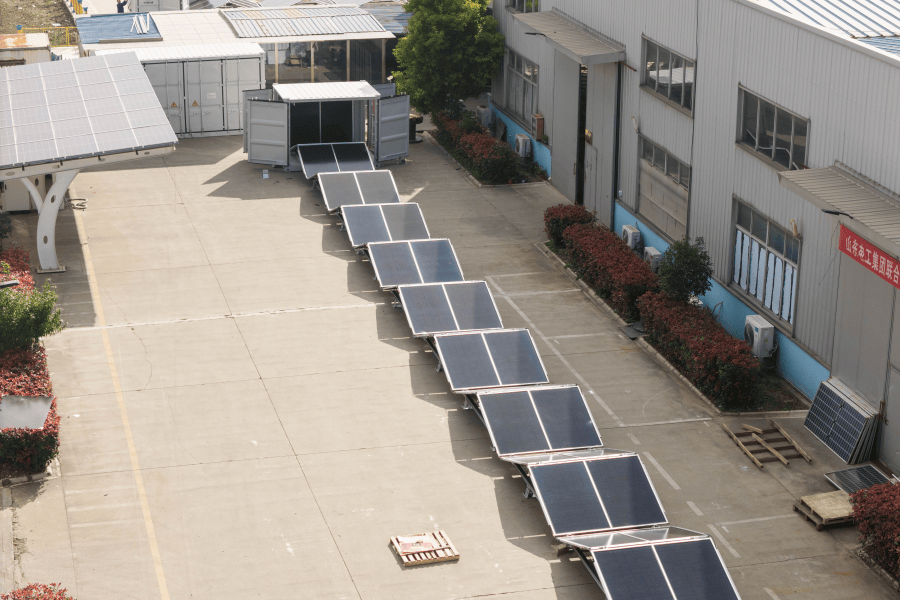
So, the next time you're assessing a BESS proposal for a site within smelling distance of the ocean, dig deeper. Look for the engineering that acknowledges the salty reality. Because the right container - one built from the cell up for this fight - doesn't just store energy. It protects your investment, your safety record, and your peace of mind for the long haul.
What's the single biggest environmental challenge you're facing on your upcoming BESS site?
Tags: UL Standard BESS LCOE Coastal Energy Storage Tier 1 Battery Cells Industrial ESS Salt-Spray Environment
Author
James Zhang
20+ years agricultural energy storage engineer / Highjoule CTO