
Why C5-M Anti-Corrosion is Non-Negotiable for Off-Grid Solar Generators in Eco-Resorts
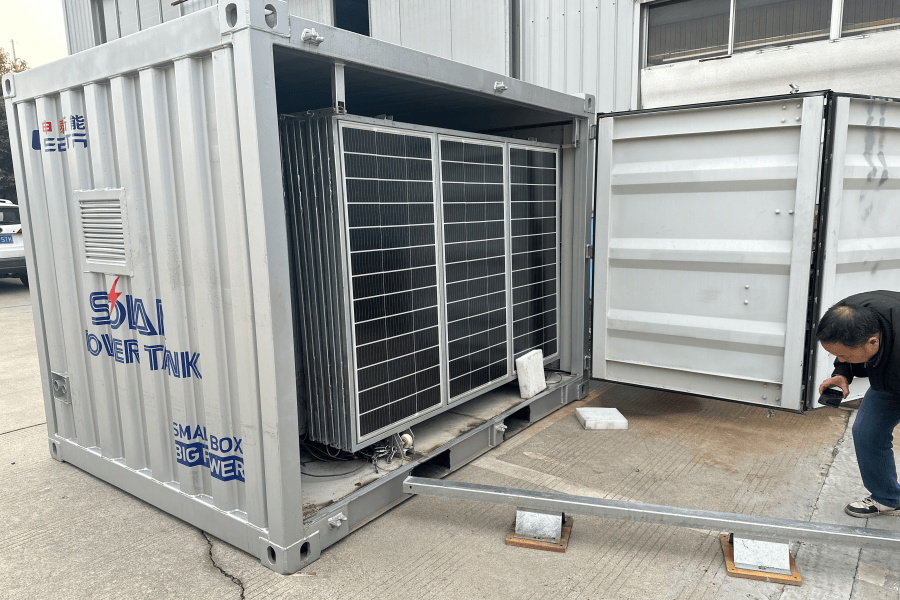
Table of Contents
- The Silent Killer of Your Off-Grid Investment
- It's More Than Just Rust: The Real Cost of Corrosion
- C5-M Decoded: What It Actually Means for Your Resort
- A Tale of Two Islands: A Real-World Case from the Caribbean
- Making Sense of the Tech: LCOE, Thermal Runaway, and You
- How to Choose Right: It's Not Just a Box, It's a Partner
The Silent Killer of Your Off-Grid Investment
Let's be honest. When you're planning an off-grid solar and battery system for an eco-resort, the big-ticket items get all the attention: the solar panel wattage, the battery's kilowatt-hour capacity, the inverter specs. I've sat in dozens of these meetings. But there's a silent, insidious factor that often gets a line-item checkmark at best, or is completely overlooked: environmental protection, specifically corrosion resistance. And for coastal, tropical, or high-humidity locations C which, let's face it, is where most beautiful eco-resorts are C this isn't a minor detail. It's the difference between a system that delivers ROI for 15+ years and one that becomes a maintenance nightmare and a safety hazard in five.
It's More Than Just Rust: The Real Cost of Corrosion
The problem isn't just cosmetic rust on the container door. We're talking about a systemic failure. Salt-laden air (chlorides) and high humidity are incredibly aggressive. They creep into cabinet seals, attack electrical busbars and connections, and degrade battery module housings. I've seen this firsthand on a site audit in Florida. A "standard" industrial BESS unit, not rated for coastal use, showed significant corrosion on internal copper connections after just 18 months. This led to increased electrical resistance, localized heating, and a scary 15% drop in round-trip efficiency. The owner wasn't just losing energy; they were sitting on a potential thermal event.
The financial impact is massive. According to a NACE International study, the global cost of corrosion is estimated at over $2.5 trillion USD annually. For a single off-grid resort system, premature failure means:
- Catastrophic CapEx Repeat: Replacing the entire BESS unit decades early.
- Sky-High OpEx: Constant maintenance, cleaning, and part replacement.
- Operational Downtime: Nothing kills a guest's experience like a power outage during a heatwave.
- Safety & Insurance Liabilities: Corrosion can lead to short circuits, arc faults, and compromised safety systems. Try getting favorable insurance premiums with that risk profile.

C5-M Decoded: What It Actually Means for Your Resort
This is where the specification "C5-M Anti-corrosion" moves from jargon to your most important safeguard. Let's break it down simply. The "C5" classification, per the ISO 12944 standard, refers to a very high corrosivity environment C think coastal areas with salt spray. The "M" stands for marine. A product built and tested to C5-M isn't just painted; it's engineered for survival.
For an off-grid solar generator, this translates to:
- Materials: Use of stainless-steel fasteners, aluminum alloys with specific anodization, and copper busbars with advanced plating.
- Coatings: Multi-stage powder coating processes with significantly higher thickness (often >200|m) and salt-spray tested for thousands of hours.
- Sealing: IP65 or higher ingress protection as a baseline, with special gasket materials resistant to ozone and salt degradation.
- Cooling System Design: Air intake paths with corrosion-resistant filters and heat exchangers designed to handle corrosive particulates.
At Highjoule, when we build a system for a Caribbean or Mediterranean resort project, C5-M isn't an option; it's the foundation. Our containers and internal racks undergo a 1000-hour neutral salt spray test as a bare minimum validation. Because honestly, if the enclosure fails, the brilliant battery chemistry inside doesn't matter.
A Tale of Two Islands: A Real-World Case from the Caribbean
Let me share a scenario from a few years back. We were called to assess two similar eco-resorts on separate Bahamas islands. Both had installed off-grid solar + storage systems around the same time. Resort A chose a system based primarily on upfront cost, with "standard" environmental protection. Resort B invested in a C5-M certified solution, which, upfront, was about 18% more.
By Year 4, the picture was starkly different. Resort A was dealing with erratic system performance, frequent alarm triggers from their battery management system (BMS), and had already spent over $40k on component replacement and emergency service visits. Their Levelized Cost of Energy (LCOE) C the true measure of lifetime cost C was climbing.
Resort B's system was humming along. Scheduled maintenance was just that C scheduled, not emergency. Their LCOE remained stable and predictable. The initial premium had already been paid back through avoided downtime and zero major repairs. The general manager told me, "The peace of mind knowing the power won't fail during a fully-booked season is worth every extra penny." That's the real value.
Making Sense of the Tech: LCOE, Thermal Runaway, and You
I know, terms like LCOE and thermal management sound like engineering department stuff. But as a decision-maker, you need the gist. LCOE is your total system cost over its life, divided by the energy it produces. A cheaper, corroding system has a short life and high maintenance, ballooning its LCOE. A C5-M system has a longer, productive life, lowering its LCOE. It's a smarter financial metric than just purchase price.
Now, thermal management. Batteries generate heat. Corrosion can clog air filters and insulate heat sinks, causing the cooling system to work less efficiently. This stresses the batteries, reduces lifespan, and in extreme cases, can contribute to thermal runaway C a cascading battery fire. A C5-M design ensures the thermal management system remains intact and functional for the system's entire design life, which is a core part of our safety-first philosophy at Highjoule. It's not just about protecting metal; it's about protecting the entire operational integrity of the asset.
How to Choose Right: It's Not Just a Box, It's a Partner
So, when you're comparing C5-M anti-corrosion off-grid solar generators, look beyond the spec sheet. Ask the hard questions:
- "Can you show me the certification test reports (like UL or IEC standards) for the C5-M claims on the actual enclosure and internal components?"
- "What is the design life of the system in my specific environment, and what warranty backs that up?"
- "How does your BMS and safety protocol account for potential sensor or connection degradation from humidity over 15 years?"
Your off-grid energy system is the heartbeat of your resort. It needs to be resilient. At Highjoule, we've built our reputation on deploying systems that don't just work on day one, but are engineered to perform reliably, safely, and efficiently for their full lifecycle, in the places where they face the toughest conditions. That requires a deep, material-level commitment to standards like C5-M from the very first design sketch.
What's the one environmental challenge at your site that keeps you up at night regarding your power supply? Let's talk specifics.
Tags: UL Standard BESS Off-grid Solar C5-M Anti-Corrosion Eco-Resort
Author
James Zhang
20+ years agricultural energy storage engineer / Highjoule CTO