
ROI Analysis of 20ft 5MWh BESS for Remote Island Microgrids
Table of Contents
- The Island Energy Dilemma: More Than Just a High Bill
- ROI Beyond the Spreadsheet: What Your Financial Model Might Be Missing
- The 20ft Container Advantage: Standardization Meets Utility-Scale Power
- Calculating True ROI: A Practical Breakdown for Island Planners
- The Highjoule Approach: Engineering for Real-World Island Resilience
The Island Energy Dilemma: More Than Just a High Bill
Honestly, if you're managing energy for a remote island or an off-grid industrial site, you don't need me to tell you about high diesel costs. You feel it every month when the fuel ship arrives. But the real problem isn't just the price per gallon; it's the total system vulnerability. I've been on-site after a storm delayed that fuel delivery, watching a community or a mine operate on razor-thin margins. Every kilowatt-hour from that diesel genset is expensive, loud, polluting, and frankly, a single point of failure. According to the International Energy Agency (IEA), islands often face electricity costs 3 to 10 times higher than mainland grids, primarily due to this reliance on imported fossil fuels. The push for solar and wind is obvious, but without a robust backbone, renewables just add instability to an already shaky system.
ROI Beyond the Spreadsheet: What Your Financial Model Might Be Missing
So, you run the numbers. A Battery Energy Storage System (BESS) looks promising. But when you look at traditional, large-scale BESS proposals, the ROI picture gets murky fast. The initial CapEx can be daunting. The site preparation - pouring massive concrete slabs, building custom enclosures, complex electrical work - adds months and significant cost before you even install the batteries. Then there's the ongoing OpEx: complex thermal management demanding high energy for cooling, maintenance that requires specialized fly-in technicians, and concerns about long-term performance degradation. I've seen projects where the promised 10-year payback stretches to 15 because the system's "balance of plant" costs and operational inefficiencies weren't fully baked into the initial ROI analysis of 20ft High Cube 5MWh Utility-scale BESS for Remote Island Microgrids.

The 20ft Container Advantage: Standardization Meets Utility-Scale Power
This is where the concept of a pre-integrated, utility-scale system in a 20ft high-cube container changes the game. It's not just a box of batteries; it's a paradigm shift in deployment. Think about it: the 20ft container is a global standard. It's how 90% of the world's goods move. By engineering a 5MWh system into this form factor, we're leveraging that entire logistics ecosystem. Shipping becomes straightforward. Site prep is dramatically simplified - often a level gravel pad will do. This isn't a theory; we deployed a system like this for a resort and aquaculture complex in the Caribbean. Their challenge was integrating a new solar array without destabilizing their existing diesel grid. The 20ft BESS solution arrived on a regular container ship, was operational within 8 days of landing, and immediately began absorbing solar spikes and shifting energy to night-time operations.
Calculating True ROI: A Practical Breakdown for Island Planners
Let's talk real numbers. A proper ROI analysis for islands must look beyond simple payback. You need to evaluate Levelized Cost of Energy (LCOE) - the total lifetime cost of ownership per kWh. A diesel genset might have a low upfront cost but a catastrophically high LCOE due to fuel. Solar alone has a low marginal cost but can't provide 24/7 power. A 5MWh BESS paired with renewables slashes that LCOE. Here's a simplified view of the value streams our clients capture:
| Value Stream | Impact on ROI |
|---|---|
| Fuel Displacement | Direct, immediate savings from reduced diesel consumption (often 40-70%). |
| Genset Optimization | Running diesel gensets at their most efficient, steady state, reducing maintenance costs and extending engine life. |
| Renewables Firming | Enabling higher penetration of solar/wind, turning intermittent sources into reliable baseload. |
| Grid Resilience | Avoided cost of outages for critical facilities (hospitals, water plants, tourism). This is huge but often undervalued. |
The technical key here is the system's C-rate - the speed at which it can charge and discharge. For island microgrids, you need a system that can handle rapid swings when clouds pass or a large load starts. A well-designed 5MWh container with a suitable C-rate acts like a shock absorber, keeping the grid stable and preventing costly genset wear-and-tear.
The Highjoule Approach: Engineering for Real-World Island Resilience
At Highjoule, our design philosophy for these systems is rooted in 20 years of field experience. We know a datasheet spec and real-world performance are two different things. For instance, thermal management isn't just about keeping batteries cool; it's about doing so with minimal energy overhead in a tropical climate. Our systems use passive and active cooling strategies that prioritize reliability and efficiency over pure peak performance. Every module, inverter, and safety system is selected and integrated with UL 9540 and IEC 62933 standards as a baseline, not an aspiration. This is crucial for insurance, financing, and local permitting, especially in U.S. and European territories.
But the real insight from the field is this: the ROI is only as good as the system's uptime. That's why our 20ft 5MWh solution is designed for serviceability. Battery modules can be safely accessed and replaced if needed, and our remote monitoring platform gives you (and our support team) a real-time view into system health. We provide localized operational training and have service partnerships in key regions because flying a specialist out for every minor alarm is a quick way to erase your hard-won savings.
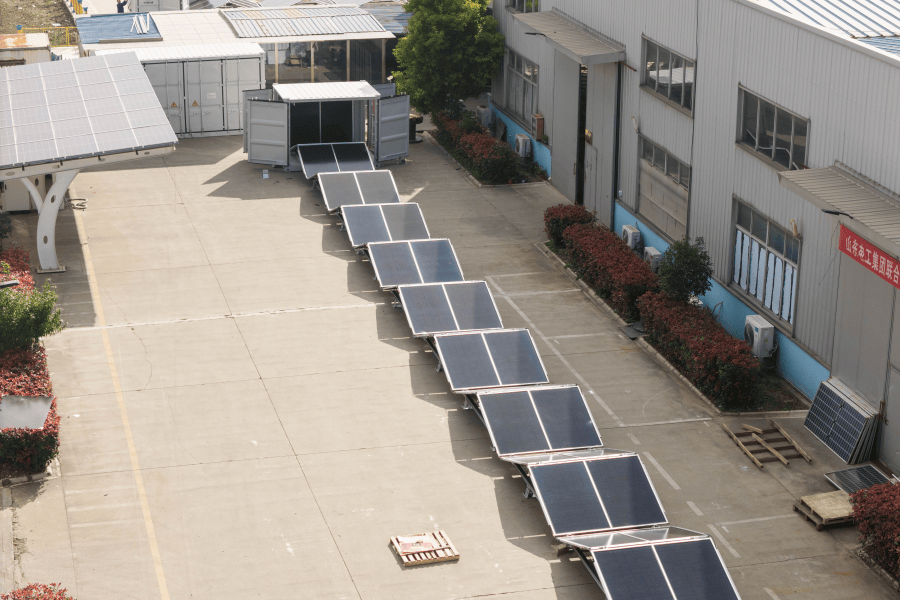
So, when you're evaluating an ROI analysis of 20ft High Cube 5MWh Utility-scale BESS for Remote Island Microgrids, look for the hidden costs and the engineered-in resilience. The right system isn't just a capital expense; it's the foundation for energy independence and predictable costs for the next 15-20 years. What's the one operational headache in your current microgrid that a truly resilient storage system could solve tomorrow?
Tags: UL Standard BESS LCOE ROI Analysis Utility-Scale Energy Storage Island Microgrid
Author
James Zhang
20+ years agricultural energy storage engineer / Highjoule CTO