
Air-Cooled BESS ROI: The Pre-Integrated Container Solution for Rural Electrification
Beyond the Hype: How Simple, Air-Cooled Containers Are Unlocking Real ROI in Tough Markets
Hey folks, let's talk about something that doesn't get enough airtime in our fancy conferences: the brutal, on-the-ground economics of deploying energy storage in challenging environments. We love to discuss the latest 4-hour duration cells or AI-driven grid software, but honestly, if the unit costs too much to ship, install, and keep running, none of that matters. I've seen this firsthand on site, from remote communities to industrial parks on the grid edge. The biggest hurdle isn't always technology - it's predictable, bankable ROI.
Table of Contents
- The Hidden Cost Problem Every Developer Faces
- Why ROI Stumbles Before the First kWh is Delivered
- The Pre-Integrated Container Advantage: Simplicity as a Superpower
- A Case in Point: Learning from Global Deployments
- Thermal Management Made Simple: The Air-Cooling Edge
- Building a Bankable Project: What Really Drives LCOE Down
The Hidden Cost Problem Every Developer Faces
Here's the phenomenon: in both mature markets like the US and emerging ones, project budgets are getting hammered by soft costs. A report by the National Renewable Energy Laboratory (NREL) highlights that balance-of-system and installation costs can eat up 30-50% of a standalone BESS project's total capex. That's before you even factor in ongoing O&M. For rural or off-grid electrification - whether it's a microgrid in the Philippines or powering a remote data center in Texas - these costs balloon. Long lead times for custom engineering, complex civil works, and the sheer man-hours needed to piece together components from different vendors on-site... it's a financial and logistical nightmare.
Why ROI Stumbles Before the First kWh is Delivered
Let's agitate that pain point a bit. What kills ROI early? Uncertainty. Uncertainty in commissioning timelines. Uncertainty in long-term performance, especially in high-ambient temperatures. Uncertainty about safety and compliance, which can lead to costly redesigns or even rejection by local authorities. I've been called to sites where a perfectly good battery rack was sitting idle for weeks because the cooling system integration failed inspection. Every day of delay is a day of lost revenue and a hit to your internal rate of return. In markets where every dollar of funding counts, this isn't just an inconvenience; it's a project killer.
The Pre-Integrated Container Advantage: Simplicity as a Superpower
This is where the logic behind solutions like an air-cooled, pre-integrated PV container becomes crystal clear. The solution isn't about having the most exotic tech; it's about radical simplification. Think of it as a "BESS-in-a-box" that's built, tested, and certified in a controlled factory environment - not in a muddy field under a baking sun. By the time it arrives on your site, it's essentially plug-and-play. This slashes those terrifying soft costs and timeline risks I just mentioned.
At Highjoule, our approach has always been to engineer out complexity for the end-user. Our pre-integrated containers come with the battery racks, thermal management system, power conversion, and safety controls all pre-wired and pre-tested. They're built to global standards like UL 9540 and IEC 62619 right off the bat, so you're not gambling on compliance. This isn't just a product; it's a de-risking strategy for your capital.
A Case in Point: Learning from Global Deployments
Let me give you a real-world parallel. We recently supported a microgrid project for an agricultural processing plant in a remote part of California's Central Valley. The challenge? Reliable, clean power for refrigeration without the exorbitant cost of grid extension. The site had high temperatures and dust - a tough environment for any equipment.
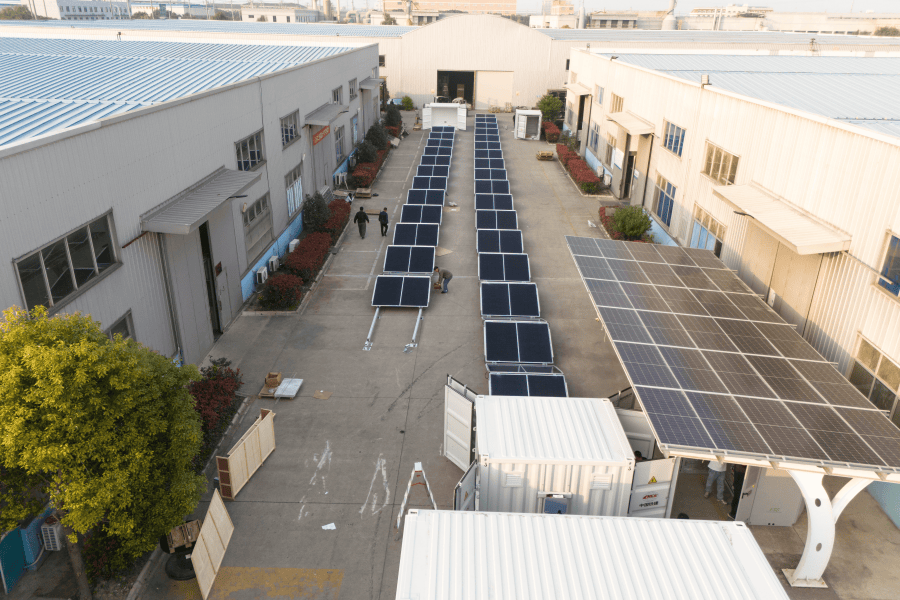
The solution was a 500kW/1MWh air-cooled containerized BESS, paired with a solar canopy. Because it was pre-integrated, we saved the developer nearly 8 weeks of on-site construction time. The air-cooling system, while less complex than liquid cooling, was perfectly sized for the local climate (we'll get to that in a sec). The container's standardized design meant local electricians could handle the final connection with minimal specialized training. The project was online in days, not months, and started generating revenue and savings immediately. The ROI calculation became straightforward and, more importantly, accurate.

Thermal Management Made Simple: The Air-Cooling Edge
Now, I know what you're thinking: "But for reliability, isn't liquid cooling superior?" In high-density, utility-scale applications constantly pushing high C-rates (the speed of charge/discharge), often yes. But for many commercial, industrial, and rural electrification projects, the continuous power draw (C-rate) is more moderate and steady. Here, a well-designed air-cooling system isn't a compromise; it's an intelligent choice.
Air-cooling means fewer components - no pumps, coolant, or leak-prone piping. Fewer parts mean fewer things that can break, lower maintenance costs, and easier local servicing. The key is intelligent design: advanced battery chemistry with lower heat generation, smart internal airflow management, and proper climate-based derating. You get a system that's robust, cost-effective over its entire life, and perfectly adequate for the duty cycle. It directly lowers the Levelized Cost of Energy Storage (LCOE) by reducing both capex and opex.
Building a Bankable Project: What Really Drives LCOE Down
So, let's tie this back to ROI analysis. When you evaluate a project, you're modeling costs and revenues over 15-20 years. A pre-integrated, air-cooled container positively impacts nearly every variable in that model:
- Lower Initial Capex: Reduced engineering, construction, and installation costs.
- Faster Revenue Start: Shorter deployment means you begin arbitrage or demand-charge savings sooner.
- Predictable Opex: Simplified thermal management leads to lower and more predictable maintenance costs.
- Reduced Risk Premium: Built-in compliance with UL/IEC standards satisfies insurers and financiers, potentially lowering your cost of capital.
The lessons learned from deploying these solutions in challenging rural contexts, like those in the Philippines, are directly transferable to grid-edge applications in Europe and the US. The core principle is universal: maximize value by minimizing unnecessary complexity.
What's the one complexity in your current project pipeline that keeps you up at night? Is it commissioning timelines, long-term serviceability, or something else? Let's discuss - sometimes the best solution is the simplest one we overlook.
Tags: UL Standard BESS LCOE Europe US Market Renewable Energy Rural Electrification Pre-integrated Container Air-cooled
Author
James Zhang
20+ years agricultural energy storage engineer / Highjoule CTO