
ROI Analysis of All-in-one Integrated Mobile Power Container for High-altitude Regions
Contents
- The Hidden Cost of "Plug-and-Play" at High Altitude
- Why Altitude Punishes Standard Battery Systems
- The Mobile Container: Not Just a Box, But a Tailored Solution
- Crunching the Real ROI Numbers
- A Case in Point: From Theory to Mountain Top
- Key Takeaways for Decision-Makers
The Hidden Cost of "Plug-and-Play" at High Altitude
Let's be honest. When you're looking at deploying energy storage for a remote mining site, a ski resort, or a telecom tower in the Rockies or the Alps, the initial pitch for a standard, off-the-shelf battery system can be tempting. The price tag looks good on paper. But here's what I've seen firsthand, crawling through containers on sites above 2,500 meters: that low upfront cost is often a mirage. The real expense - and risk - comes from what the thin air and harsh conditions do to a system that wasn't built for them. De-rated performance, accelerated aging, and safety concerns that keep project managers up at night. This isn't just about storing electrons; it's about ensuring reliable, safe power where the grid can't reach, and where every kilowatt-hour is exponentially more valuable.
Why Altitude Punishes Standard Battery Systems
So, why is altitude such a big deal? It boils down to physics and chemistry. First, thermal management. Air is less dense, which means it can't carry away heat as efficiently. Your cooling system has to work much harder to keep the battery cells at their optimal temperature window (usually 20-25C). A system designed for sea-level cooling capacity might be 30% less effective up high. This leads to hotspots, inconsistent performance, and a faster decline in overall capacity.
Second, internal pressure and safety. Many battery enclosures and safety vents are calibrated for standard atmospheric pressure. At high altitude, the differential pressure changes. I've witnessed cases where this caused sealing issues or compromised the operation of critical safety devices. This isn't a minor spec issue; it's a fundamental design criterion for compliance with standards like UL 9540 and IEC 62933, which demand systems perform safely in their stated environment.
Finally, there's the C-rate and effective capacity. You might buy a 1 MWh container, but if the thermal system can't handle the heat from a 1C discharge (drawing the full 1 MW in an hour) at altitude, you have to artificially limit it - a process called de-rating. Suddenly, your 1 MWh system can only reliably deliver 0.7 MW when you need it most. That's a 30% haircut on your asset's capability right out of the gate, destroying your projected financial model.
The Mobile Container: Not Just a Box, But a Tailored Solution
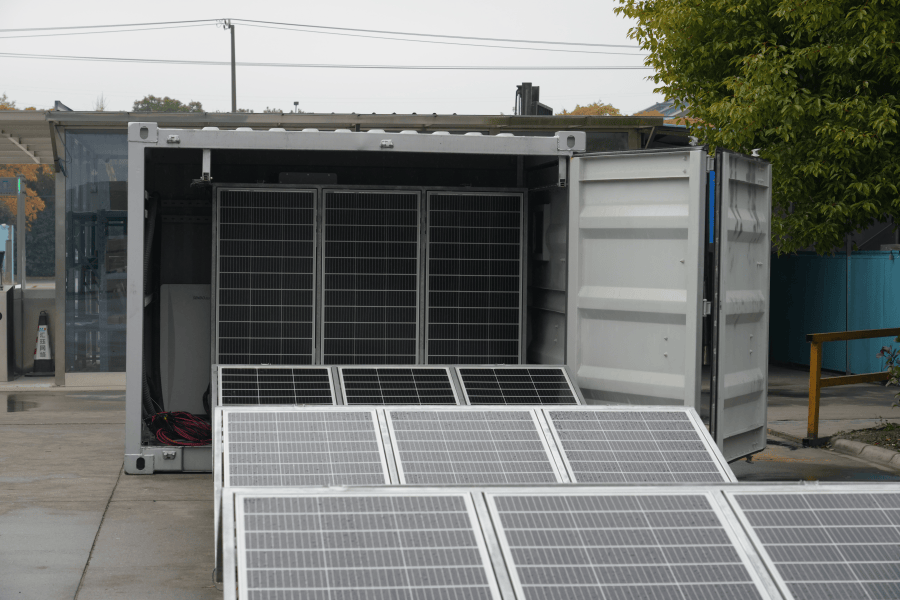
This is where the concept of an All-in-one Integrated Mobile Power Container shifts from a convenience to a necessity for positive ROI. The key word is integrated. It's not about taking a lowland system and shipping it uphill. It's about engineering the entire unit - battery racks, HVAC, fire suppression, power conversion, controls - as a single, optimized system for a specified altitude range.
At Highjoule, when we design for high-altitude deployment, we start with the environmental specs. We overspec the cooling capacity, use fans and heat exchangers rated for the lower air density, and design cabinet pressures accordingly. Our battery management system (BMS) is programmed with altitude-aware algorithms that adjust charging profiles and monitor for altitude-specific stress factors. This integrated approach is what allows us to maintain the stated C-rate and capacity, ensuring you get the megawatts you paid for. It also streamlines compliance, as the entire container is tested and certified as a unified system to the relevant UL and IEC standards for its target deployment zone.

Crunching the Real ROI Numbers
Let's talk numbers. The traditional ROI calculation is simple: (Benefits - Costs) / Costs. But in high-altitude scenarios, the "Costs" side is often underestimated, and the "Benefits" side overestimated.
True Cost Considerations:
- Capital Cost Premium: Yes, an altitude-optimized container costs more upfront - typically a 10-20% premium. This is for the heavy-duty thermal management, safety engineering, and robust packaging for transport on mountain roads.
- Avoided Cost of Downtime: This is the big one. According to data from the National Renewable Energy Laboratory (NREL), unplanned downtime for critical power in remote locations can cost tens of thousands of dollars per hour in lost productivity or revenue. A reliable, purpose-built system drastically reduces this risk.
- Lifecycle Cost (LCOE - Levelized Cost of Energy Storage): This is the most telling metric. LCOE accounts for total lifetime cost divided by total energy delivered. A de-rated or failing system delivers less energy over its life, skyrocketing its LCOE. A robust system maintains performance, leading to a lower, more predictable LCOE. The International Renewable Energy Agency (IRENA) highlights system longevity as a primary driver for LCOE improvement.
True Benefit Realization:
- Full Capacity Utilization: You capture 100% of the revenue from energy arbitrage or demand charge management.
- Extended Asset Life: Proper thermal management can extend battery life by several years, deferring the massive capital outlay for replacement.
- Reduced O&M Surprises: Fewer emergency service calls to remote, difficult-to-access sites.
When you run this ROI Analysis of All-in-one Integrated Mobile Power Container for High-altitude Regions, the premium upfront investment consistently pays back over a 3-5 year period, often beating the "cheaper" alternative by a wide margin in the long run.
A Case in Point: From Theory to Mountain Top
Let me give you a concrete example from a project we completed in Colorado, USA. A mining operation at 3,000 meters needed reliable backup and load-shifting to reduce their staggering diesel generator costs. They initially considered a standard containerized BESS.
The Challenge: Extreme temperature swings, low air pressure, and a single, treacherous access road. The risk of a standard system de-rating or failing was unacceptably high for their 24/7 operation.
The Highjoule Solution: We provided a 2 MWh mobile power container engineered for 3,500-meter operation. Key features included a redundant, forced-air cooling system with 40% extra capacity, altitude-compensated electrical clearances, and a chassis reinforced for the specific transport route. The entire system was pre-commissioned and tested at a simulated altitude facility before shipment.
The Outcome: Two years in, the system has performed at its full 2 MW discharge capability with zero downtime due to environmental factors. It has cut their diesel consumption by over 70% during peak shifts. The project's financial controller told me the ROI was achieved in under 4 years, primarily because they avoided the lost production that would have occurred with a less robust system. The mobile nature also means they can relocate it as their mining faces shift.

Key Takeaways for Decision-Makers
If you're evaluating storage for a high-altitude project, move beyond the spec sheet. Ask your vendor these questions:
- "Is the thermal management system specifically rated for my site's altitude and ambient temperature range?"
- "Can you provide performance data (C-rate, capacity) guaranteed at my altitude?"
- "Is the entire container system (not just components) certified to relevant standards for this environment?"
- "What is the projected LCOE over 10 years, factoring in altitude-related degradation?"
The goal isn't just to buy a battery container. It's to secure a predictable, high-performing power asset for a demanding location. The right analysis upfront - one that honestly confronts the challenges of altitude - is what separates a project that delivers for decades from one that becomes a costly lesson learned. What's the single biggest operational risk your remote site faces if the power goes down?
Tags: UL Standard BESS LCOE Europe US Market Renewable Energy Energy Storage ROI High-altitude Deployment
Author
James Zhang
20+ years agricultural energy storage engineer / Highjoule CTO