
ROI Analysis of C5-M Anti-corrosion Hybrid Solar-Diesel Systems for Eco-Resorts
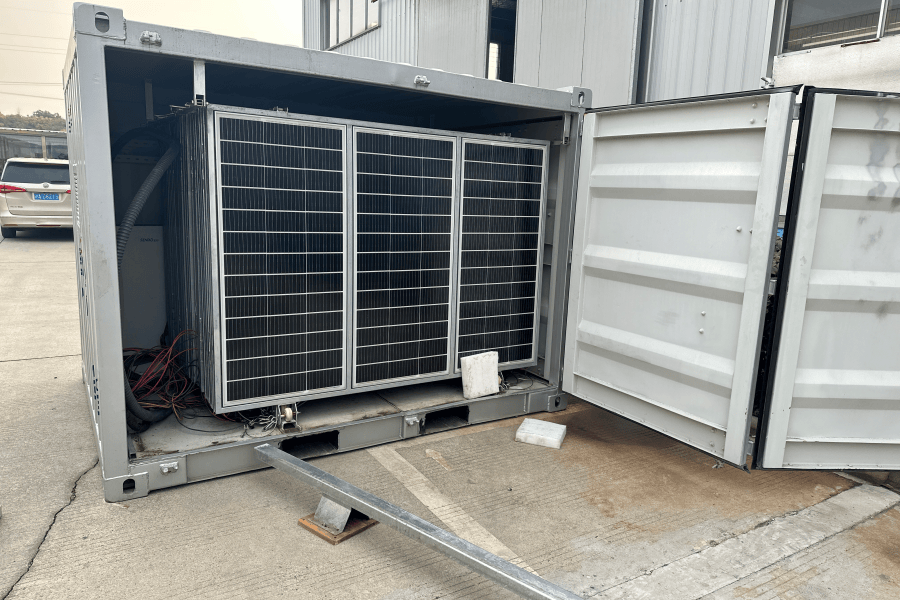
Table of Contents
- The Silent Cost of "Standard" Systems in Paradise
- ROI Beyond the Spreadsheet: What Really Eats Your Margins
- The C5-M Anti-Corrosion Advantage: It's Not Just a Coating
- A Real-World Case: From Constant Anxiety to Predictable Power
- Calculating Your True ROI: The Factors You Must Model
- Making the Shift: What to Look For in Your Partner
The Silent Cost of "Standard" Systems in Paradise
Let's be honest. When you're planning an eco-resort in the Caribbean, the Mediterranean coast, or a Pacific island, your energy system often starts as a line item, not a core strategic asset. The default thinking? "We'll need a big diesel generator for reliability, and hey, let's add some solar to be green and maybe save a bit on fuel." It sounds logical. But having deployed systems from Fiji to Florida, I've seen this approach unravel, not in years, but sometimes in mere months. The culprit is almost never the sun or the diesel - it's the environment itself.
Salt spray, constant high humidity, and thermal cycling create a C5-M corrosion environment. That's the official classification for severe marine atmospheres. A standard commercial battery energy storage system (BESS) or hybrid inverter, even if it's "outdoor-rated," is simply not built for this relentless assault. The result isn't a sudden failure; it's a slow, expensive bleed. I've been on site to see control boards coated in a fine white powder, busbars with compromised conductivity, and cooling fans seized with salt. Each "minor" issue leads to downtime, a frantic call for a (very expensive) specialist fly-in, and guests experiencing a "green" resort that ironically has to run its diesel genset 24/7 while the solar system is down.
ROI Beyond the Spreadsheet: What Really Eats Your Margins
Most ROI models for hybrid systems focus on big, easy inputs: capital cost, diesel price, solar irradiance. They spit out a neat payback period. But they quietly ignore the massive operational variables that determine real profitability.
- Unplanned Downtime is a Revenue Killer: A failed inverter during peak season isn't just a repair cost. It's lost room revenue, compromised guest experience, and potential reputational damage. That's a cost no standard model captures.
- The "Fly-In Technician" Tax: In remote locations, a simple service visit can cost thousands before a single tool is unpacked. According to a National Renewable Energy Laboratory (NREL) report on remote microgrids, O&M costs can be 2-3x higher than mainland installations, primarily due to logistics.
- Premature Asset Replacement: A BESS or power conversion system degraded by corrosion might need a major overhaul or replacement in 5-7 years, not the expected 10-15. That crushes your long-term financial model.
The real question isn't "What's the payback on a solar-diesel system?" It's "What's the lifetime cost and reliability of that system in my specific, punishing environment?"
The C5-M Anti-Corrosion Advantage: It's Not Just a Coating
This is where the conversation shifts from commodity to critical infrastructure. A true C5-M anti-corrosion hybrid system, like the ones we engineer at Highjoule, is designed from the ground up for survival, which is the absolute foundation of ROI.
It starts with the enclosure - think beyond a simple IP55 rating. We're talking about hermetically sealed electrical compartments, stainless steel or hot-dip galvanized structural components, and corrosion-inhibiting coatings on every internal surface. The thermal management system is completely sealed, using closed-loop liquid cooling to prevent salty, humid air from being sucked over sensitive battery cells and electronics. Honestly, the difference in internal component condition after 18 months in a coastal site is staggering compared to a standard unit.
This engineering rigor directly translates to your bottom line: higher system availability (more solar harvested, less diesel burned), predictable and lower lifetime maintenance costs, and the full realization of the asset's designed lifespan. Your ROI model suddenly gets a lot more attractive and, more importantly, a lot more accurate.
A Real-World Case: From Constant Anxiety to Predictable Power
I remember a 45-room luxury eco-resort on a Bahamian out-island. Their first-generation hybrid system was a constant headache. The battery enclosure, while rugged-looking, was passively cooled. Salt air entered, condensed, and accelerated corrosion. They were facing inverter faults every 4-6 months and had a full-time staff member basically babysitting the power hut.
We replaced it with a fully C5-M engineered solution. The integrated BESS and power conversion system were housed in a dedicated, climate-controlled container with positive air pressure and corrosion-resistant coatings on all internal hardware.

The result? In the two years since commissioning, they've had zero system faults related to the environment. Their diesel runtime has decreased by over 65%, and their previously dedicated "power manager" now handles other resort maintenance. The owner told me last quarter that the system's reliability is now an invisible, trusted utility - exactly what it should be. The ROI wasn't just in fuel savings; it was in operational calm and reclaimed human resources.
Calculating Your True ROI: The Factors You Must Model
So, how do you build a robust financial analysis? Go deeper than the basics.
| Standard ROI Factor | Enhanced C5-M ROI Factor (What You Must Add) |
|---|---|
| Diesel Fuel Price | Diesel Fuel Price + Estimated Fuel Spillage/Waste from frequent genset cycling |
| Solar Array Output | Solar Array Output degraded by expected system downtime (aim for >98% availability) |
| Battery System Cost | Battery System Cost / Extended Lifespan (e.g., 12+ years vs. 8) |
| Routine Maintenance | Routine Maintenance + "Fly-in Tax" Probability & Cost |
| Capital Expenditure | Capital Expenditure evaluated against Risk Mitigation (revenue loss prevention) |
You also need to consider the Levelized Cost of Energy (LCOE) - the total lifetime cost of your system divided by the total energy it produces. A slightly higher upfront cost for a C5-M system often leads to a significantly lower LCOE because it produces more reliable energy for many more years. It's the classic "buy once, cry once" principle applied to critical infrastructure.
Making the Shift: What to Look For in Your Partner
Specifying "C5-M protection" on a datasheet isn't enough. You need a partner who understands it as an engineering philosophy, not a checkbox. At Highjoule, our approach is baked into our design, testing, and support.
- Ask for Certifications, Not Claims: Look for explicit compliance with standards like UL 9540 for BESS safety and IEC 60068-2-52 for salt fog corrosion testing. We design to these because they're non-negotiable for bankable projects in Europe and North America.
- Demand Details on Thermal Management: How is the battery temperature controlled? If the answer involves fans drawing in outside air at a coastal site, be wary. Sealed, liquid-based systems are the gold standard for harsh environments.
- Evaluate the Service Model: Do they have local or regional technicians trained on the specific system? Can they provide remote monitoring and predictive diagnostics to prevent issues before they cause downtime? Our platform gives operators a real-time view of system health, often letting us diagnose a potential issue before they're even aware of it.
The goal for your eco-resort is to have an energy system that fades into the background - utterly reliable, efficient, and durable. That's what delivers the promised financial and environmental returns. So, on your next project, look past the simple payback calculation. Ask the harder questions about survival. Your future self, enjoying a quiet sunset without a generator hum in the background, will thank you.
What's the single biggest operational headache your current power system causes?
Tags: UL Standard BESS LCOE C5-M Anti-Corrosion Microgrid ROI Analysis Off-Grid Energy Eco-Resort Hybrid Power System Solar-Diesel
Author
James Zhang
20+ years agricultural energy storage engineer / Highjoule CTO