
Real-world Case Study: 5MWh Utility-Scale BESS for EV Charging Stations
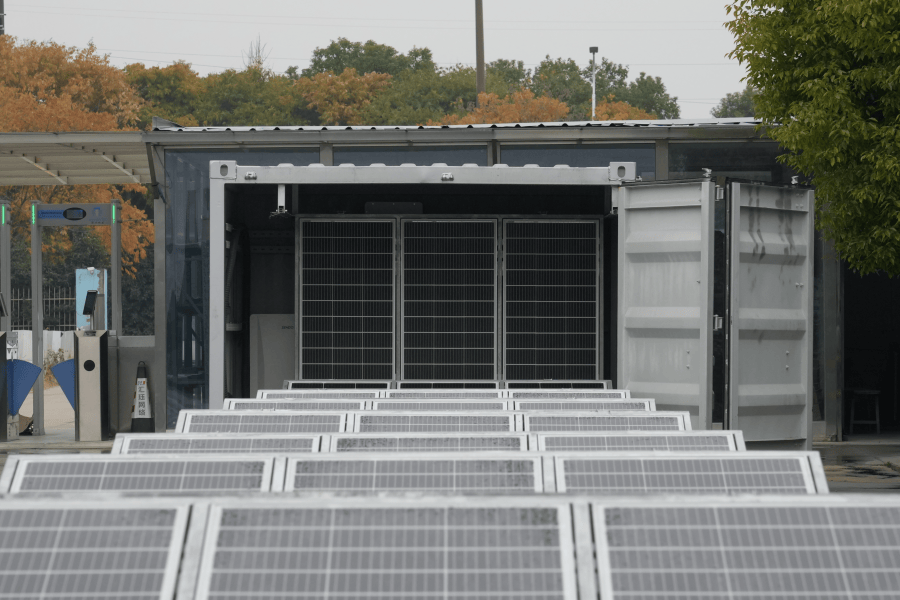
Table of Contents
- The Grid Can't Charge Your Fleet (And It's Costing You)
- Beyond the Hype: A Real 5MWh BESS in Action
- The Tier 1 Cell Advantage: More Than Just a Name
- Thermal Management: The Silent Hero
- Calculating True Value: LCOE for EV Charging
- Your Next Step Beyond the Case Study
The Grid Can't Charge Your Fleet (And It's Costing You)
Let's be honest. If you're planning a large-scale EV charging hub - whether for a municipal bus fleet, a logistics depot, or a public fast-charging plaza - you've already run into the hard reality. The local grid connection is your biggest bottleneck, and frankly, your single largest cost driver. I've seen this firsthand from California to Germany: a site has the land and the demand, but the utility comes back with a quote for a multi-million dollar substation upgrade and a 24-month wait. Or worse, they simply say "no."
This isn't just an inconvenience. According to the National Renewable Energy Lab (NREL), demand charges from simultaneous high-power charging can constitute up to 90% of an operator's electricity bill. You're penalized for the very service you provide. The problem we're really solving here isn't just storing energy; it's managing power. You need to deliver hundreds of kilowatts to multiple vehicles at once without asking the grid for a similarly massive, instantaneous draw. That's the core pain point a well-designed Battery Energy Storage System (BESS) addresses.
Beyond the Hype: A Real 5MWh BESS in Action
Let's move from theory to a site I recently visited - a logistics company in Northern Germany. They transitioned to a 50-vehicle electric truck fleet for last-mile delivery. Their challenge? The depot's grid connection could only support a trickle charge for a few vehicles overnight. Fast charging the entire fleet between shifts was physically impossible.
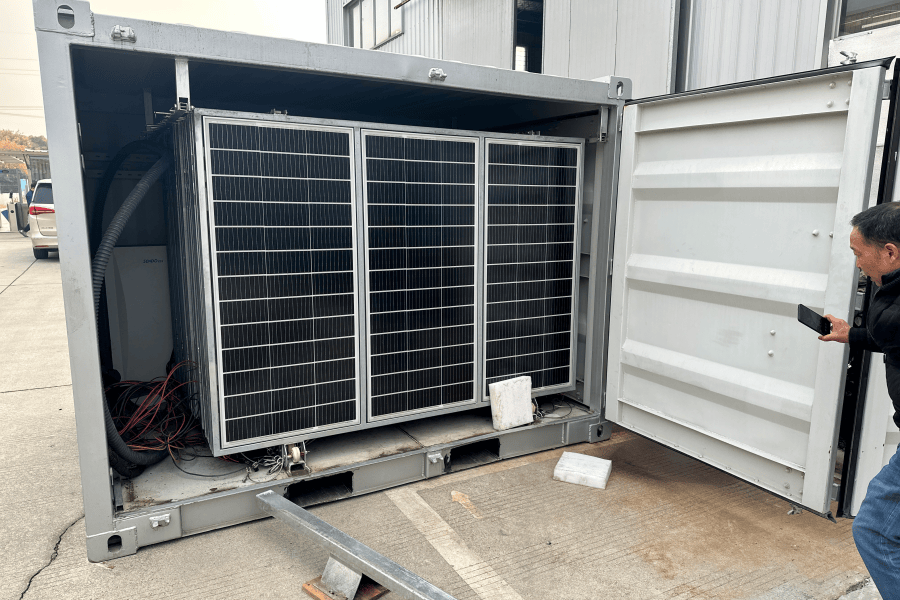
Their solution was a 5MWh, containerized BESS, built with Tier 1 lithium-ion cells. Here's how it works in the real world:
- Overnight & Off-Peak "Trickle Charge": The BESS slowly charges from the grid over 6-8 hours at night, when electricity rates are lowest and grid stress is minimal.
- Daytime Power Burst: During the 2-hour midday break, when all trucks return, the system discharges at a high C-rate to simultaneously fast-charge the entire fleet. The grid connection barely notices.
- Demand Charge Savior: By capping the site's peak draw from the grid, the system slashed their demand charges by over 70%. The project's payback period? Just under 4 years, based on energy arbitrage and demand charge savings alone.
This is the real-world case study in motion. It's not a lab experiment; it's a financial and operational necessity running today.

The Tier 1 Cell Advantage: More Than Just a Name
You'll hear "Tier 1 cells" thrown around a lot. In our world, it's not about brand snobbery. It's about traceability, consistency, and safety documentation that meets the intense scrutiny of European and North American insurers and authorities having jurisdiction (AHJs). A Tier 1 manufacturer provides full cell genealogy - we know the batch, the factory, and the test data for every single cell in our systems. This is non-negotiable for utility-scale projects.
Why does this matter for a 5MWh EV charging BESS? Cycle life and C-rate. Fast charging an EV fleet means you're cycling the battery hard and often. A high, sustained C-rate (the rate at which you charge/discharge relative to capacity) generates heat and stress. Tier 1 cells come with validated, long-term cycle life data under these specific high-power profiles. At Highjoule, we've learned that pairing this cell-level data with our own system-level Battery Management System (BMS) is what unlocks both performance and longevity. You're not just buying cells; you're buying predictable degradation over 15+ years.
Thermal Management: The Silent Hero
If the BMS is the brain, the thermal management system is the lifeblood. This is where many theoretical designs meet their harsh reality. In a 5MWh system supporting 350kW+ chargers, heat is the enemy. I've opened cabinets on sites with poor thermal design, and the temperature differential from the top to the bottom cells was staggering - a surefire way to accelerate aging and create safety risks.
Our approach is straightforward: liquid cooling. It's more complex to engineer, but for a high-power, high-cycle application like EV buffering, it's essential. It maintains every single cell within a tight, optimal temperature range, whether it's 110F in Texas or -10F in Norway. This uniformity is critical for safety (think UL 9540 and IEC 62933 standards) and for hitting that projected cycle life. Honestly, the thermal system is what lets you confidently push the C-rate when you need to, knowing the cells aren't cooking themselves.
Calculating True Value: LCOE for EV Charging
Decision-makers need a number. For energy, that number is often Levelized Cost of Energy (LCOE). For an EV charging BESS, we tweak the model to become the "Levelized Cost of Delivered Charging Capacity."
It factors in:
- Capital Cost: The system itself (where Tier 1 cells and robust thermal management might mean a higher upfront cost).
- Operational Lifespan: Directly tied to cycle life and thermal management quality.
- Performance Degradation: How much capacity is lost over 10,000 cycles.
- Operational Savings: Demand charge reduction, energy arbitrage, and avoided grid upgrade costs.
The German logistics case showed a lower LCOE for BESS-buffered charging compared to the grid-upgrade alternative after Year 4. The BESS became a revenue-protecting asset, not just a cost. This is the calculus we help our clients at Highjoule Technologies work through - modelling the total lifetime economics, not just the sticker price.
Your Next Step Beyond the Case Study
So, a 5MWh BESS with Tier 1 cells can solve the EV charging grid dilemma. We know that. But how do you make it work for your specific site, with your local utility tariffs, your fleet schedule, and your regional safety codes (like the upcoming NFPA 855 in the US)?
The gap between a successful case study and a successful project is filled with granular, on-the-ground expertise. It's in the system integration, the utility interconnection paperwork, the fire marshal walk-through, and the long-term service agreement that guarantees uptime. That's where two decades of deploying these systems across different grids and regulatory landscapes becomes invaluable. What's the one constraint keeping your EV expansion plans parked?
Tags: BESS LCOE UL Standards EV Charging Infrastructure Tier 1 Battery Cells Utility-Scale Energy Storage Grid Stability
Author
James Zhang
20+ years agricultural energy storage engineer / Highjoule CTO