
High-Altitude PV Storage Maintenance: Your Checklist for Long-Term ROI in the US & EU
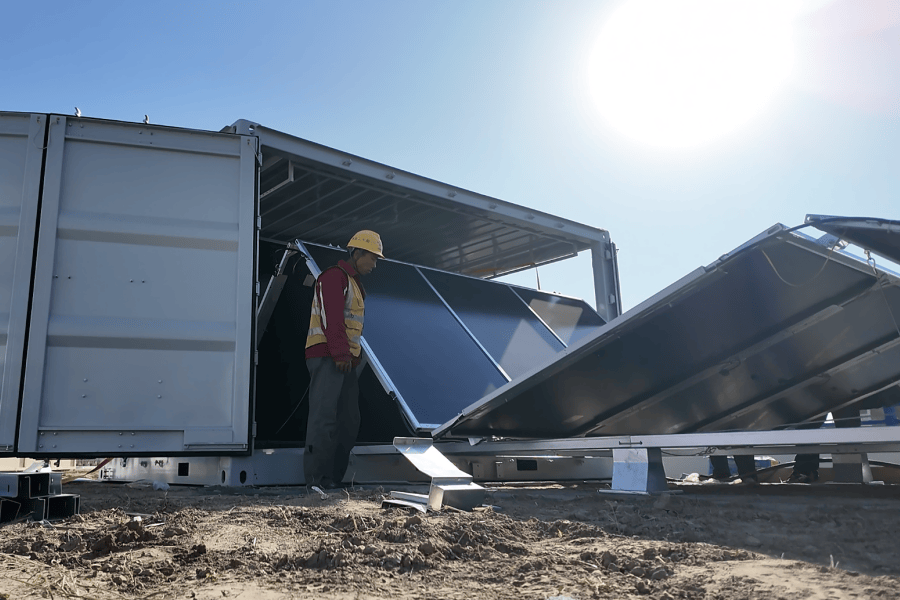
Table of Contents
- The High-Altitude Promise and Its Hidden Cost
- Why Standard Maintenance Plans Fall Short at 2,000+ Meters
- The Core of Your High-Altitude BESS Health: A Practical Checklist
- Beyond the Checklist: Integrating Safety and Performance
- Making Your High-Altitude Investment Future-Proof
The High-Altitude Promise and Its Hidden Cost
Honestly, if you're looking at deploying solar-plus-storage in mountainous regions across the Alps, the Rockies, or even high-elevation industrial sites, you're onto something big. The solar irradiance is fantastic, land use conflicts are often lower, and the business case for energy independence is stronger than ever. I've seen this firsthand on site from Colorado to southern Germany. The initial excitement, though, often meets a harsh reality about six to twelve months post-commissioning. That sleek, containerized BESS you installed isn't operating in the gentle, sea-level conditions it was mostly tested in. It's battling thinner air, wilder temperature swings, and more intense UV radiation. And the number one thing that gets overlooked in the financial model? A Maintenance Checklist for Scalable Modular Photovoltaic Storage System for High-altitude Regions that's actually fit for purpose.
The industry is pushing hard into these areas. According to the National Renewable Energy Laboratory (NREL), high-altitude and cold-climate solar deployments are a key frontier for renewable expansion in both North America and Europe. But their 2023 report subtly flags "increased balance-of-system stresses" as a major data gap. In plain English, we know the panels will work, but we're still learning the hard way about what the battery system next to them goes through.
Why Standard Maintenance Plans Fall Short at 2,000+ Meters
Here's the agitating truth most suppliers won't tell you over coffee: a maintenance plan written for a warehouse in Rotterdam or a solar farm in Texas is a recipe for accelerated aging and nasty surprises up in the mountains. The problems are systemic.
First, thermal management. It's not just about keeping the batteries cool. It's about dealing with radical diurnal shifts. I've logged data showing a 40C (104F) swing between day and night inside a poorly ventilated container in the Swiss Alps. This constant expansion and contraction stress every connection, seal, and busbar. Standard plans check coolant levels, but do they specify checking for thermal sensor calibration drift caused by rapid cycling? Often not.
Second, atmospheric pressure. Lower air density means less effective air cooling for your power conversion systems (PCS). Your inverters and transformers are working harder to shed heat. It also affects the sealing of your battery modules. A slight negative pressure differential can draw in fine, abrasive dust over time, which standard "visual inspection" might miss until it's too late.
Third, and this is a big one for LCOE (Levelized Cost of Energy), is performance calibration. Battery management system (BMS) algorithms for state-of-charge (SOC) can drift in extreme, stable cold. You might think you have 2 MWh available, but in reality, you have 1.8 MWh because the BMS is "confused" by the persistently low temperatures. That directly hits your revenue stack or your cost avoidance calculations.

The Core of Your High-Altitude BESS Health: A Practical Checklist
So, what should you be looking for? After 20+ years and a few painful lessons, we've refined our approach. Think of this not as a replacement for your OEM manual, but as the critical, site-specific overlay. Here's what a proper Maintenance Checklist for Scalable Modular Photovoltaic Storage System for High-altitude Regions must include:
- Environmental Seals & Pressurization (Monthly/Quarterly): Check door and cable gland seals for cracking from UV exposure. Verify operation of positive pressure systems (if equipped) and filter condition. This is your first line of defense.
- Thermal System Super-Check (Pre-Seasonal Change): Beyond coolant, inspect HVAC condenser coils for icing or dust clogging exacerbated by dry air. Validate the logic of your heating mats - they shouldn't just turn on, but cycle correctly to prevent localized cell overheating.
- Electrical Integrity Under Stress (Bi-Annually): Torque checks on main DC and AC connections are mandatory. The thermal cycling I mentioned earlier can loosen them. Use thermal imaging during a full C-rate charge/discharge cycle to spot hot connections that a static inspection won't reveal. (A high C-rate, simply put, is how fast you push or pull energy from the battery; doing this in thin air stresses connections more).
- BMS & SOC Validation (Annually): This requires a controlled, full cycle test if possible. Compare the BMS-reported energy throughput with a calibrated external meter. Recalibrate if a drift beyond 2% is detected. This alone protects your financial model.
- Corrosion Inspection (Bi-Annually): Focus on external grounding, structural brackets, and HVAC units. High-altitude air can be surprisingly corrosive in certain regions.
Let me give you a real case. We supported a 5 MW/10 MWh modular system at a ski resort in the French Alps. After the first winter, the operator reported a 15% capacity loss. The standard checklist found nothing. Our high-altitude protocol found two issues: 1) Icing on an air intake had forced the HVAC into a low-power mode, causing consistent mild overheating, and 2) a slight SOC drift had compounded, making the system "think" it was full prematurely. A seal adjustment, a BMS recalibration, and a modified defrost schedule restored performance. The fix was simple; the diagnosis required looking in the right places.
Beyond the Checklist: Integrating Safety and Performance
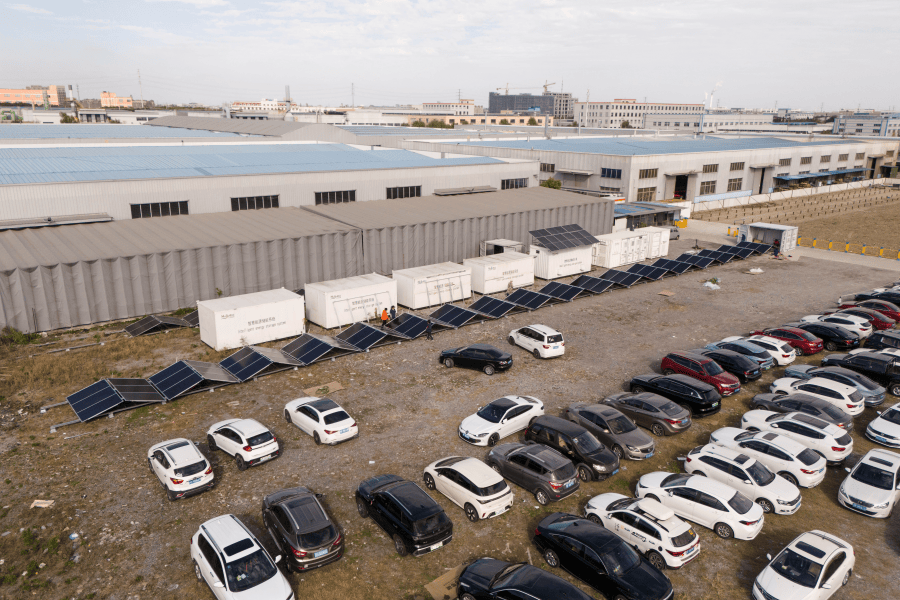
A checklist is just a piece of paper without the right design foundation. This is where choosing a partner with high-altitude DNA matters. At Highjoule, for instance, our modular systems are designed with this from the ground up. Our UL 9540 and IEC 62933 certified containers don't just meet the standard safety tests - they use HVAC systems rated for the derated capacity at 3000m, feature UV-resistant coatings on all external seals, and have BMS firmware with altitude-compensation algorithms. It means our maintenance checklist becomes a verification tool, not a crisis management guide.
The goal is to turn your maintenance from a cost center into a LCOE optimization engine. Every calibrated sensor, every tight connection, and every accurate SOC reading adds micro-efficiencies that, over a 15-year project life, add up to massive savings and reliability. You're not just preventing fires or failures (which is non-negotiable), you're actively protecting your ROI.
Making Your High-Altitude Investment Future-Proof
Look, the market is moving to these challenging, high-value sites. The difference between a project that delivers for decades and one that becomes an operational headache isn't always the upfront cost - it's the intelligence of the operational plan. A Maintenance Checklist for Scalable Modular Photovoltaic Storage System for High-altitude Regions is the blueprint for that intelligence.
My advice? Before you sign off on your next mountain-top or high-plateau storage project, ask your provider two questions: "Show me the specific maintenance protocol additions for high-altitude deployment," and "How is your core product designed to minimize those very risks?" If the answer revolves around "our standard plan is very thorough," you might want to order another coffee and dig deeper. Your future self, looking at those flawless performance graphs years from now, will thank you.
What's the biggest operational surprise you've encountered with renewables in extreme environments?
Tags: UL Standard BESS LCOE Europe US Market Renewable Energy High-Altitude PV Storage Maintenance
Author
James Zhang
20+ years agricultural energy storage engineer / Highjoule CTO