
ROI Analysis of Grid-forming BESS for Eco-Resorts: The Real Numbers
Contents
- The Quiet Problem Every Eco-Resort Manager Knows
- Beyond the Generator: The Real Cost of "Reliable" Power
- The Grid-Forming Difference: More Than Just Backup
- Crunching the Real Numbers: An ROI Analysis You Can Trust
- Case in Point: A California Retreat's Transformation
- What Makes a System Work (And Pay for Itself)
- Your Next Step: Asking the Right Questions
The Quiet Problem Every Eco-Resort Manager Knows
Let's be honest. If you're running an eco-resort, a remote lodge, or any off-grid hospitality property, you have a secret stressor that never quite leaves your mind: the power. That beautiful, secluded location that draws your guests is the same thing that makes your electrical infrastructure a constant, complex, and expensive puzzle. I've been on-site for dozens of these projects, from the mountains of Colorado to the islands of Greece, and the story is often the same. You're juggling diesel generators, a patchwork of solar panels, and a fragile connection to a distant grid, all while promising your guests a seamless, sustainable experience. The tension is real.
Beyond the Generator: The Real Cost of "Reliable" Power
We often agitate the problem by only looking at the upfront price tag. A new generator? Sure, we can budget for that. But the real ROI killer is in the operational details - the details that keep you up at night. I've seen firsthand the monthly fuel delivery bills that swing wildly with global prices. I've listened to the frustration over generator maintenance schedules that disrupt peak season operations. And let's not forget the noise and emissions, which directly contradict the "eco" brand you've worked so hard to build.
Then there's the solar side. You've invested in PV, but without robust storage, a lot of that clean energy is wasted when the sun is shining but demand is low. Or worse, during a cloud passage, the entire system stutters, forcing a clumsy handoff back to diesel. According to the National Renewable Energy Laboratory (NREL), maximizing the value of solar in remote microgrids often hinges on advanced, controllable storage - not just panels alone. The old way creates hidden costs: wasted energy, brand inconsistency, and operational fragility.
The Grid-Forming Difference: More Than Just Backup
This is where a proper ROI Analysis of Grid-forming Energy Storage Container for Eco-resorts changes the conversation. Most people think of batteries as just backup - a silent box that waits for a failure. A grid-forming BESS is fundamentally different. It's the active, beating heart of your microgrid. It doesn't just store energy; it creates a stable, clean voltage and frequency waveform that can start cold (a "black start"), seamlessly integrate your solar, and tell your generators when to run at their most efficient point - or not run at all.
Think of it as the conductor of your energy orchestra, instead of just another instrument. This capability is a game-changer for ROI because it transforms your storage from a cost center into a revenue-enabling and cost-avoidance asset.

Crunching the Real Numbers: An ROI Analysis You Can Trust
So, what does the math actually look like? A genuine ROI analysis has to move beyond simple payback on equipment. We need to talk about LCOE (Levelized Cost of Energy). LCOE is the total lifetime cost of your power system divided by the energy it produces. It's the metric that matters. A grid-forming BESS, properly sized and integrated, slashes your LCOE by:
- Fuel Displacement: Drastically reducing generator runtime. I've seen sites cut diesel use by 70-90%.
- Asset Optimization: Extending generator life by 2-3x by eliminating low-load, inefficient operation.
- Zero-Wasted Solar: Capturing every kilowatt-hour your panels produce, for use anytime.
- Resilience as a Revenue Stream: Avoiding lost bookings and guest compensation during outages. Your power reliability becomes a marketable feature.
For a typical 50-room eco-resort, we're often looking at a full system ROI in the 4-7 year range, with a system life of 15-20 years. That's a decade-plus of dramatically lower, predictable energy costs.
Case in Point: A California Retreat's Transformation
Let me give you a real example from the Sierra Nevada. A high-end retreat was reliant on a long, vulnerable overhead line and a backup diesel generator. Their goals were clear: eliminate outage risk, go greener, and control costs.
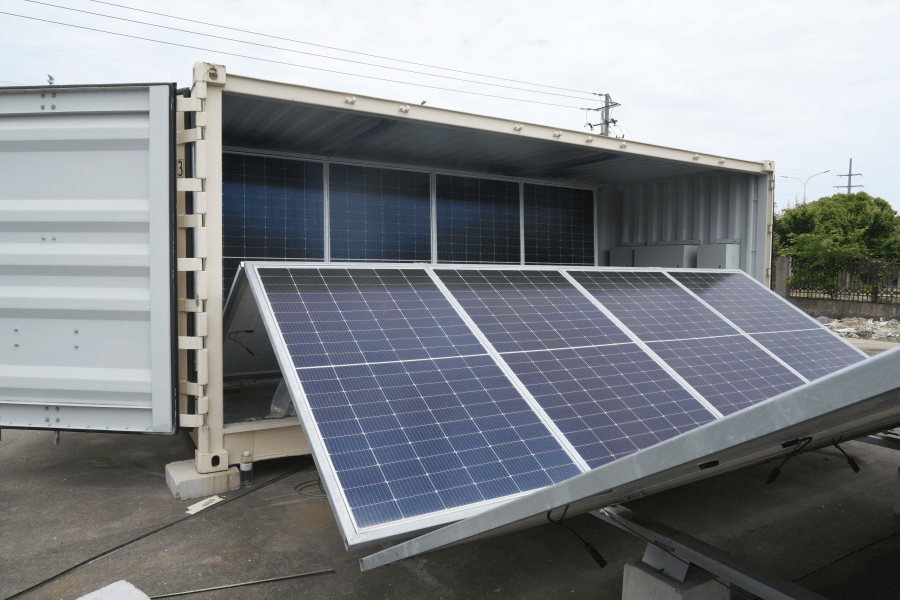
We deployed a UL 9540-certified grid-forming energy storage container from Highjoule, paired with their existing solar array. The challenges were classic: space constraints, strict local fire codes, and the need for a "set-and-forget" system that their staff could manage.
The outcome? In the first year:
- Generator hours reduced by 85%.
- Solar self-consumption rate jumped from ~40% to over 95%.
- They survived three major grid outages without a single flicker in guest areas.
- The thermal management system we spec'd (a critical, often overlooked piece) kept the container performing optimally through both summer heat and winter snow, all while meeting all local UL and IEC safety standards. That operational certainty is priceless.
The owner told me later, "The battery doesn't just save us money. It lets me sleep at night and sell the'fully sustainable' experience with confidence." That's the real ROI.
What Makes a System Work (And Pay for Itself)
Not all BESS are created equal for this job. From my two decades in the field, here's what to look for in a system that will deliver on its ROI promise:
- True Grid-Forming Inverter Technology: It must be able to create a stable grid from zero, not just follow one.
- Robust Thermal Management: Battery life and safety hinge on this. A poorly cooled system will degrade fast, killing your ROI. Look for liquid cooling or advanced forced-air systems with full redundancy.
- The Right C-rate: This is basically the "power rating" of the battery. A high C-rate means it can discharge quickly to handle big loads (like all the AC units kicking on at once). You need one matched to your resort's load profile - oversizing is wasteful, undersizing is ineffective.
- Localized Support & Compliance: This is where Highjoule's model is crucial. Your container must be pre-configured to meet local codes (UL in the Americas, IEC in Europe). And when a software alert pops up, you need a local service partner who understands the system, not a helpline halfway around the world. That's how we design our deployments - for the full lifecycle.

Your Next Step: Asking the Right Questions
The journey to a smarter, more profitable energy setup starts with a shift in perspective. Stop asking, "How much does a battery cost?" and start asking, "What is the total lifetime cost of my current energy mix, and what am I risking by not making it resilient and sustainable?"
When you talk to a provider, ask them about their on-site experience with grid-forming tech in hospitality. Ask for a detailed LCOE model, not just a quote. Ask how their thermal management works in your specific climate. Honestly, the right partner will welcome these questions - because they've been on-site, they've seen the problems, and they know the solution is about more than just hardware. It's about delivering peace of mind and a clear path to a stronger bottom line. So, what's the first energy cost you'd like to eliminate?
Tags: UL Standard BESS Microgrid Grid-forming Energy Storage ROI Eco-Resort
Author
James Zhang
20+ years agricultural energy storage engineer / Highjoule CTO