
Maximizing Data Center Uptime & ROI: A Deep Dive into High-Voltage DC Hybrid Solar-Diesel Systems
The Real ROI Behind Keeping Your Data Center Online: Why Hybrid Systems Are the New Gold Standard
Hey there. Let's grab a virtual coffee. If you're responsible for a data center's power strategy, I know your world: it's a constant balancing act between unbreakable uptime and spiraling operational costs. Honestly, I've been in your shoes on the client side, and now, after 20+ years deploying BESS and renewable systems globally, I've seen firsthand what truly moves the needle on both reliability and the bottom line. Today, I want to cut through the hype and talk about a specific, powerful approach that's changing the game: the High-voltage DC Hybrid Solar-Diesel System. We're not just talking theory; we're talking about a clear, calculable path to a stronger ROI for your backup power.
What We'll Cover
- The Real Problem: More Than Just a Diesel Generator
- The Cost Spiral: When Reliability Becomes a Financial Burden
- The Hybrid Solution: Engineering for Efficiency and ROI
- Case in Point: A 10MW Data Center in Northern Germany
- Key Technical Insights (Made Simple)
- Making It Work For You: Beyond the Hardware
The Real Problem: More Than Just a Diesel Generator
For decades, the playbook was simple: pair the grid with a massive diesel genset farm. It worked, but it came with baggage we all learned to accept. The problem isn't just having backup; it's the operational model of that backup. Diesel generators are fantastic for rare, short-duration outages. But what about frequent grid sags, or the need for daily peak shaving to avoid demand charges? Firing up a 2MW diesel engine for that is like using a sledgehammer to crack a nut C incredibly inefficient, expensive, and noisy. Not to mention the maintenance overhead and the emissions targets staring you down.
The Cost Spiral: When Reliability Becomes a Financial Burden
Let's agitate that pain point a bit. I've walked through countless data center yards, and the financial drain is often visible. You have millions in capex sitting idle 99% of the time. You're buying diesel fuel at commercial rates, dealing with strict runtime permits (especially in places like California or the EU), and facing ever-rising carbon taxes. The International Energy Agency (IEA) highlights that data centers are among the fastest-growing consumers of electricity globally, with power reliability being their top concern. This isn't just an ops issue; it's a core financial one.
The traditional model creates a vicious cycle: higher reliability demands lead to more diesel capacity, which drives up fixed costs and variable Opex, eroding your facility's overall profitability. You're paying a premium for peace of mind, and that premium keeps getting steeper.
The Hybrid Solution: Engineering for Efficiency and ROI
This is where the ROI Analysis of a High-voltage DC Hybrid Solar-Diesel System becomes more than a spreadsheet exercise - it becomes a blueprint for a smarter infrastructure. The solution is integration, not replacement. Here's the elegant idea:
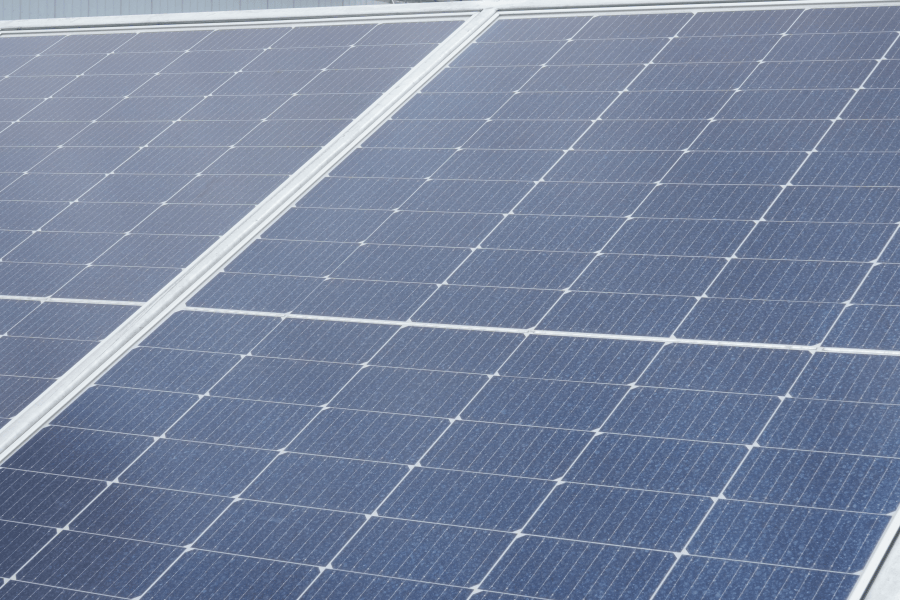
- Solar PV: Provides clean, low-cost energy during the day, directly offsetting your base load and charging the battery.
- High-Voltage Battery Energy Storage System (BESS): This is the heart. It acts as a instantaneous buffer for grid transients, handles peak shaving daily, and serves as the first responder during an outage. The diesel genset now has precious minutes to start and synchronize perfectly, drastically reducing wear and tear.
- Advanced DC Coupling: By keeping solar and batteries on a high-voltage DC bus, we minimize conversion losses (AC-DC-AC). It's more efficient, simpler, and frankly, more reliable. We're talking about system efficiency gains of 3-5% compared to traditional AC-coupled setups. That directly improves your Levelized Cost of Energy (LCOE).
The financial logic is compelling. You're converting a pure cost center (backup) into a revenue-protecting, cost-optimizing asset. The BESS pays for itself through daily grid service (demand charge reduction, frequency regulation markets in some regions) while safeguarding your uptime.
Case in Point: A 10MW Data Center in Northern Germany
Let me bring this to life with a project we completed last year. The client, a hyperscale operator in Schleswig-Holstein, faced stiff local emissions regulations and wanted to mitigate grid congestion risks. Their challenge: ensure 99.99% uptime while reducing diesel dependence and future-proofing against carbon costs.
We deployed a 4MW/16MWh Highjoule BESS, DC-coupled with a 2MW rooftop solar array, integrated with their existing 10MW diesel plant. The BESS is housed in two UL 9540-certified containers, a non-negotiable for their risk and insurance team.

The outcome? The system now handles all short-duration grid fluctuations and executes daily peak shaving. The diesel gensets haven't run for a grid event in 9 months - they only spin up for mandated monthly tests. The projected ROI, factoring in avoided demand charges, reduced fuel and maintenance, and green incentives, tightened from an initial 7-year to under 5 years. The facility manager told me the quiet site is now a "side benefit he didn't fully appreciate in the proposal."
Key Technical Insights (Made Simple)
As an engineer, the devil's in the details. Here's what I look for, in plain English:
- C-rate & Thermal Management: Think of C-rate as how "hard" you can push the battery. For backup, you need a high discharge C-rate (like 1C or more) to instantly pick up the full load. But high power generates heat. If the thermal management (cooling) isn't superb, the battery degrades fast. We use a liquid-cooled system that's whisper-quiet and keeps every cell at an optimal temperature, which is critical for longevity and safety. A poorly cooled BESS can lose 20% of its capacity in a few years, destroying your ROI.
- UL/IEC 62933 & IEEE 1547: These aren't just acronyms. In the US and EU, they're your safety and grid-interconnection bible. Your system must be designed and tested to these standards. It ensures it won't fail dangerously and will "play nice" with the grid. Any credible provider's hardware will have these certifications.
- LCOE & Software: The Levelized Cost of Energy is your true cost per kWh over the system's life. A high-quality, durable BESS with smart software that optimizes every charge/discharge cycle for value (not just simple logic) lowers your LCOE. The software is the brain that maximizes ROI.
Making It Work For You: Beyond the Hardware
The technology is proven. The real success, from my site experience, comes from treating this as an integrated power system project, not a battery purchase. It's about:
- Localized Design: A system for Texas needs different specs than one in Finland (think ambient temperature, grid code nuances).
- Partnering with Expertise: You need a partner who understands the full stack - from the power conversion hardware to the grid codes to the financial modeling. At Highjoule, our service model includes a dedicated site assessment and a performance guarantee backed by our remote monitoring and local maintenance crews.
- Honest ROI Modeling: Be wary of overly optimistic models. A good analysis will include conservative degradation curves, local fuel price forecasts, and a clear picture of all available incentives, like the ITC in the US or various EU green deal programs.
So, what's the next step for your facility? Have you looked at your last year's fuel and maintenance bills for your backup gensets? That number is the starting point for your own ROI analysis.
Tags: UL Standard BESS LCOE Data Center Backup Power US Market Europe Market Microgrid ROI Analysis High-voltage DC Hybrid Solar-Diesel System
Author
James Zhang
20+ years agricultural energy storage engineer / Highjoule CTO