
LFP Hybrid Solar-Diesel ROI: Cutting Mining Energy Costs in Remote Sites
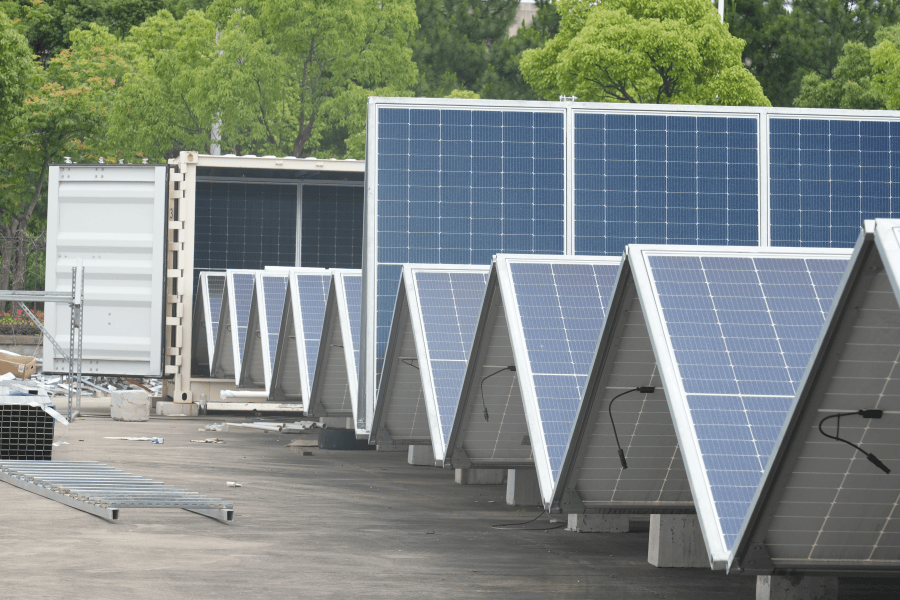
Table of Contents
- The Remote Power Dilemma: It's Not Just About Fuel
- Why Traditional ROI Stumbles in Harsh Environments
- The LFP Hybrid Advantage: More Than Just Chemistry
- A Mauritania Case in Mind: From Spreadsheet to Reality
- Key ROI Drivers, Unpacked for Decision-Makers
- Beyond the Numbers: The Unseen ROI of Resilience
The Remote Power Dilemma: It's Not Just About Fuel
Let's be honest. When we talk about powering remote mining or industrial sites, the conversation immediately jumps to the astronomical cost of diesel. And it should - it's often 60-70% of the operating cost for off-grid power. But after 20 years on sites from the Australian Outback to the Chilean highlands, I've seen firsthand that the real problem is more nuanced. It's the volatility of that cost, the sheer logistical headache of getting fuel there, and the brutal reality of equipment failure when you're hundreds of miles from the nearest service depot. You're not just buying diesel; you're buying a fragile, expensive lifeline.
Why Traditional ROI Stumbles in Harsh Environments
Many operators look at solar-plus-storage and run a quick payback calculation: solar generation vs. diesel displaced. On paper, it looks promising. But then reality hits. The dust storms in Mauritania or the extreme temperature swings in Nevada degrade system performance faster than models predict. A battery system not built for the duty cycle of a haul truck motor starting, or one that can't handle the thermal stress, ends up needing replacement years early. Suddenly, that attractive 4-year ROI stretches to 7 or 8. The problem isn't the concept; it's applying a commercial-grade solution to an ultra-demanding industrial environment. According to the National Renewable Energy Laboratory (NREL), proper system design and technology selection for the specific use case can swing the levelized cost of energy (LCOE) by over 30% in remote microgrids.

The LFP Hybrid Advantage: More Than Just Chemistry
This is where the specific focus on an LFP (LiFePO4) hybrid system changes the game. It's not just a "battery." For a mining operation, it's a strategic power asset. Why LFP? Honestly, for harsh, safety-critical environments, its inherent stability is non-negotiable. You get a longer cycle life - we're consistently seeing 6000+ cycles at 80% depth of discharge in our field data - which directly translates to a longer asset life and better ROI. The thermal runaway tolerance is orders of magnitude higher than other chemistries. When I'm on site, that means I can sleep a little better knowing the system next to the fuel depot and crew quarters has that built-in safety buffer.
A Mauritania Case in Mind: From Spreadsheet to Reality
Let's talk about a project that mirrors the challenges of a Mauritanian mining operation, but let's place it in a jurisdiction with standards our US and EU clients know well: a copper processing facility in the arid Southwest US. The challenge was identical - reduce a 5 MW diesel genset load, stabilize voltage for heavy machinery, and do it without adding operational risk.
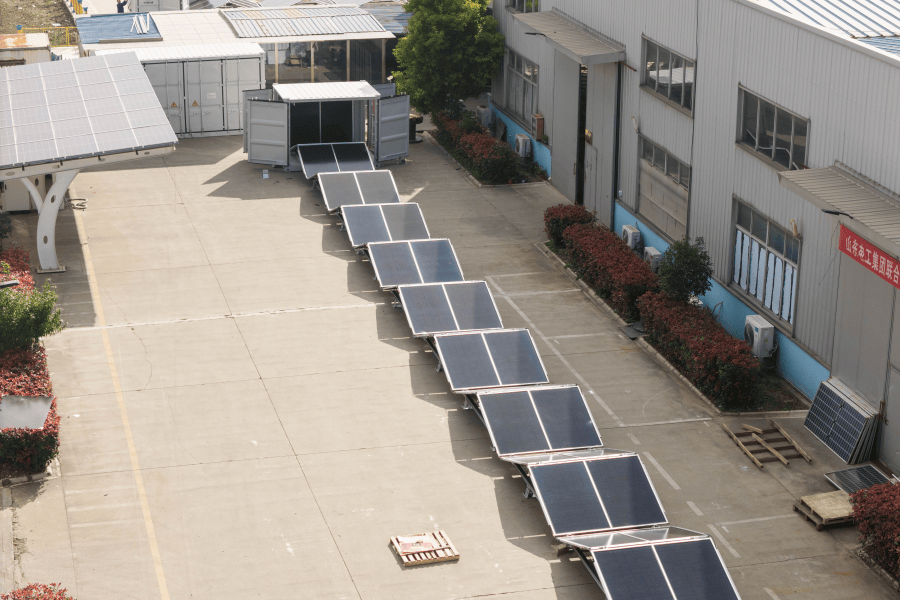
The solution was a 4 MW solar PV array coupled with a 3 MWh Highjoule LFP battery storage system, integrated into the existing genset control system. The key wasn't just the hardware. It was the control logic we co-developed with the operator. The BESS doesn't just store solar energy; it acts as a spinning reserve, allowing the remaining diesel gensets to run at their most fuel-efficient point, and instantly responds to load spikes (like those big mills kicking in) to prevent frequency drops. The result? A 41% reduction in diesel consumption in the first year. But the ROI story got even better: reduced genset maintenance hours and the ability to defer a total genset upgrade. That's the kind of holistic financial picture that gets a CFO's attention.
Key ROI Drivers, Unpacked for Decision-Makers
So, what should you really be modeling in your ROI analysis for a hybrid system? Let's move past the basics:
- C-rate Isn't Just a Spec: It's about power when you need it. A battery with a sustained high C-rate can handle the simultaneous start-up of multiple large motors without calling on diesel. This "peak shaving" capability is where immediate fuel savings happen. Our systems are engineered for these high-power, short-duration events common in mining.
- Thermal Management is a Capex & Opex Item: A passively cooled system might be cheaper upfront. But in a 45C (113F) desert environment, its lifespan and performance will plummet. An active liquid-cooling system, like the one we use in our UL 9540-certified containers, maintains optimal cell temperature. This upfront cost preserves your long-term investment and ensures you get the cycles you paid for.
- LCOE is Your True North: Don't just look at simple payback. Work with a partner who can model the Levelized Cost of Energy over the system's 15-20 year life. Include all costs: fuel, genset maintenance, carbon compliance costs (increasingly relevant in Europe), and battery replacement. A robust LFP system with a flat degradation curve dramatically improves the long-term LCOE.
Beyond the Numbers: The Unseen ROI of Resilience
Finally, there's an ROI component that's hard to put in a spreadsheet but is felt daily on site: energy resilience and predictability. When your power supply is no longer hostage to fuel delivery delays or volatile prices, you gain operational certainty. You can plan. For a mine, uninterrupted operation is everything. The hybrid system with LFP storage becomes a buffer against the world's instability. It also future-proofs your site. Adding more solar later? The BESS is ready. Facing new emissions regulations? Your carbon footprint is already down.
At Highjoule, when we design a system for a remote industrial client, we're not just selling containers. We're deploying a localized, intelligent power plant that complies with the strictest standards you require - be it UL, IEC, or IEEE. We've learned that the real ROI comes from a deep understanding of your site's unique load profile, its environmental extremes, and your operational pain points. So, what's the one power reliability issue keeping your site manager up at night? That's usually where the best ROI story begins.
Tags: UL Standard BESS LCOE Europe US Market Renewable Energy Energy Storage ROI Hybrid Power Systems Mining Industry
Author
James Zhang
20+ years agricultural energy storage engineer / Highjoule CTO