
ROI Analysis of Novec 1230 Fire Suppression for Off-grid Solar Telecom BESS
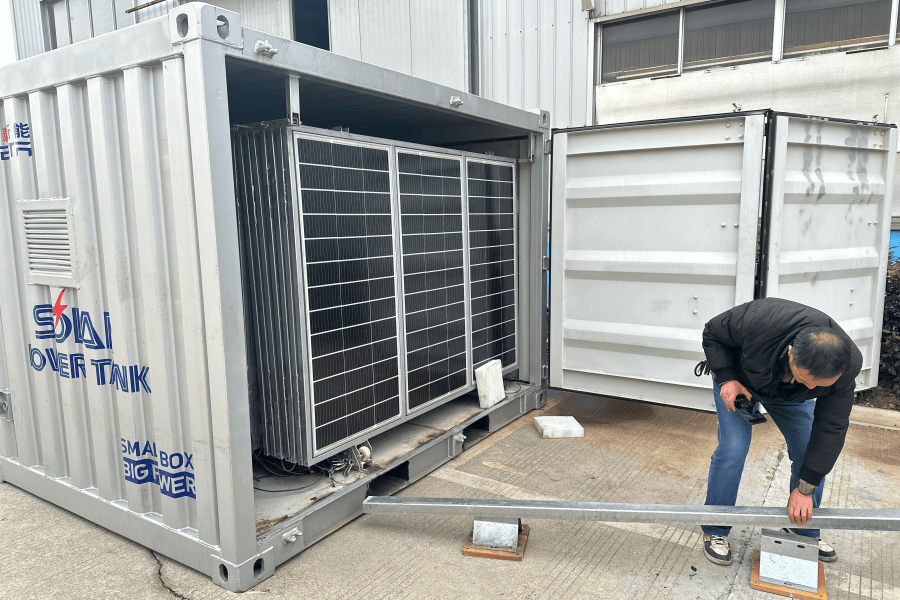
Table of Contents
- The Silent Cost Killer on Your Balance Sheet
- Beyond the Battery: The Real ROI Equation
- A Case in Point: The German Forest Site
- Novec 1230: The ROI Breakdown You Don't Get From Brochures
- Thermal Management & C-Rate: The Unsung Heroes of Profitability
- Making the Numbers Work for Your Next Project
The Silent Cost Killer on Your Balance Sheet
Let's be honest. When you're planning an off-grid solar and battery system for a remote telecom tower, your spreadsheet is probably obsessed with two things: the cost per watt of the panels and the dollar per kilowatt-hour of the battery bank. I've sat in those meetings. But after twenty-plus years of deploying these systems from the Arizona desert to the Scottish Highlands, I can tell you there's a line item that often gets underestimated, yet it can make or break your project's lifetime ROI. It's not the hardware you see; it's the risk you don't.
I'm talking about fire risk and suppression. A thermal runaway event in a lithium-ion battery energy storage system (BESS) isn't just a safety nightmare - it's a financial black hole. The National Renewable Energy Laboratory (NREL) has detailed how a single incident can lead to total asset loss, massive environmental cleanup, crippling downtime, and, let's not forget, stratospheric insurance premiums. For a telecom base station, downtime isn't an operational metric; it's a direct revenue killer and a breach of service-level agreements.
Beyond the Battery: The Real ROI Equation
So, we all agree we need fire suppression. The old-school choice was often water or generic chemical agents. But here's the agitation point I've seen firsthand on site: traditional suppression can be almost as damaging as the fire itself. Water conducts electricity, leading to secondary short circuits. Some chemical agents leave a corrosive residue that destroys sensitive electronics, turning a contained fire event into a total system write-off. You've "saved" the site only to face a six-figure equipment replacement bill and weeks of extra downtime.
This is where the conversation shifts from simple fire suppression to asset preservation. Your ROI analysis must evolve from "What's the cheapest box to put out a fire?" to "What system protects my entire capital investment and keeps my revenue flowing?" This mindset is critical for systems built to UL 9540 and IEC 62933 standards, where safety is integral, not an add-on.
A Case in Point: The German Forest Site
Let me give you a real example. We worked on a project in North Rhine-Westphalia, Germany - a telecom site powered solely by solar and BESS, deep in a managed forest. The challenge was triple: extreme weather fluctuations, zero municipal water access, and incredibly stringent environmental regulations. A conventional system failure would have been an ecological and PR disaster.
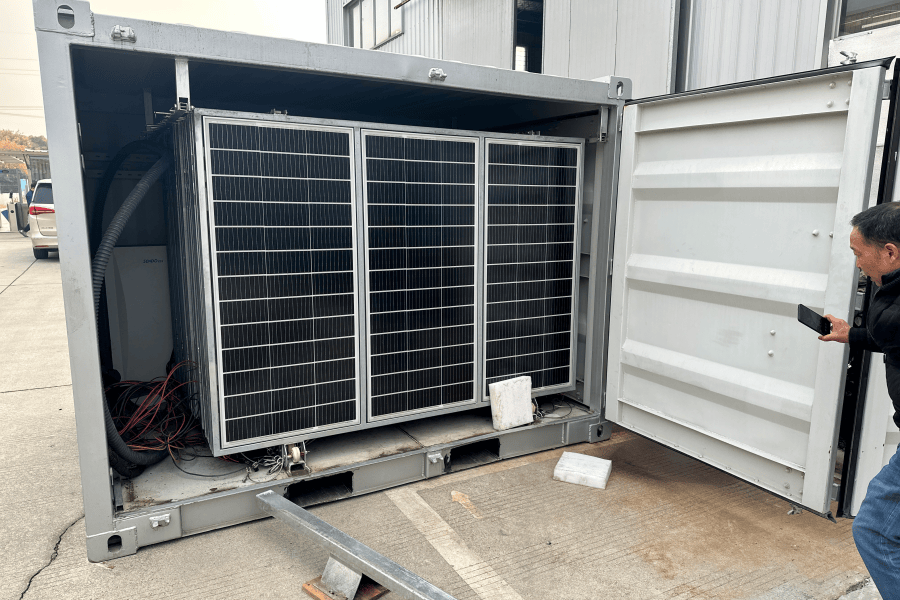
The solution we deployed integrated a Novec 1230 fluid fire suppression system from the ground up. The beauty of Novec 1230, for those not deep in the specs, is that it's a clean agent. It extinguishes fire by removing heat, not oxygen, and it vanishes without a trace - no residue, no conductivity, no secondary damage. For the operator, this meant that in the unlikely event of a thermal incident, the system could potentially be inspected, reset, and brought back online with minimal interruption. The off-grid solar generator wasn't just safe; it was resilient.

Novec 1230: The ROI Breakdown You Don't Get From Brochures
So, how does this translate into hard numbers for your ROI Analysis? Let's look beyond the upfront cost premium, which does exist.
- Downtime Avoidance: A clean agent system can reduce post-incident recovery from weeks to potentially days or hours. Calculate your revenue loss per hour of tower downtime. The math becomes compelling very quickly.
- Asset Longevity: By preventing corrosive damage to all surrounding components (inverters, controllers, telecom gear), you protect the full system's life expectancy. This directly improves your Levelized Cost of Energy (LCOE), a key metric for any off-grid power source.
- Insurance & Risk Financing: Insurers are increasingly savvy about BESS risks. Demonstrating a UL-tested, clean-agent suppression system like one using Novec 1230 can lead to significant reductions in annual premiums. Over a 15-year project life, these savings can offset the initial investment.
- Regulatory Future-Proofing: Standards like IEEE 2030.2 are pushing for higher safety benchmarks. Investing in a top-tier system now avoids costly retrofits later.
Thermal Management & C-Rate: The Unsung Heroes of Profitability
This leads me to a crucial technical point that ties directly to fire risk and ROI: thermal management and C-rate. In simple terms, the C-rate is how fast you charge or discharge a battery. A higher C-rate for backup power is great, but it generates more heat. Poor thermal management leads to accelerated degradation (shortening battery life) and increases the statistical risk of thermal events.
At Highjoule, when we design a system for a telecom base station, we don't just slap the highest C-rate battery we can find into a container. We model the thermal load, design the cooling (often passive or low-power active cooling to save energy), and then integrate the suppression system as the final, failsafe layer. This holistic approach ensures the battery operates in its "happy zone" for 95% of its life, maximizing cycle life and minimizing stress. The suppression system is for the other 5% of scenarios. This integrated design philosophy is what delivers true long-term value, not just a collection of certified parts.
Making the Numbers Work for Your Next Project
The bottom line is this: an ROI Analysis of a Novec 1230 Fire Suppression Off-grid Solar Generator for Telecom Base Stations cannot be a footnote. It must be a central pillar of your financial model. You're not just buying a fire extinguisher; you're buying insurance for your revenue, a guarantee for your operational continuity, and a shield for your capital investment.
My advice? On your next RFP or design review, push your engineering team or technology provider on these specifics. Ask: "How does the fire suppression system integrate with the thermal management design?" and "What is the projected recovery time and asset salvage rate after a suppression event?" The answers will tell you everything you need to know about the long-term ROI of the project.
We've built this expertise into our own systems at Highjoule Technologies because we've seen the cost of getting it wrong. The goal isn't just to build a system that works on day one, but one that protects your investment and your peace of mind for the next two decades. So, what's the real cost of risk in your next off-grid deployment?
Tags: UL Standard BESS Off-grid Solar Novec 1230 Telecom Energy ROI Fire Safety IEEE
Author
James Zhang
20+ years agricultural energy storage engineer / Highjoule CTO