
ROI Analysis of Scalable Modular Lithium Battery Storage for Farm Irrigation
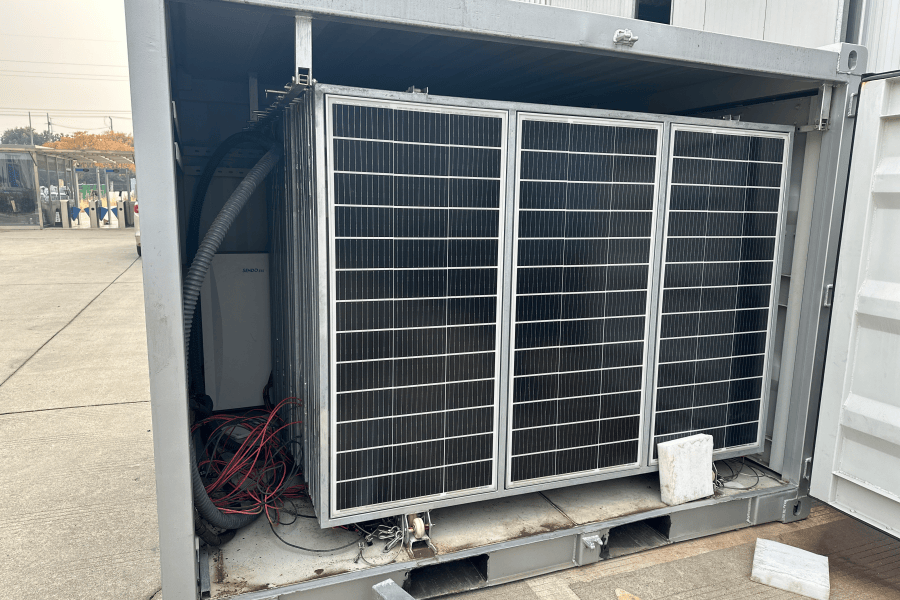
Table of Contents
- The Irrigation Dilemma: Power When You Need It, Costs When You Don't
- Why Traditional "Solutions" Fall Short for Modern Farms
- The Modular Container Solution: Scalability Meets Smart Economics
- Breaking Down the ROI: A Real-World Framework
- A Case from the Field: California Almonds and Demand Charge Relief
- Beyond the Basics: Expert Insights for a Bulletproof Investment
- Making the Move: What to Look For
The Irrigation Dilemma: Power When You Need It, Costs When You Don't
Let's be honest. If you're running a large-scale agricultural operation in the US or Europe, your energy bill isn't just a line item; it's a major variable in your profitability. And nothing drives that variable crazier than irrigation season. You've got a narrow window to water, often during peak demand periods when utility rates are at their highest. I've been on farms where the demand charges from running those massive pumps can make an accountant wince. You're essentially penalized for the intensity of your power use, even if it's just for a few hours. The problem isn't just cost, it's predictability. With volatile energy markets and increasing grid instability in rural areas, planning your operational budget feels like a gamble.
Why Traditional "Solutions" Fall Short for Modern Farms
So, what are the options? Diesel generators are a common fallback. But between the fuel costs, maintenance, noise, emissions, and frankly, the logistical headache of storing and handling fuel, they're a 20th-century solution. Going fully off-grid with solar? It's a fantastic goal, but the sun doesn't always shine when your crops need water most - often in the early evening. You end up oversizing a solar array and a battery bank to cover those worst-case scenarios, which kills your project's economics before it even starts.
The core issue is a lack of flexibility. Agricultural energy needs aren't static; they scale with the season, the crop, and the weather. A fixed, oversized system has a terrible LCOE (Levelized Cost of Energy). You're paying for capacity you only use a fraction of the year. According to the National Renewable Energy Lab (NREL), the key to cost-effective storage is high utilization. A system that sits idle for months can't possibly deliver a strong return.
The Modular Container Solution: Scalability Meets Smart Economics
This is where the concept of a scalable, modular lithium battery storage container changes the game. Think of it not as a single, massive battery, but as a "building block" of energy. You start with a base container unit that's pre-engineered, pre-wired, and safety-certified (like to UL 9540 and IEC 62619 standards we design to at Highjoule). It plugs and plays on your site. Then, as your farm grows or your energy strategy evolves, you simply add another identical container module alongside it. Your storage capacity scales linearly with your needs and your capital outlay.

For irrigation, this is a revelation. You can right-size your initial system to shave off the most expensive peak demand charges today. Later, you can add modules to integrate more solar, cover more pumps, or even provide backup power for critical farm facilities. The ROI analysis stops being a one-time, all-or-nothing calculation and becomes a phased, manageable investment roadmap.
Breaking Down the ROI: A Real-World Framework
When I sit down with a grower for that coffee chat, we don't just talk tech specs. We build a simple, tangible ROI model. Here's what matters:
- Demand Charge Reduction: This is often the biggest saver. By using stored battery power to supplement the grid during peak irrigation hours, you can dramatically flatten your power draw. I've seen reductions of 30-50% on the demand portion of the bill. At $15-$30 per kW of peak demand, that adds up fast.
- Energy Arbitrage: Charge the batteries with cheap, off-peak grid power (or your own solar), and discharge during expensive peak periods. The price spread is your profit.
- Resilience & Power Quality: How much is it worth to avoid a crop-loss event from a well-timed power outage during a heatwave? For many, this isn't just an insurance policy; it's business continuity.
- Incentives: The IRENA tracks the global push for storage. In the US, the Investment Tax Credit (ITC) now stands at 30-70% for standalone storage, and many states have additional ag-specific grants. In the EU, various CAP and innovation funds apply. These directly improve payback.
The formula shifts from "Can I afford this?" to "What's the payback period?" With the right modular system, we're consistently seeing paybacks in the 4-7 year range, with a system life of 15+ years.
A Case from the Field: California Almonds and Demand Charge Relief
Let me give you a real, anonymized example from California's Central Valley. A 500-acre almond grower was facing monthly demand charges over $12,000 during summer. Their pumps would all kick on within a short window, creating a massive spike.
We deployed a single, scalable 500kW/1MWh modular container from Highjoule. The system was programmed with one primary job: prevent that spike. It would seamlessly discharge battery power to supplement the pumps during the 4-6 daily peak hours defined by their utility. The rest of the time, it would quietly recharge from the grid at night.
The result? A 44% reduction in their monthly demand charge in the first season. That's an annual saving of over $60,000. The system paid for itself in under 5 years, and it's built to expand. Next year, they're adding a solar canopy and another battery module to further reduce their energy purchases.
Beyond the Basics: Expert Insights for a Bulletproof Investment
Honestly, not all containers are created equal. My two decades on site have taught me that the devil - and the durability - is in the details.
- Thermal Management is Everything: Lithium batteries hate extreme heat. A container baking in a Texas or Spanish field needs a robust, independent cooling system. We use liquid cooling for uniform temperature control, which extends cycle life dramatically. This isn't a place to cut corners.
- Understanding C-Rate: This is just a fancy way of saying how fast you can charge or discharge the battery. Irrigation pumps need a lot of power fast (a high discharge C-rate). You need a battery chemistry and design built for that punch, not just for slow, steady output.
- True Modularity: It should be more than just stacking boxes. Real modularity means independent inverters and management per module, so if one needs service, the rest keep running. Your irrigation schedule doesn't care about maintenance.
At Highjoule, we bake these insights in from the start. Our containers are designed as independent, self-contained power assets that meet the toughest UL and IEC safety standards, because a farm is a tough environment, and safety is non-negotiable.
Making the Move: What to Look For
If you're considering this path, start with your utility bills. Identify your peak demand and the times it occurs. That's your bullseye. Then, partner with a provider who thinks in ROI Analysis of Scalable Modular Lithium Battery Storage Container for Agricultural Irrigation first, not just in megawatt-hours. They should offer clear, phased expansion plans and have deep experience with local utility interconnection rules and incentive paperwork.
The question isn't really about the technology anymore - it's proven. The question is: how do you want to structure your farm's energy independence and turn a cost center into a controlled, predictable asset? The scalable container model gives you that control, one module at a time.
What's the single biggest energy cost driver on your operation this season?
Tags: UL Standard BESS Energy Storage Agricultural Irrigation US Market Europe Market ROI Analysis Modular Battery Container
Author
James Zhang
20+ years agricultural energy storage engineer / Highjoule CTO