
Utility-Scale BESS Safety: Why Global Standards Matter for Rural Electrification
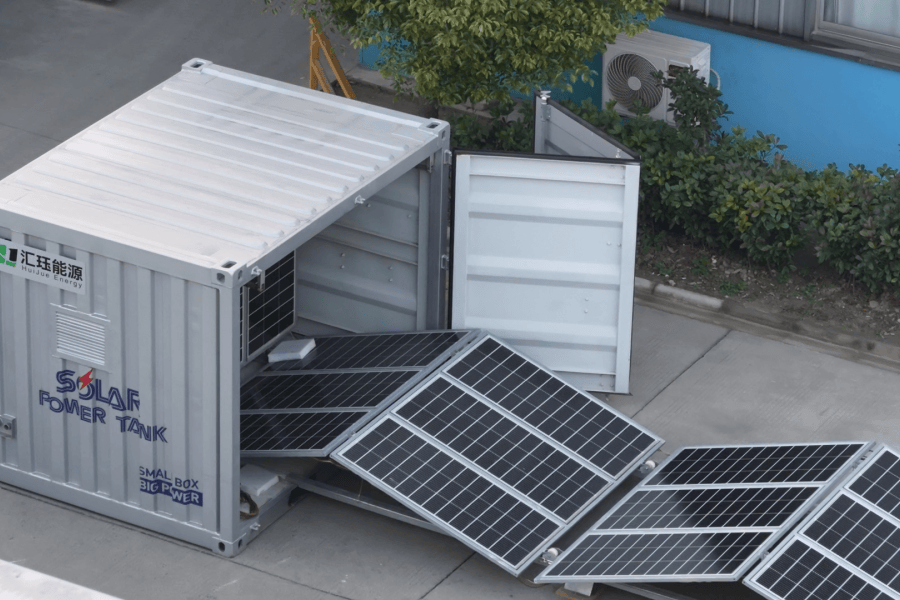
Table of Contents
- The Distance Paradox: When "Remote" Doesn't Mean "Simple"
- Beyond the Checkbox: The Real Cost of Safety Compromises
- The Global Safety Playbook: Your Best Risk Mitigation Tool
- Case in Point: A German Microgrid's Lesson in Proactive Safety
- Engineering for Reality: C-Rate, Thermal Runaway, and LCOE
- The All-in-One Advantage: Simplifying Complexity
The Distance Paradox: When "Remote" Doesn't Mean "Simple"
Honestly, I've seen this firsthand on site from Texas to Tanzania. There's a common, and frankly dangerous, misconception in our industry: that deploying a utility-scale Battery Energy Storage System (BESS) in a remote or rural area is somehow a "simplified" project. The thinking goes, "Fewer grid constraints, more space, less red tape." But from an engineering and safety perspective, the opposite is true. Distance amplifies risk. When you're hours from the nearest specialized fire department, or when routine maintenance requires a complex logistical dance, every component and every protocol must be more robust, not less.
This is the core challenge projects like rural electrification in the Philippines face, and it's a mirror to challenges we see in off-grid industrial sites in the US Midwest or island microgrids in Europe. The technology - like a pre-integrated 5MWh BESS container - might be destined for a specific tropical location, but the safety philosophy underpinning it must be universal. A thermal event doesn't care about your project's postal code.

Beyond the Checkbox: The Real Cost of Safety Compromises
Let's agitate that point a bit. In the rush to meet CAPEX targets or aggressive commissioning timelines, safety can get boxed into a compliance exercise - a list of certificates to be obtained. But what happens when a system designed to a minimal local specification is deployed in a harsh, remote environment? I've seen the aftermath of cascade failures where a minor battery module issue, exacerbated by inadequate thermal management, led to a total system shutdown. The financial loss isn't just in damaged assets.
It's in the millions of dollars of lost energy revenue, the crippling of a community's or factory's primary power source, and the immense cost of emergency response and remediation in a hard-to-reach location. According to the National Renewable Energy Laboratory (NREL), operational failures and safety incidents are among the top contributors to increased Levelized Cost of Storage (LCOS), eroding the very economic case for the storage project. For a rural electrification project, this isn't a business hiccup; it's a failure of its core mission.
The Global Safety Playbook: Your Best Risk Mitigation Tool
So, what's the solution? It's about adopting a safety-first design language that speaks the toughest dialects - namely, the globally recognized standards like UL 9540, IEC 62933, and IEEE 1547. When I look at a project's safety regulations, like those for a rural 5MWh BESS in the Philippines, I'm not just looking for local approval. I'm looking for the foundational DNA of UL and IEC. Why? Because these standards represent the collective, hard-won wisdom of the global industry. They are a pre-emptive playbook for failure modes.
For a company like Highjoule, this isn't an academic exercise. It's our production floor reality. Designing a system to meet UL 9540 from the cell level up means we've already stress-tested the design for arc flash containment, fire propagation resistance, and management of off-gassing. This built-in pedigree makes deployment in any geography, whether it's a Philippine barangay or a Canadian mining site, inherently more bankable and insurable. It de-risks the project for all stakeholders.
Case in Point: A German Microgrid's Lesson in Proactive Safety
Let me give you a European example that resonates with this principle. We were involved in supporting a 4.8MWh BESS for an industrial microgrid in Northern Germany. The local grid was weak, and the facility needed "islandable" backup for critical processes. The initial specs were focused on cost and capacity. But our team pushed hard on the safety architecture, insisting on a full UL 9540A test report for the system design and a compartmentalized thermal runaway barrier system inside the container.
During commissioning, a faulty cell in one module did go into thermal runaway. Because the system was designed to this higher global standard, the event was contained within that single, sealed module compartment. The rest of the battery rack - and the entire container - kept operating. The facility lost less than 5% of its storage capacity temporarily, with zero collateral damage or safety incident. If that had been a system with a less rigorous internal design, the entire asset could have been a total loss. That's the tangible value of global standards.
Engineering for Reality: C-Rate, Thermal Runaway, and LCOE
Getting into the weeds for a minute, this is where engineering insight matters. Three concepts are crucial: C-Rate, Thermal Management, and LCOE.
C-Rate is basically how fast you charge or discharge the battery. In rural applications, you might have huge solar influxes needing quick absorption (high charge C-rate) or demand spikes needing quick discharge. Pushing the C-rate stresses the cells and generates heat. A safety-focused design anticipates this with robust electrical and thermal systems to handle these peaks without degradation.
Which leads to Thermal Management. This isn't just about cooling; it's about precise, uniform temperature control. In a 5MWh all-in-one unit, you have thousands of cells. A hotspot can start a chain reaction (thermal runaway). Our approach uses a multi-zone liquid cooling system that maintains temperature variation across the entire container within 2C. This extends cell life dramatically and removes the primary trigger for catastrophic failure.
And both directly impact the Levelized Cost of Energy (LCOE). A safer system that lasts longer (more cycles) and has higher availability (less downtime) delivers a lower cost of energy over its 20-year life. The International Renewable Energy Agency (IRENA) highlights that system longevity and reliability are key levers for reducing LCOE. So, investing in upfront safety engineering isn't a cost; it's the best way to secure your long-term ROI.
The All-in-One Advantage: Simplifying Complexity
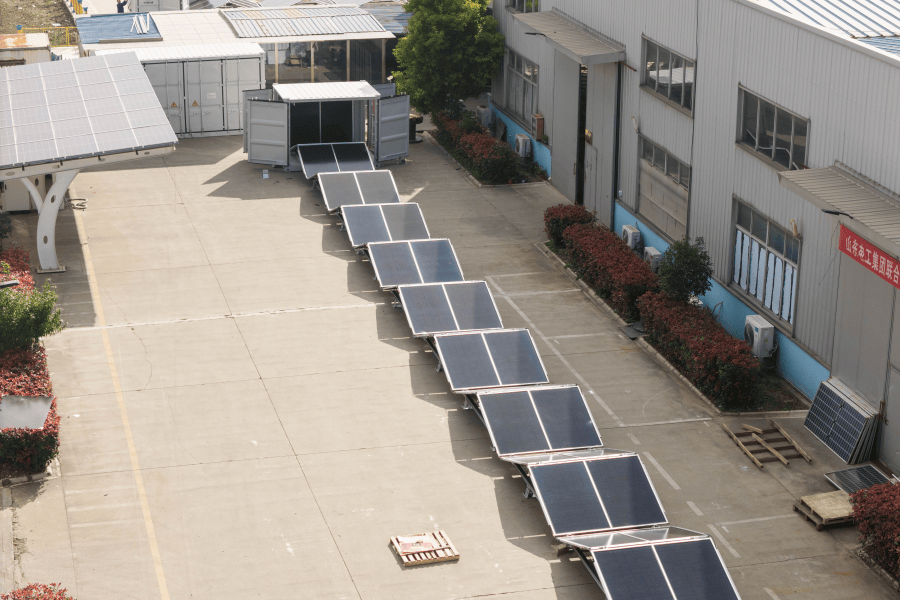
This brings us to the value of the all-in-one, pre-integrated system for these challenging deployments. When you're dealing with remote sites, the last thing you want is a complex, multi-vendor commissioning process where safety responsibilities are blurred. An all-in-one unit that arrives on-site with the battery management, power conversion, cooling, and fire suppression fully integrated and pre-tested as a single system is a game-changer.
At Highjoule, we build our 5MWh+ solutions this way. The safety systems - from the gas-based suppression to the continuous gas detection sensors - are wired into the central controller with failsafe logic. It means a single point of command and control, and a single point of accountability. For our clients in Europe and the US, this simplifies everything from interconnection studies to ongoing remote monitoring from our NOC. The same principle that ensures safety for a rural village ensures operational peace of mind for a grid operator in California.
So, the next time you evaluate a BESS for a remote or demanding application, look beyond the local permit checklist. Ask your provider: "Show me the UL 9540A report. Explain your thermal runaway strategy. How does your design protect my LCOE?" The answers will tell you everything you need to know about the system's true readiness for the real world. What's the one safety specification you now consider non-negotiable?
Tags: LCOE UL Standards IEC Standards Thermal Management Utility-Scale BESS Rural Electrification Energy Storage Safety
Author
James Zhang
20+ years agricultural energy storage engineer / Highjoule CTO