
All-in-One PV Storage Safety for Data Centers: A Practical Guide
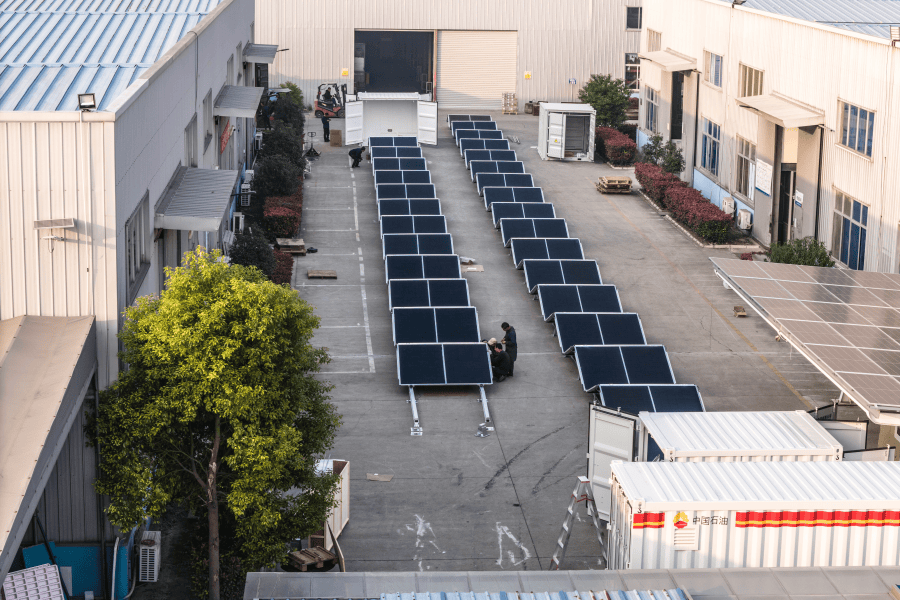
Data Center Backup Power: Why "All-in-One" Safety Isn't Just a Box-Ticking Exercise
Hey there. Let's grab a virtual coffee. Over my 20+ years on project sites from California to Bavaria, I've had a lot of conversations about data center resilience. The shift towards on-site solar and battery storage for backup is no longer a "what if" C it's a "how soon." But honestly, the excitement around an all-in-one, integrated photovoltaic (PV) and battery energy storage system (BESS) for backup can sometimes overshadow the most critical question: Is it truly safe for a 24/7, mission-critical environment?
I've seen this firsthand. A client was thrilled with the compact footprint of an integrated unit, but their due diligence on the specific safety certifications was, let's say, a bit thin. They assumed "certified" meant "certified for their use case." That assumption is where the real risk lies, and it's a gap in the market I see too often.
In This Article
- The Real Problem: More Than Just a Power Outage
- The Staggering Cost of a Safety Oversight
- The Safety Framework You Can't Ignore
- A Case Study: Learning from a Near-Miss in North Rhine-Westphalia
- Expert Insight: Thermal Runaway & Why Your C-Rate Matters
- Implementing the Solution: A Checklist for Decision-Makers
The Real Problem: More Than Just a Power Outage
The problem isn't the desire for integrated PV storage. It's brilliant. The problem is treating its safety regulations as a generic afterthought. Data centers aren't just buildings; they're high-value, high-density, thermally sensitive assets. A fire or fault in a backup power system isn't just a failure to backup; it can become the primary disaster.
Many integrated systems on the market are built to broad commercial standards. But when you're inches from your server racks, you need a system engineered and certified for that specific proximity and risk profile. The Safety Regulations for All-in-one Integrated Photovoltaic Storage System for Data Center Backup Power aren't just a list of rules. They're a design philosophy.
The Staggering Cost of a Safety Oversight
Let's agitate that pain point for a second. Think beyond downtime costs (which, according to the Uptime Institute, can exceed $500,000 per hour for a major outage). Consider a thermal event. The damage isn't confined to the BESS container. You're looking at:
- Catastrophic Asset Damage: Smoke and corrosive gases from a battery fire can destroy sensitive server hardware across a wide area.
- Business Reputation Collapse: "Data center destroyed by its own backup system" is a headline no provider recovers from.
- Insurance & Liability Nightmares: If the system wasn't installed to the recognized, highest local standards (UL in the US, IEC/IEEE with local amendments in the EU), insurers may deny claims. You're left holding the bag.
The financial risk multiplies when you realize that an underspec'd or non-compliant system might also have a shorter lifespan, driving up your long-term Levelized Cost of Energy (LCOE) for backup power. You save on capex today, only to pay massively in opex and risk tomorrow.
The Safety Framework You Can't Ignore
So, what's the solution? It's a layered approach, where the Safety Regulations for All-in-one Integrated Photovoltaic Storage System for Data Center Backup Power become your core checklist. This isn't about one certificate; it's about a system of certifications.
- UL 9540 & UL 9540A: The gold standard in North America. 9540 is for the unit itself. 9540A is the critical test C the "thermal runaway fire propagation" test. You want a system that has passed 9540A, proving a cell failure won't cascade. For us at Highjoule, this isn't optional. It's the starting point for any system we design for data center applications.
- IEC 62933 & IEEE 2030 Series: The international and grid interconnection frameworks in Europe and beyond. The key is local adoption. For instance, in Germany, VDE regulations will incorporate and often tighten these standards. Your integrator needs to know these nuances.
- Building & Fire Codes (NFPA, IFC): Where will the container sit? Distance from the main structure, fire suppression (sprinklers vs. chemical suppression systems specifically for Li-ion), ventilation C these are dictated by local codes. An all-in-one unit must be designed with these placement constraints in mind from day one.
At Highjoule, our engineering team doesn't just build to these standards; we start with them. It means selecting chemistry (like LFP) with higher inherent thermal stability, designing with wider cell spacing and advanced thermal management from the ground up, and pre-integrating gas detection and suppression interfaces. This upfront design rigor is what actually makes the "all-in-one" concept safe for a data center environment.

A Case Study: Learning from a Near-Miss in North Rhine-Westphalia
Let me tell you about a project we were brought into post-design. A mid-sized colocation facility in Germany wanted to add solar and storage for backup and peak shaving. They had selected a sleek, integrated system from a reputable manufacturer.
The Challenge: During our technical deep-dive, we found the system was CE-marked and met basic IEC standards. However, for its planned location - within 5 meters of the main data hall as per the site's limited space - the local fire authority required a specific fire rating and a dedicated, explosion-vented enclosure that the standard unit didn't have. The generic "all-in-one" solution became a liability.
The Solution: We worked with the client, the authority, and our own engineering team to provide a modified Highjoule DataGuard-IX series unit. The core was our pre-certified UL 9540A/ IEC 62933-compliant platform, but we added:
- A factory-integrated, 1-hour fire-rated enclosure with directed venting.
- An upgraded environmental control system to handle the added thermal load of the enclosure in the confined space.
- Pre-approved documentation packs for the local T1V and fire marshal.
The project was delayed by 8 weeks for the redesign and requalification, but it was permitted and installed without a hitch. The client's comment stuck with me: "We didn't just buy a battery; we bought compliance and peace of mind." That's the goal.
Expert Insight: Thermal Runaway & Why Your C-Rate Matters
Let's get a bit technical, but I'll keep it simple. Everyone talks about battery chemistry (LFP is safer, yes), but two operational factors are crucial for safety: Thermal Management and C-Rate.
Thermal Management: This isn't just a fan. It's a liquid-cooled or precision air-cooled system that maintains every single cell within a tight temperature window (usually 20-30C). In an integrated PV storage system, you have a heat source (the batteries) and another (the PV inverter) in one box. The thermal system must be designed for the combined heat load, not just the battery in isolation. I've seen systems overheat not because the battery was stressed, but because the inverter's waste heat wasn't properly isolated and exhausted.
C-Rate: Simply put, it's how fast you charge or discharge the battery. A 1C rate means discharging the full capacity in 1 hour. For data center backup, the instantaneous load when switching to battery can be huge. Some systems are specified with a high C-rate for discharge (like 2C). That's great for power, but it generates immense internal heat. Pushing a high C-rate on a system with mediocre thermal design is asking for trouble. Sometimes, a slightly larger battery bank operating at a gentler 0.5C rate is inherently safer and will last much longer. You need to model your real load profiles and choose a system whose C-rate capability is matched by its thermal dissipation prowess.
Honestly, when we model a system's LCOE at Highjoule, we factor in this thermal and C-rate balance. A safer, slightly gentler operating system often has a double-digit percentage longer lifespan, dramatically lowering the LCOE. Safety and economics aren't opposites; they're partners.

Implementing the Solution: A Checklist for Decision-Makers
So, where do you start? Don't get lost in the jargon. Ask your vendor these questions:
- "Can you show me the UL 9540A test report for this exact system configuration?"
- "For my location in [State/Germany/UK], what are the specific fire code and setback requirements? How is your unit designed to meet them?"
- "What is the continuous C-rate for backup discharge, and what is the maximum temperature delta across the battery rack at that rate?" (If they can't answer the second part, be wary).
- "Is the thermal management system rated for the combined heat load of the batteries and the power conversion systems at my site's maximum ambient temperature?"
- "Provide a list of all local authorities having jurisdiction (AHJs) where an identical system has been permitted."
Your due diligence here is your best insurance policy. The right partner won't see these questions as a burden. They'll welcome them, because it shows you're serious about a safe, reliable, long-term installation. That's the kind of conversation we love to have over a proper coffee. What's the one safety concern keeping you up at night about your backup power plan?
Tags: UL Standard BESS Data Center Backup Power IEC Standard Safety Regulations
Author
James Zhang
20+ years agricultural energy storage engineer / Highjoule CTO