
Ensuring BESS Safety & Durability: C5-M Anti-Corrosion Standards for Remote Island Microgrids
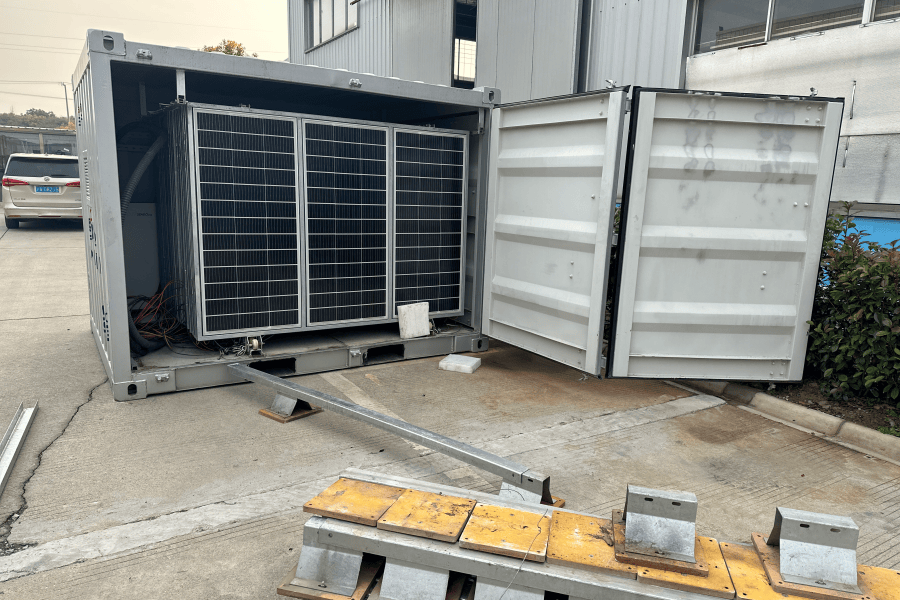
When Salt Air Meets Megawatts: Why Your Island Microgrid's BESS Needs More Than Just a Coat of Paint
Hey there. If you're reading this, chances are you're evaluating energy storage for a remote location - maybe a coastal community, an island resort, or an off-grid industrial site. I've been on-site for more of these deployments than I can count, from the Caribbean to the Scottish Isles. And honestly, the single biggest conversation we have over coffee with clients isn't about battery chemistry first. It's about the container. Specifically, how to make sure that multi-million dollar asset doesn't succumb to the one thing that's everywhere: corrosive salt air. Let's talk about what that really means on the ground.
Quick Navigation
- The Hidden Cost of a "Standard" Container
- Beyond Rust: The Safety Cascade
- The C5-M Standard: Your Technical Specs Decoded
- A Real-World Test: Lessons from the North Sea
- Making It Work For Your Project
The Hidden Cost of a "Standard" Container
Here's the common scenario. A project gets budgeted, the battery specs are locked in, and then someone says, "We'll use a standard 40ft ISO container for housing." It seems logical. They're ubiquitous, relatively cheap, and robust. For a inland, temperate climate? Maybe it's okay. But for a coastal or marine environment, that decision can become the project's biggest liability.
The National Renewable Energy Laboratory (NREL) has highlighted that environmental stressors are a leading contributor to increased Levelized Cost of Storage (LCOS) in remote deployments. Premature failure of enclosures leads to moisture ingress, which compromises battery management systems, electrical connections, and thermal management units. I've seen this firsthand: a project in the Florida Keys where surface corrosion on conduit entries within 18 months led to costly unplanned downtime and component replacement. The initial "savings" on the enclosure were wiped out ten times over.
Beyond Rust: The Safety Cascade
This is where we move from a cost discussion to a critical safety one. Corrosion isn't just cosmetic. It's a slow, insidious attack on system integrity.
- Electrical Faults: Corroded busbars or connections increase resistance, leading to localized heating - a primary ignition risk in a BESS.
- Sensor Failure: Corrosion can disable humidity, temperature, or gas detection sensors. Your system is now operating blind in a harsh environment.
- Structural Weakening: In extreme cases, corrosion can compromise the container's structural integrity, affecting its ability to house heavy battery racks safely.
All these risks directly contradict the core principles of safety standards like UL 9540 and IEC 62933, which assume the enclosure is a stable, protective first line of defense. If the box itself is failing, the certifications inside it start on shaky ground.
The C5-M Standard: Your Technical Specs Decoded
This is where Safety Regulations for C5-M Anti-corrosion Solar Container for Remote Island Microgrids comes from. It's not just a fancy paint. C5-M is a corrosion protection category defined by ISO 12944, specifically for "Marine atmospheres with high salinity and industrial areas with high humidity."
Let me break down what this means in practical, on-site terms:
- Surface Preparation: It starts with abrasive blast cleaning to a near-white metal finish (Sa 2?). This isn't a quick sanding; it's a thorough foundation.
- Coating System: We're talking about a multi-layer, high-performance epoxy-zinc primer and polyurethane topcoat system, with a dry film thickness often exceeding 280 microns. That's about 5-6 times thicker than a standard industrial coating.
- Sealant Philosophy: Every weld, seam, door gasket, and cable gland is designed and treated as a potential failure point. It's about creating a hermetic seal against salt mist.
- Material Choice: It often extends to specifying stainless steel for external hardware (hinges, latches) and using corrosion-inhibiting compounds for internal spaces.
At Highjoule, when we build a container to C5-M for a microgrid, we're not just following a spec sheet. We're engineering a climate-controlled vault for your most critical energy asset. Our design integrates this protection with the thermal management system - ensuring that the aggressive cooling or heating needed for battery health doesn't create internal condensation points that could undermine the anti-corrosion work.

A Real-World Test: Lessons from the North Sea
Let me share a recent project. We supplied a 2 MWh BESS for a microgrid on a small island off the coast of Germany, in the North Sea. The challenge was brutal: constant high winds, 95% average humidity, and pervasive salt spray.
The local utility's main concern was longevity and safety compliance with stringent German regulations (which lean heavily on IEC standards). A previous pilot using a standard container showed significant external corrosion and internal sensor issues in under two years.
Our solution was a C5-M certified container, but we went a step further based on our field experience:
- We specified a slight positive pressure inside the container, maintained by filtered air intake, to prevent salt-laden air from being drawn in through micro-gaps.
- All internal steelwork received a secondary protective coating, even though it's "inside."
- The cable entry points used a double-gland system with a corrosion-inhibiting grease pocket.
Two years in, the latest inspection report showed corrosion levels classified as "0" (zero) on the standard scale. The client's operational expenditure (OpEx) for maintenance is tracking 60% below their initial forecast. That's the real ROI of getting the enclosure right from day one.
Making It Work For Your Project
So, what should you, as a project developer or operator, do?
1. Specify Early: Don't treat the container as a commodity item. Include C5-M or equivalent (like NORSOK M-501 for extreme marine) in your initial Request for Proposal (RFP). This changes the vendor conversation immediately.
2. Audit the Process, Not Just the Product: Ask potential suppliers for their quality control documentation for the coating process - surface preparation certificates, dry film thickness logs, and inspection reports. At Highjoule, we provide this as part of our delivery pack because we know it matters.
3. Think Total System: The best anti-corrosion shell is compromised by a poorly sealed HVAC unit or a cheap cable gland. Ensure all ancillary components meet the same environmental rating (like IP66 or higher).
Honestly, deploying a BESS on a remote island is challenging enough with logistics and grid integration. The enclosure shouldn't be your biggest worry. By baking Safety Regulations for C5-M Anti-corrosion into your project's DNA, you're not just buying a container. You're investing in the long-term safety, reliability, and ultimately, the financial viability of your entire microgrid.
What's the most challenging environment you're considering for a BESS deployment? I'd love to hear about it - sometimes the best solutions come from sharing those on-the-ground realities.
Tags: UL Standard BESS IEC Standards Microgrid Anti-corrosion Energy Storage Safety Remote Island C5-M
Author
James Zhang
20+ years agricultural energy storage engineer / Highjoule CTO