
Wholesale 1MWh BESS for Telecom Base Stations: Cost & Reliability Solutions
Table of Contents
- The Silent Cost Crunch for Telecom Operators
- When Grid Instability Meets Rising Operational Bills
- The Containerized 1MWh Unit: More Than Just a Wholesale Price
- A Real-World Fix: From California Brownouts to 24/7 Uptime
- The Engineer's Notebook: What Makes a "Good" 1MWh BESS?
The Silent Cost Crunch for Telecom Operators
Let's be honest. When we talk about energy for telecom base stations, the conversation often starts and ends with diesel gensets. They're the familiar, loud, and frankly, expensive backup we've all relied on for decades. But sitting with network operators across the US and Europe lately, I hear a different, more pressing concern. It's not just about backup anymore; it's about the crushing operational expenditure (OpEx) from grid power volatility and the sheer complexity of maintaining aging, distributed power assets. Every time the grid flickers or electricity prices spike - which, according to the IEA's Electricity Market Report 2024, is becoming more frequent - your network's profitability takes a direct hit.
When Grid Instability Meets Rising Operational Bills
Here's what I've seen firsthand on site. A base station's power reliability isn't just a technical spec; it's the bedrock of service-level agreements (SLAs). A single outage can trigger massive penalties. But the traditional solution - oversized diesel generators - creates its own problems. You've got fuel logistics, emission controls (a big deal in the EU), maintenance schedules, and noise complaints. The total cost of ownership is a nightmare to calculate and often hidden. Meanwhile, the opportunity to integrate solar is missed because pairing it with a diesel-centric setup is clunky and inefficient. You're left with a power system that's both costly and fragile, a real agitating situation for any CFO or operations manager trying to future-proof their network.
The Hidden Numbers Behind the Headache
Consider this: The National Renewable Energy Lab (NREL) highlights that telecoms are among the top critical infrastructure sectors most vulnerable to grid disruptions. Every minute of downtime isn't just lost revenue; it's eroded trust. When you factor in potential carbon taxes and volatile diesel prices, the business case for the old way starts to collapse.

The Containerized 1MWh Unit: More Than Just a Wholesale Price
This is where the conversation gets practical. The industry's move towards the Wholesale Price of 20ft High Cube 1MWh Solar Storage for Telecom Base Stations isn't a random trend. It's a direct, scalable response to the pain points we just talked about. Think of it not as a "battery in a box," but as a pre-integrated, grid-forming power plant that's delivered to your site. The "wholesale price" tag is attractive, sure, but the real value is in the standardization. A 20ft high-cube container is a globally recognized logistics unit. It simplifies everything - shipping, siting, and commissioning. For companies like Highjoule, designing to this form factor means we can optimize every component - from the lithium-ion battery racks to the HVAC and fire suppression - in a controlled factory environment, ensuring it lands on your site ready to plug into your solar array and switchgear.
A Real-World Fix: From California Brownouts to 24/7 Uptime
Let me give you a concrete example from our project log. A regional telecom operator in California was facing dual pressures: mandatory Public Safety Power Shutoff (PSPS) events and time-of-use rates that made peak-hour grid power prohibitively expensive. Their remote sites were bleeding money. We deployed a pre-configured 1MWh BESS in a 20ft container, coupled with an existing solar canopy. The system was designed to UL 9540 and IEC 62485 standards, which smoothed the local permitting process - a huge time-saver.
The outcome? During grid outages, the BESS seamlessly takes over, maintaining site operations for over 8 hours without a drop of diesel. More importantly, during normal operation, it performs automated energy arbitrage: storing cheap solar and off-peak grid power, then discharging during expensive peak windows. The client's projected Levelized Cost of Energy (LCOE) for that site dropped by over 40% in the first year. The "wholesale" upfront cost was recouped faster than they'd modeled because we baked in the ongoing OpEx savings from day one.
The Engineer's Notebook: What Makes a "Good" 1MWh BESS?
Okay, so the concept sounds good. But as a buyer, how do you look past the price tag? Having commissioned dozens of these units, I focus on three things that really matter for telecom:
- Thermal Management is Non-Negotiable: A battery's lifespan and safety live and die by its operating temperature. In a sealed container in Arizona heat or Norwegian cold, the HVAC system isn't an accessory; it's the heart of the unit. Look for independent cooling zones and redundancy. A poorly managed system can lose 20% of its cycle life faster than you'd think.
- C-Rate Isn't Just a Number: You'll see specs like 0.5C or 1C. Simply put, it's the rate of charge/discharge. A 1MWh system at 1C can deliver 1MW of power. For telecom, you often need high power (say, 500kW) for a relatively short duration (a couple of hours). A system optimized for this doesn't just have the right energy capacity (MWh), it has the right power capability (MW). This matching is crucial for cost-efficiency and performance.
- Grid-Forming Capability (The New Gold Standard): Old batteries just followed the grid. Modern, UL 9540-compliant systems like ours can create a stable grid. If the main grid goes down, the BESS can "black start" the site, establishing voltage and frequency for sensitive telecom gear without needing a generator to sync to. This is a game-changer for true off-grid resilience.
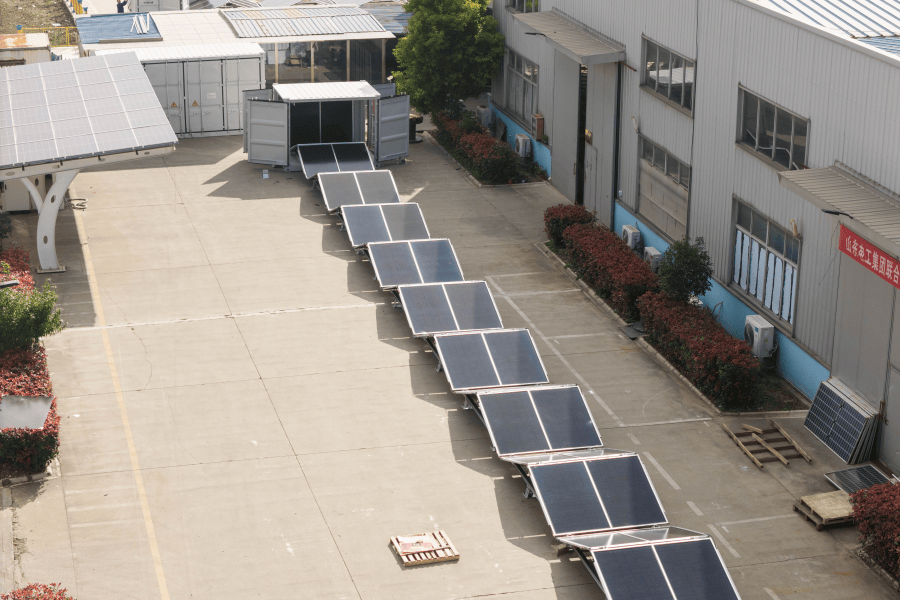
Ultimately, the goal is to lower your LCOE. A cheaper unit with poor thermal management will degrade faster, increasing your long-term cost. The true "wholesale" advantage comes from a design that balances upfront cost with relentless attention to these engineering details, ensuring the system operates reliably for 15+ years with minimal fuss from your local team.
Where Do We Go From Here?
The shift to containerized storage for telecom isn't coming; it's here. The question is no longer "if," but "how to do it smartly." What's the one power-related constraint at your most challenging site that, if solved, would unlock the most value for your network? Is it fuel cost, grid reliability, or maybe carbon targets? Let's talk about that.
Tags: UL Standard BESS LCOE Europe US Market Renewable Energy Telecom Power
Author
James Zhang
20+ years agricultural energy storage engineer / Highjoule CTO