
Safety Regulations for Grid-forming Off-grid Solar Generator for High-altitude Regions
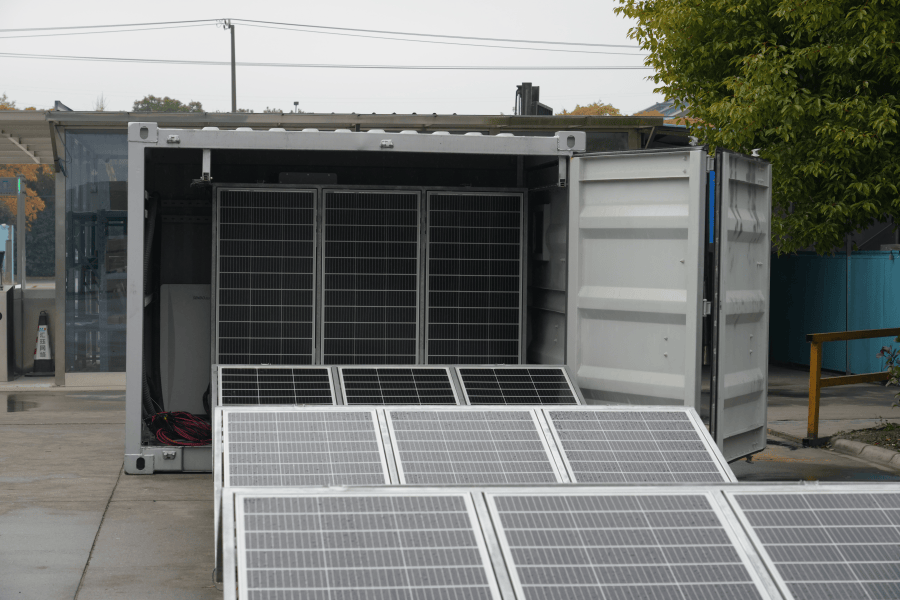
Navigating the Thin Air: Why Safety Regulations for Grid-forming Off-grid Solar Generator for High-altitude Regions Aren't Just Paperwork
Hey there. Grab your coffee. Let's talk about something that keeps a lot of project managers and asset owners up at night when they look at their remote, high-altitude sites: safety. Not the generic kind, but the very specific, unforgiving safety demands of putting a grid-forming, off-grid solar and battery system where the air is thin, the weather swings wildly, and the nearest utility crew is hours away. Honestly, I've seen this firsthand on site - from the Rockies in Colorado to the Alps in Europe - where a standard, lowland-centric approach to safety just doesn't cut it. Today, I want to walk you through why these Safety Regulations for Grid-forming Off-grid Solar Generator for High-altitude Regions are your project's most critical blueprint, not a bureaucratic hurdle.
Table of Contents
- The Silent Problem: Assuming "One-Size-Fits-All" Safety
- The Real Cost of Getting It Wrong
- The Solution: A Framework Built for Thin Air
- Case in Point: A German Alpine Microgrid
- Beyond the Checklist: The Expert's Corner
The Silent Problem: Assuming "One-Size-Fits-All" Safety
Here's the common phenomenon I see. A developer has a fantastic site for an off-grid lodge, telecom tower, or research station at 3,000+ meters. They spec a robust solar array and a grid-forming battery system - the brains that create a stable electrical grid from scratch. They check the boxes for UL 9540 or IEC 62619, which are fantastic base standards. But then, they deploy the same containerized BESS unit they'd use in Texas or Bavaria. That's where the disconnect starts.
High altitude isn't just a scenic detail. It fundamentally changes the physics. Lower atmospheric pressure reduces the air's ability to cool equipment and suppress electrical arcing. According to the National Renewable Energy Laboratory (NREL), temperature and pressure swings at altitude can accelerate component aging by up to 20% compared to sea-level deployments. Your thermal management system is now working with less-dense air, and the safety clearances inside your inverter and battery management system? They might not be sufficient anymore.
The Real Cost of Getting It Wrong
Let's agitate that pain point a bit. What happens if you treat altitude as an afterthought?
- Safety & Liability: The primary risk is catastrophic. Increased potential for fire or arc flash incidents in a remote location means slower response, greater asset loss, and unthinkable liability. This isn't fear-mongering; it's a direct consequence of physics that standards like IEEE 1547 and IEC 62109 are starting to address more explicitly for derated conditions.
- Operational Downtime & Cost: A system that overheats and derates itself constantly, or fails prematurely, isn't providing power. For an off-grid application, that's a total blackout. The Levelized Cost of Energy (LCOE) - the true measure of your system's economic value - skyrockets when you factor in unscheduled maintenance, helicopter lifts for replacement parts, and lost revenue/production.
- Financing & Insurance Hurdles: Try getting project financing or a comprehensive insurance policy without demonstrating a safety design specifically validated for high-altitude operation. Underwriters are sharp; they know the difference between a generic spec sheet and a site-adapted solution.
The Solution: A Framework Built for Thin Air
So, what's the path forward? It's about embracing Safety Regulations for Grid-forming Off-grid Solar Generator for High-altitude Regions as an integrated design philosophy from day one. This isn't a single document, but a layered approach:
- Component-Level Derating & Certification: Specifying inverters and BESS units that are explicitly rated and tested for high-altitude operation. Look for certifications that go beyond the base standard - for instance, a UL listing that includes a specific altitude rating (e.g., "Suitable for operation up to 3000m").
- Adaptive Thermal Management: Moving from passive or standard active cooling to pressurized and/or liquid-cooled systems that compensate for thin air. This ensures your battery C-rate - the speed at which it charges and discharges - remains stable without pushing cells into unsafe temperature zones.
- Enhanced Monitoring & Grid-Forming Logic: Your system's brain needs altitude awareness. This means sensors for pressure and humidity feeding into the grid-forming control algorithms, allowing for proactive derating and communication of status, rather than emergency shutdowns.
At Highjoule, we've baked this philosophy into our Everest-series BESS for remote applications. It starts with cells and inverters sourced with altitude specs, integrated into a pressurized, NEMA 3R-rated enclosure with a liquid-cooled thermal loop. The result isn't just a "safe" box, but one that delivers predictable, lower LCOE over its entire life because it's designed for the environment, not just placed in it.
Case in Point: A German Alpine Microgrid
Let me give you a real example. We worked on a project for an off-grid alpine research station in Bavaria, sitting at about 2,800 meters. The challenge was providing 24/7 power for sensitive instruments in an environment with -30C winters, rapid snow load, and air pressure 30% below sea level.
The initial design from another vendor kept tripping on over-temperature faults in the power conversion system during summer data-intensive campaigns. Our solution was to deploy one of our altitude-adapted, grid-forming BESS units. The key wasn't just a bigger battery, but:
- A thermal management system with a sealed, pressurized coolant circuit.
- Inverter stacks certified for 4000m operation.
- Enhanced arc-fault detection circuits.
The station now has over 18 months of flawless, autonomous operation. The safety protocol isn't a hidden feature; it's the core enabler of reliability. 
Beyond the Checklist: The Expert's Corner
If you take one thing from our chat, let it be this: Thermal Management is Your #1 Safety System at altitude. Think about it. A battery's performance, lifespan, and safety are inextricably linked to temperature. At high altitude, your baseline cooling is less effective. You might need to de-rate the system's continuous power output (its C-rate) to keep it in a safe thermal window. A well-designed system does this intelligently and communicates it clearly, rather than just failing.
This is where working with a partner who gets their hands dirty matters. We don't just sell a container; we model the specific site conditions - solar irradiance, ambient temperature swings, load profile - and simulate the thermal and electrical performance before anything ships. It's the difference between hoping it works and knowing it will.
So, as you plan your next high-altitude, off-grid project, I'll leave you with this question: Is your safety and performance design based on the physics of your specific site, or on a datasheet written for sea level? The difference defines your project's true cost and success.
Tags: UL Standard BESS IEC Standards Off-grid Solar Microgrid High-Altitude Safety Regulations
Author
James Zhang
20+ years agricultural energy storage engineer / Highjoule CTO