
Scalable Modular BESS Containers for Agricultural Irrigation: A Real-World Case Study
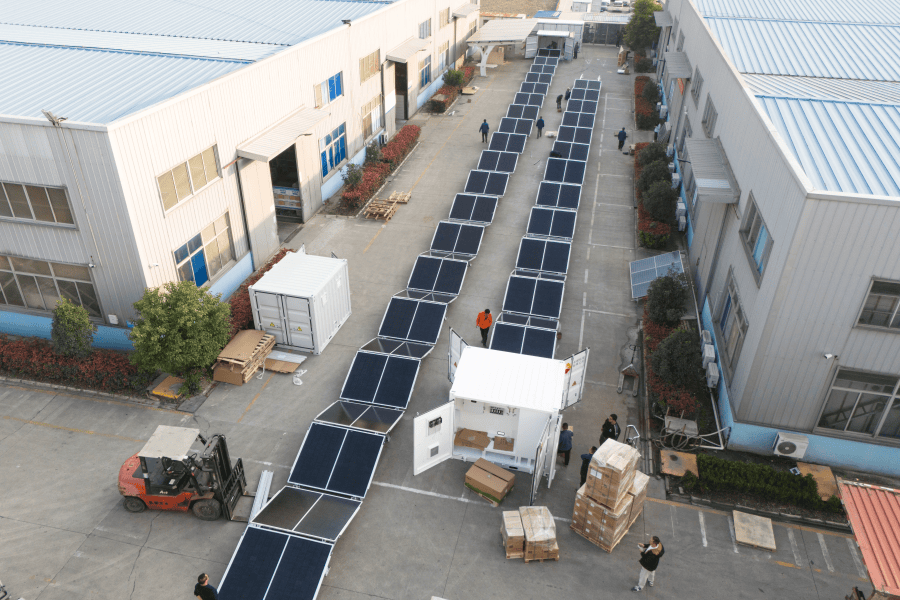
Table of Contents
- The Irrigation Power Dilemma: It's More Than Just Water
- Why Traditional "Fixes" Fall Short (And Cost You More)
- The Modular Container Solution: Power, Scaled to Your Field
- A Case Study in California's Central Valley
- Key Technical Insights from the Field
- Making the Right Investment for Your Operation
The Irrigation Power Dilemma: It's More Than Just Water
Honestly, after two decades on sites from Texas to Bavaria, I've learned one universal truth about industrial and agricultural operations: your power bill and your water needs are locked in a constant tug-of-war. You're dealing with peak demand charges that spike the moment you fire up those massive irrigation pumps, often during the hottest part of the day when grid electricity is at its most expensive and, frankly, sometimes at its most fragile. The International Energy Agency (IEA) has highlighted that irrigation can account for a huge portion of a farm's operational costs, and grid dependency in remote areas adds another layer of risk and expense. It's not just about cost, though. It's about reliability. A brownout during a critical irrigation window can mean the difference between a profitable season and a devastating loss. I've seen the stress this causes firsthand.
Why Traditional "Fixes" Fall Short (And Cost You More)
So, what do most operations do? They might look at diesel generators C noisy, polluting, and with ever-fluctuating fuel costs that are a nightmare to budget for. Or they consider a standard, fixed-size battery system. Here's the aggravation: a fixed system is like buying a warehouse for seasonal inventory. You're overpaying for capacity you only need a few months a year, and the upfront capital expenditure (CapEx) is a major hurdle. Worse, if your needs grow C you add more acreage or more efficient but power-hungry drip systems C that battery bank is suddenly obsolete. You're stuck. The levelized cost of energy (LCOE) for that underutilized, inflexible asset just doesn't make sense for the dynamic nature of modern agriculture.
Then there's safety and compliance. In the US and Europe, you can't just slap any battery system in a field. It needs to meet UL 9540 and IEC 62933 standards for safety, and the entire installation must be permitted and approved. A non-compliant system is a liability, full stop.
The Modular Container Solution: Power, Scaled to Your Field
This is where the concept of a scalable, modular Industrial Energy Storage System (ESS) container moves from a nice idea to a game-changing solution. Think of it like building with LEGO blocks, but for megawatt-hours. Instead of one massive, costly, permanent installation, you start with a core containerized unit that's pre-engineered, pre-tested, and fully compliant with UL and IEC standards. This plug-and-play approach is what we've perfected at Highjoule Technologies. Our ModuStack series, for instance, arrives on-site virtually ready to connect. Each 20-foot or 40-foot container is a self-contained power hub with integrated battery management, thermal control, and safety systems.
The magic word is scalable. Need more power for the summer irrigation peak? You can add another identical container module alongside the first, stacking your capacity without re-engineering the entire system. This drastically reduces the initial financial barrier and allows you to align your investment perfectly with your operational growth. It turns CapEx into more manageable, stepped investments.

A Case Study in California's Central Valley
Let me walk you through a real project that illustrates this perfectly. We worked with a large almond grower in California's Central Valley. Their pain points were textbook: crippling peak demand charges from running center-pivot irrigators, concerns about grid reliability during fire-prevention shutoffs, and a desire to integrate a new solar array that would otherwise be curtailed when the pumps weren't running.
The challenge wasn't just storing energy; it was providing a huge, short-term power burst (a high C-rate discharge) to start and run the pumps, doing it reliably day after day in 100F+ heat, and future-proofing for planned orchard expansion.
The solution was a phased deployment of two 1 MWh ModuStack container units. Phase 1 saw the first unit installed at the main substation. It was programmed to discharge during the 4-9 PM peak window, shaving over 30% off their demand charges immediately. It also stored excess solar generation from their new array. Phase 2, added two years later as they expanded, doubled their storage capacity. Because the system was modular, the integration was seamless C same footprint, same controls, just more power. The thermal management system, using liquid cooling, kept the batteries at optimal temperature even in the valley heat, which is absolutely critical for longevity and safety.
Key Technical Insights from the Field
For the non-engineers making the decisions, here's the plain-English version of what makes a system like this work:
- C-rate Isn't Just a Letter: It's how fast a battery can charge or discharge. Irrigation pumps need a lot of power fast. A system with a high discharge C-rate (like 1C or more) is essential, otherwise you'd need a monstrously oversized battery. Our chemistry and design are chosen specifically for these high-power agricultural loads.
- Thermal Management is Everything: Batteries hate extreme heat. A passive air-cooled system in an Arizona or Spanish farmyard will degrade prematurely. Active liquid cooling, like in our containers, is like giving the batteries their own dedicated AC unit. It maintains efficiency, extends lifespan by years, and is a core part of our safety protocol.
- LCOE - The True Cost Meter: The Levelized Cost of Energy is your total cost to own and operate the system over its life, divided by the energy it produces. Modularity improves LCOE because you're not paying for idle capacity. High efficiency and long lifespan (aided by that thermal management) improve it further. That's the number you should benchmark, not just the upfront price tag.
Our approach at Highjoule is to engineer these technical realities into a product that just works on-site. The UL and IEC certifications aren't just stickers; they're the result of a design philosophy that prioritizes safety from the cell level up. And because these are containerized, local deployment and ongoing service are straightforward C we or our partners can provide support without needing a small army of specialists on-site forever.

Making the Right Investment for Your Operation
The question I get asked over coffee by farm managers and COOs isn't usually "how do batteries work?" It's "how do I make my power costs predictable, my irrigation reliable, and my operation more resilient without a massive, risky bet?"
A scalable, modular ESS container is the pragmatic answer. It addresses the core financial pain point (demand charges and high LCOE) with a flexible asset. It de-risks your energy supply. And it builds a bridge to using more of your own renewable energy, whether you have solar today or plan for it tomorrow.
So, what's the first step? Look at your last 12 months of utility bills. Find those peak demand charges and map them against your irrigation schedule. Then ask: what would a system that cuts those peaks by 30, 40, or 50% be worth to my bottom line? And how would I design it if I knew I could start small and grow precisely when I need to?
Tags: UL Standard BESS LCOE Agricultural Irrigation Renewable Energy US Market Energy Storage System Modular Container
Author
James Zhang
20+ years agricultural energy storage engineer / Highjoule CTO