
Safety First: Why Liquid-Cooled, Off-Grid BESS is Non-Negotiable for Military & Critical Sites
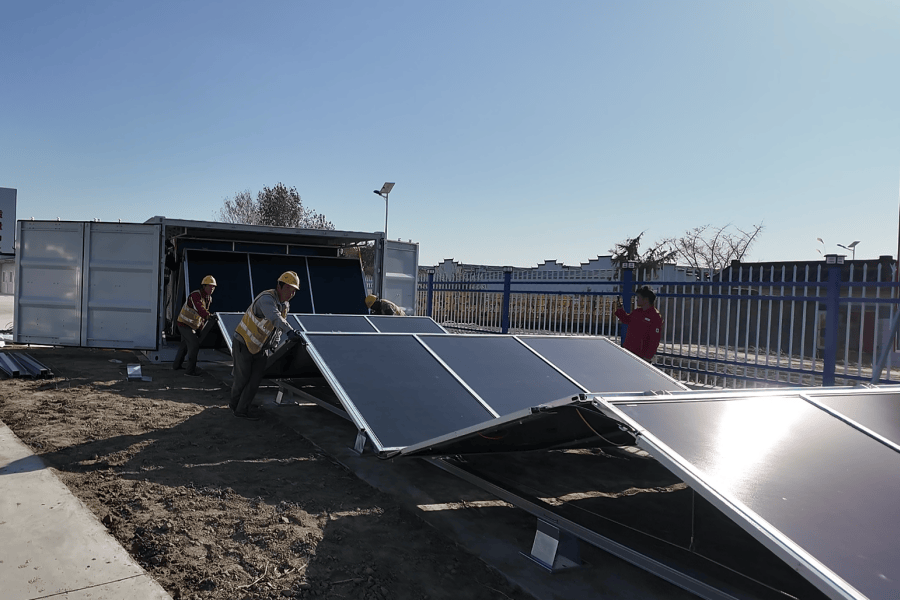
Beyond the Grid: Building Unshakeable Energy Security for Critical Sites
Honestly, after two decades on the ground from California to Germany, I've seen the energy storage conversation shift. It's no longer just about kilowatt-hours or return on investment. For sites like military bases, remote communications hubs, or critical infrastructure, it's about one thing: absolute, fail-safe reliability. And that reliability is built on a foundation of safety that many commercial systems simply can't provide. Let's talk about why, especially when you're off the grid.
Quick Navigation
- The Real Problem: It's More Than Just Backup Power
- The Staggering Cost of a "Minor" Failure
- The Liquid-Cooling Advantage: Precision in the Field
- Safety Beyond the Box: System-Level Thinking
- Real-World Proof: It Has to Work Every Time
The Real Problem: It's More Than Just Backup Power
When we talk about off-grid solar generators for a military base, we're not discussing a nice-to-have for peak shaving. This is mission-critical power. The core challenge is managing intense, unpredictable load demands - think radar systems, communications arrays, or rapid deployment logistics - in often harsh environmental conditions, all while maintaining complete operational silence and low observability. Air-cooled systems, which are fine for many commercial applications, struggle here. They can't shed heat quickly enough during high C-rate discharges (that's the speed at which you pull energy from the battery), leading to thermal runaway risk, accelerated degradation, and frankly, a potential single point of failure that no commander can accept.
The Staggering Cost of a "Minor" Failure
Let's agitate that point a bit. In a commercial setting, a battery overheating might trigger a shutdown and a costly service call. On a forward base or a domestic critical installation, the stakes are existential. A thermal event compromises not just the asset, but the entire mission's energy security. The National Renewable Energy Laboratory (NREL) has extensively documented how thermal mismanagement is the leading accelerator of battery degradation. When your system's life expectancy drops from 15 years to 5 because of heat, your Levelized Cost of Energy (LCOE) - the true total cost of ownership - skyrockets. More importantly, you've introduced a vulnerability. I've seen firsthand on site how a seemingly minor spec compromise during procurement led to constant derating (reducing power output to cool down) of a system, effectively leaving it at 60% capacity when it was needed most.

The Liquid-Cooling Advantage: Precision in the Field
This is where stringent safety regulations for liquid-cooled off-grid solar generators move from a compliance checklist to a strategic enabler. Liquid cooling isn't a luxury; it's a force multiplier. Here's my take from the engineering side:
- Precision Thermal Management: A liquid coolant circulates directly to each cell or module, maintaining an even temperature spread. This prevents hot spots - the precursors to failure - especially during those high C-rate demands I mentioned. It allows the system to deliver full power, on demand, in a desert or an arctic environment.
- Silent and Self-Contained: Compared to the loud fans of air-cooled units, liquid-cooled systems are whisper-quiet, a critical feature for tactical sites. The entire cooling loop is sealed within a ruggedized enclosure.
- The Standards Are Your Blueprint: Regulations based on UL 9540A (test standard for thermal runaway fire propagation), IEC 62933 (safety for electrical energy storage systems), and IEEE 2030.3 (testing for BESS) aren't bureaucratic hurdles. They are a validated engineering blueprint for resilience. At Highjoule, when we design for these scenarios, we start with these standards as the minimum baseline. Our systems are built with this DNA - from cell selection to the final containerized solution, it's about exceeding the spec for the real-world, not just passing a lab test.
Safety Beyond the Box: System-Level Thinking
True safety isn't just about the battery cabinet. It's about the integrated system. An off-grid solar generator for a base involves PV arrays, power conversion, controls, and grid-forming inverters that must create a stable "microgrid." The safety regulation mindset forces you to consider:
Real-World Proof: It Has to Work Every Time
Let me give you a non-sensitive analogue from a project we completed in Northern Europe for a remote telecommunications station. The challenge was identical: off-grid reliability in sub-zero temperatures, with sudden high loads, and zero tolerance for downtime or maintenance visits.
The solution was a containerized, liquid-cooled BESS paired with solar. The liquid cooling system didn't just manage heat; it actually used waste heat to keep the battery at optimal temperature during freezing winters, eliminating the need for separate, power-draining heating pads. The system was designed from day one to meet and exceed the relevant IEC and UL standards for off-grid critical power. Two winters in, the performance data shows zero capacity fade and 100% availability during critical load events. That's the peace of mind that proper, regulation-informed design delivers.

Your Next Step
If you're evaluating energy security for a critical, off-grid site, my advice is simple: start with the safety regulations. Use them as your filter. Ask your potential providers not just about cycle life and capacity, but about their UL 9540A test reports, their cell-to-system thermal management philosophy, and their experience deploying in environments that don't forgive compromises. What does your current plan account for that a standard commercial system would miss?
Tags: UL Standard BESS Thermal Management Off-grid Solar Energy Storage Safety Military Energy Security
Author
James Zhang
20+ years agricultural energy storage engineer / Highjoule CTO