
Step-by-step Installation of 215kWh Cabinet for 1MWh Eco-resort Solar Storage

Table of Contents
- The Real Challenge: It's Not Just About the Panels
- Why a Modular 215kWh Cabinet is a Game-Changer
- A Practical, Step-by-Step Guide to Your 1MWh System
- The Critical Details They Don't Tell You in the Brochure
- Beyond Installation: Thinking About the Next 20 Years
The Real Challenge: It's Not Just About the Panels
Honestly, when most eco-resort developers think about solar, they get captivated by the array on the roof or the field. The real puzzle, the one that keeps project managers up at night, is what happens when the sun goes down or a cloud passes over. That's where the battery system comes in, and frankly, that's where many beautiful projects hit a snag. I've seen it firsthand on sites from California to the Greek islands.
The dream is energy independence: a seamless, quiet, and clean power flow for your luxury villas, restaurants, and pools. The reality? Navigating a maze of local grid codes (think UL 9540 in the US, IEC 62619 in Europe), managing the sheer physical footprint of storage, and dealing with the complexity of integrating it all without blowing your budget or timeline. The IEA reports that global battery storage capacity needs to grow massively to meet net-zero goals, but on the ground, each new megawatt-hour comes with its own set of very real headaches.
The "Big Box" Trap
Many resort projects get presented with a single, massive containerized solution. It seems simple, right? Drop a 1MWh box and you're done. But let me tell you, site access on a scenic, often rugged resort property is rarely container-friendly. I once spent two weeks just preparing a pad and access road for a 40-foot container in the Italian Alps - the logistics cost nearly matched the hardware. And what if you need to expand later, or if one part fails? You're looking at a major, disruptive operation.
Why a Modular 215kWh Cabinet is a Game-Changer
This is where the philosophy behind a modular, cabinet-based approach like our Highjoule 215kWh units makes all the difference. Instead of one monolithic block, you're working with building blocks. A 1MWh system becomes roughly five of these cabinets, strategically placed. This isn't just a product spec; it's a fundamental shift in deployment strategy that solves the core pain points of resort projects.
- Logistics & Siting: A cabinet can fit through a standard doorway, be moved with smaller equipment, and be placed in existing utility rooms or separate, smaller pads. This preserves your resort's aesthetics and minimizes earthworks.
- Phased Investment: Start with 430kWh (two cabinets) to cover your critical night load. Add more cabinets as your resort expands or as budget allows, with minimal re-engineering.
- Resilience & Uptime: With a true modular design, if one cabinet needs service, the others keep running. Your guests never notice a dip in their experience.
A Practical, Step-by-Step Guide to Your 1MWh System
Let's walk through how this actually unfolds on a real site. Forget the theory; this is the field manual version.
Phase 1: Site Prep & Foundation (Weeks 1-2)
This is about precision, not just pouring concrete. Each cabinet pad needs to be level, bonded, and often seismically braced depending on location. Conduit runs for DC from the solar combiner boxes and AC to the main distribution panel are laid. We always coordinate this with the civil team for the main resort construction - it's far cheaper to do it once. A key detail: we plan for not just five, but maybe six pad locations for future growth from day one.
Phase 2: Cabinet Placement & Mechanical (Week 3)
The cabinets are craned or even forklifted into place. Here, the modular design shines. We once placed four cabinets around the back of existing lodges in a Colorado resort with minimal disruption to guests. The cabinets are bolted down, and the critical thermal management loop is connected. This closed-loop liquid cooling system is the unsung hero - it's what allows these cabinets to be placed indoors or close together without overheating, a common issue with air-cooled units in hot climates.
Phase 3: Electrical Integration & Commissioning (Weeks 4-5)
This is where our pre-fabricated, UL-listed power conversion systems (PCS) and switchgear come in. Because they're pre-tested in the factory as a unit, the on-site wiring is dramatically simplified. We connect the DC strings, the AC bus, and the communication backbone. Then comes the most important week: commissioning. We don't just turn it on. We simulate every scenario - grid loss, peak shaving, full charge/discharge cycles - and validate every safety protocol against the local utility's requirements. The final deliverable isn't just a working system; it's a complete set of stamped drawings and test reports for your insurance and authorities.
The Critical Details They Don't Tell You in the Brochure
Anyone can quote a price per kWh. The real cost and safety live in the details.
Thermal Management: The Heart of Longevity
Batteries hate heat. Every 10C above their ideal temperature range can halve their lifespan. That's a direct hit on your project's Levelized Cost of Energy (LCOE) - the true measure of your system's economic value. Our cabinet's liquid cooling actively maintains optimal cell temperature, not just reacting to a crisis. This is non-negotiable for a 20+ year asset in a tropical or desert resort location.
C-Rate: It's About Harmony, Not Just Power
You'll hear about power (kW) and energy (kWh). The C-rate is the ratio between them. A 215kWh cabinet with a 0.5C C-rate can smoothly deliver about 107kW of power. For a resort, this is perfect. It matches the sustained load of evening operations, not spiking aggressively. A gentler C-rate means less stress on the battery chemistry, again extending life and safety. We size the system for your load profile, not just to win a spec sheet war.
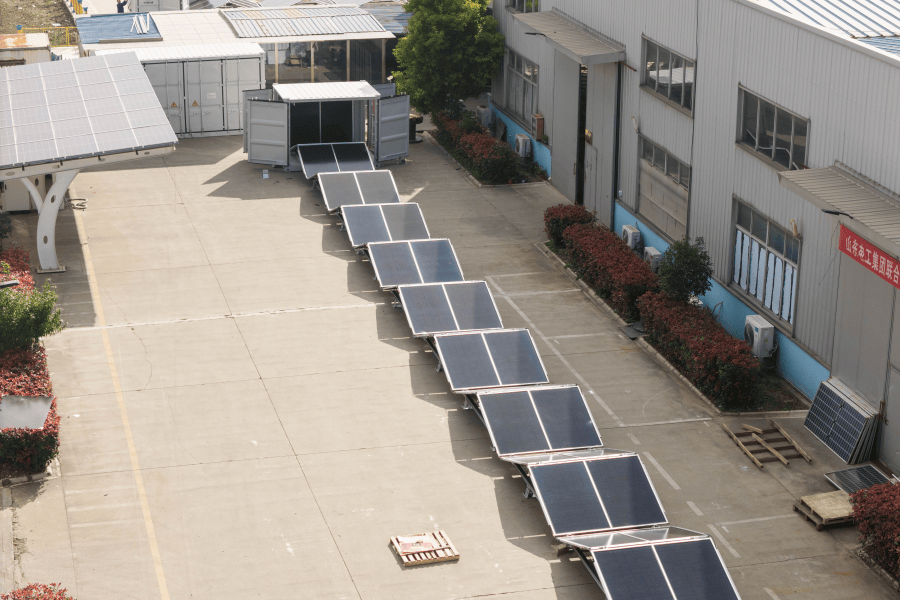
The Compliance Labyrinth
"Compliant" is a broad term. Our approach at Highjoule is to engineer to the highest common denominator from the start. The cell, module, rack, and full cabinet are all designed and tested to meet both UL and IEC standards. This isn't just about paperwork; it's about a fundamental safety architecture - from cell-level fusing to seismic racking to fire suppression interfaces - that gives peace of mind to you, your insurer, and your local fire marshal.
Beyond Installation: Thinking About the Next 20 Years
The handshake after commissioning isn't the end of our relationship. A battery system is a living asset. Our cloud-based monitoring gives your team a simple dashboard to see performance and savings, but it gives our support team a powerful diagnostic tool. We can often spot a trend in a cooling pump's performance or a slight voltage imbalance before it becomes an issue, and dispatch local service if needed.
The goal of this step-by-step approach isn't just to install a system. It's to create a resilient, adaptable energy backbone for your resort that quietly pays for itself year after year, while letting you market the genuine sustainability that today's guests demand. So, what's the one site constraint on your current project that's making you rethink the standard "big box" solution?
Tags: UL Standard LCOE Thermal Management Solar Storage Eco-Resort BESS Installation Modular Battery Cabinet
Author
James Zhang
20+ years agricultural energy storage engineer / Highjoule CTO