
A Step-by-Step Guide to Installing 1MWh C5-M Anti-Corrosion Solar Storage for Military Bases
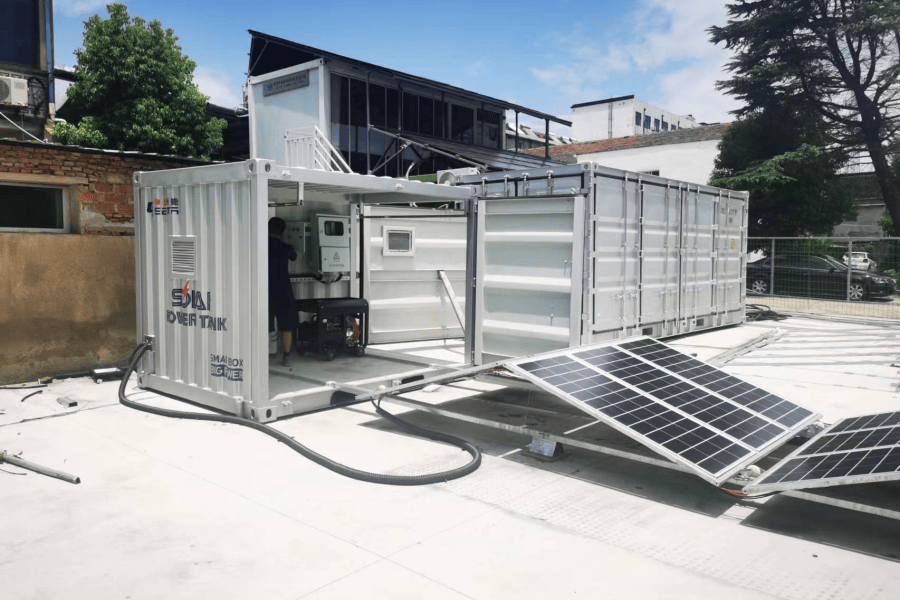
From Blueprint to Battle-Ready Power: Installing a 1MWh C5-M Anti-Corrosion Solar Storage System
Honestly, over my twenty-plus years on sites from the deserts of Nevada to the coastlines of the North Sea, I've learned one thing: a perfect energy storage design can be undone by a flawed installation. Nowhere is this truer than in military applications. You're not just installing a battery; you're deploying a mission-critical asset that must perform under duress, in harsh environments, for decades. Let's talk about what that really looks like on the ground.
Quick Navigation
- The Real Problem: It's More Than Just a Box
- Why C5-M Corrosion Protection Isn't Optional
- The Installation Playbook: A 6-Step Field Guide
- Case in Point: A Coastal Installation Story
- Beyond the Hardware: The Long-Game Mindset
The Real Problem: It's More Than Just a Box
The common thinking? "We've got a flat pad, a 1MWh container, and a crew. How hard can it be?" I've seen this firsthand. The agitation comes months or years later: premature component failure, mysterious faults, soaring O&M costs, and - worst of all - a system that's unavailable when needed most. The International Energy Agency (IEA) highlights that system integration and installation quality are among the top barriers to reliable long-duration storage deployment. It's the gap between the spec sheet and the salty, vibrating, real world that eats into your Levelized Cost of Storage (LCOS).
Why C5-M Corrosion Protection Isn't Optional
Forget the standard industrial coatings. A military base, especially near coasts or in areas with de-icing salts, is a C5-M environment. That's defined by the ISO 12944 standard as a "very high" corrosivity category for marine and offshore atmospheres. It means constant assault from salt-laden mist, high humidity, and aggressive chemicals. Standard paint will blister in a few years, leading to rust that compromises structural integrity and, scarily, can create thermal hotspots or electrical faults inside the container. Choosing a system designed and certified for C5-M from the outset, like our Highjoule HX-C5 series, isn't an upgrade; it's the baseline for a 20-year asset life.

The Installation Playbook: A 6-Step Field Guide
Based on our deployments, here's the step-by-step that moves beyond the manual.
Step 1: Site Prep & Foundation: The Unseen Hero
This is where most future headaches are born - or prevented. The foundation must do more than hold weight. It needs to account for:
- Drainage: Water must flow away from the container pad. I've seen "self-draining" cable trenches that became ponds, accelerating corrosion from below.
- Accessibility: Leave clear service corridors on all sides, not just the front. Fire safety codes (like NFPA 855) and utility requirements are non-negotiable here.
- Anchoring: Use seismic and wind load-rated anchors. Don't just bolt it down; follow the engineered drawings for torque sequences to avoid stressing the container frame.
Step 2: Delivery & Positioning: Precision Logistics
A 1MWh container is heavy. You need a crane with the right reach and capacity. The critical moment is setting it down. Use non-metallic, high-density polyethylene shims for final leveling. Why non-metallic? To prevent creating a galvanic corrosion point between the steel frame and a metal shim - a small detail with big consequences.
Step 3: Electrical Interconnection: Safety First, Always
This is high-power work. Every connection must be torqued to spec, with anti-oxidation compound applied. The DC string commissioning is delicate. We use infrared cameras during initial load tests to catch any loose or high-resistance connections before they become failures. All our systems are built to UL 9540 and IEC 62485 standards, but that certification is only valid if the field wiring is done right.
Step 4: C5-M Specific Sealing & Finishing
Once positioned, you must seal all penetrations - conduit entries, HVAC ducts - with C5-M rated mastics and sealants. The factory-applied coating on the container is only as good as the field seals. We supply a specific kit for this. Also, install sacrificial anode bags at strategic points if specified in the corrosion control plan.
Step 5: Commissioning & Thermal System Validation
This isn't just a "power on" test. You need to stress the thermal management system. On a cool day, we'll run the BESS at a high C-rate (like 1C discharge) to force the cooling system to ramp up. Then monitor temperature differentials across the battery racks. A well-designed system, like ours with its indirect liquid cooling, should keep cell-to-cell delta-T under 3C. This directly impacts cycle life and safety.
Step 6: Cybersecurity & Grid Integration Handshake
For military bases, this is paramount. The system's SCADA and communications need to be hardened. Work closely with base IT/cyber teams from day one. The final step is the "grid handshake" - testing all utility disconnect and control functions under simulated island and grid-tied scenarios to ensure seamless, secure operation.
Case in Point: A Coastal Installation Story
Let me give you a real example. We deployed a 1.2MWh HX-C5 system for a National Guard facility on the U.S. Gulf Coast. The challenge was triple: salt air, hurricane-force winds, and a need for 72 hours of backup for critical comms.
The installation followed our playbook, but with extra emphasis on the foundation (elevated above the 100-year flood plain) and sealing. Every conduit entry got a double-seal treatment. Two years on, with multiple storm events and constant salt exposure, the system's availability is at 99.8%. A comparable, non-C5-M system at a nearby industrial site installed around the same time is already showing significant exterior corrosion and has had two humidity-related alarm events. The upfront investment in the right hardware and meticulous installation has already paid off in reduced OpEx and absolute reliability.

Beyond the Hardware: The Long-Game Mindset
The final insight? The installation isn't complete when the system is energized. You need a living digital twin - a model of the system's performance that tracks health metrics like insulation resistance, cooling efficiency, and capacity fade. At Highjoule, our service team uses this data for predictive maintenance, often catching issues like a failing fan filter before it impacts performance. This proactive approach is what flattens the LCOS curve over 20 years.
So, when you're planning your next military base storage project, think beyond the procurement. Think about the pad it will sit on, the seals on the conduits, and the team that will keep it running for the next two decades. The right partner doesn't just sell you a container; they bring that end-to-end, in-the-trenches experience to the table. What's the one environmental or operational challenge keeping you up at night about your next deployment?
Tags: UL Standard BESS Anti-corrosion Energy Resilience Military Energy Security 1MWh Solar Storage C5-M
Author
James Zhang
20+ years agricultural energy storage engineer / Highjoule CTO