
Step-by-step Installation of High-voltage DC 5MWh Utility-scale BESS for Mining Operations in Mauritania
The Real-World Playbook: Installing a 5MWh High-Voltage DC BESS in the Middle of Nowhere
Honestly, when we talk about utility-scale battery energy storage systems (BESS), a lot of the conversation in boardrooms focuses on specs, costs, and ROI projections. And that's important. But having spent over two decades on sites from the Australian Outback to the Chilean highlands, I can tell you the real test happens between the "project approval" and the "system online" milestones. That's where theory meets dust, extreme temperatures, and logistical puzzles. Today, I want to pull back the curtain on a specific, complex deployment: a Step-by-step Installation of High-voltage DC 5MWh Utility-scale BESS for Mining Operations in Mauritania. This isn't just a case study; it's a masterclass in what it truly takes to go from blueprint to operational asset in a demanding environment.
Table of Contents
- The Planning Pitfall: Why Good Designs Fail on Bad Sites
- The Mauritania Blueprint: More Than Just a Shipping List
- The "Why" Behind High-Voltage DC: Efficiency in the Heat
- Beyond the Battery: The Unsung Heroes of a Stable System
- Is Your Site "Mauritania-Ready"?
The Planning Pitfall: Why Good Designs Fail on Bad Sites
Here's a common phenomenon I've seen firsthand: a BESS is designed in a comfortable engineering office for a "standard" industrial site. It looks perfect on paper, compliant with all the right standards like UL 9540 and IEC 62933. Then it arrives on location - maybe a remote mine, a distant agricultural processing plant, or an island microgrid. Suddenly, "standard" doesn't exist. The foundation isn't quite level, the local grid is weaker than modeled, or the ambient temperature swings are brutal. According to a National Renewable Energy Laboratory (NREL) report on grid storage, integration challenges and site-specific adaptation are among the top contributors to project delays and cost overruns. The pain isn't just a slipped timeline; it's sunk capital, missed revenue from energy arbitrage or demand charge reduction, and a erosion of trust in storage technology itself.

The Mauritania Blueprint: More Than Just a Shipping List
Our project in Mauritania was for a large-scale mining operation needing reliable power to offset diesel generation and manage peak loads. The site was, frankly, remote and harsh. Here's how our step-by-step process tackled reality:
- Pre-Mobilization & Virtual Site Audit: Before we shipped a single container, we went beyond PDF site plans. We used high-res drone footage and geospatial data to finalize placement, access routes, and crane positioning. This digital twin saved us weeks. We also pre-fabricated and pre-tested entire DC busbar sections and HVAC units in our facility, minimizing complex assembly under the Mauritanian sun.
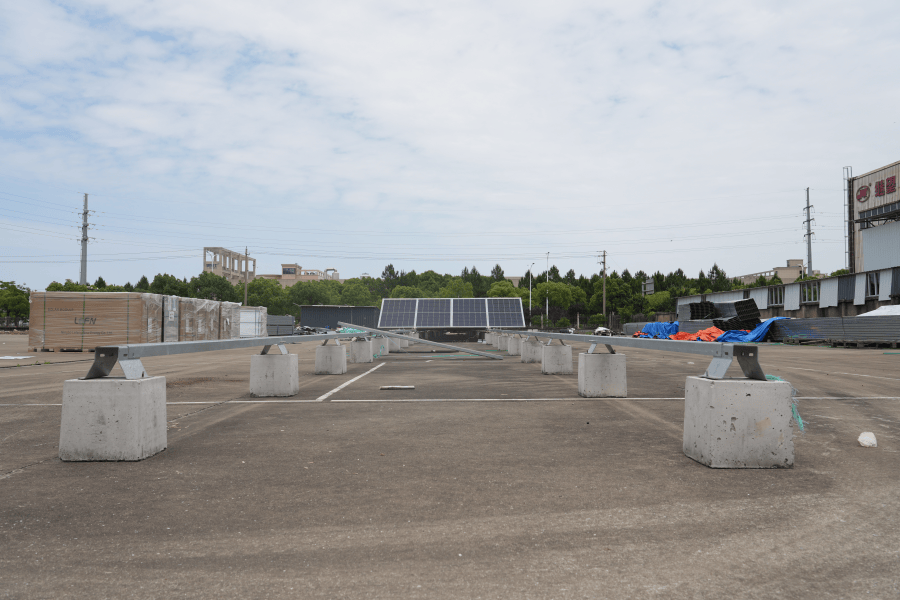
- Site Prep & The Foundation Myth: You might think "a concrete pad is a concrete pad." Not here. We designed a custom, reinforced plinth that accounted for not just weight, but for potential ground shift and extreme drainage needs from rare but intense rain events. This level of detail is where you leverage partners with field experience, not just catalog sales.
- Arrival & Strategic Staging: Logistics is king. We sequenced the arrival of components. Heavy BESS enclosures and the power conversion system (PCS) came first, directly placed. Delicate networking and control cabinets arrived later, stored in a temporary, climate-controlled site shack until needed.
- The High-Voltage DC Heart: The core differentiator. Instead of a traditional low-voltage battery bank needing massive AC/DC conversion, our system strings batteries at a much higher DC voltage. This meant fewer, more efficient conversions, smaller cabling, and significantly reduced electrical losses - a critical factor when every kilowatt-hour counts.
- Commissioning: The Symphony Conductor: This isn't just "turning it on." It's a meticulous, multi-day process of verifying every communication link, testing safety protocols (like the arc-fault detection mandated by UL), and simulating grid disturbances. We brought the system up in careful stages, hand-in-hand with the mine's electrical team, ensuring it spoke perfectly to their existing infrastructure.
The "Why" Behind High-Voltage DC: Efficiency in the Heat
Let me geek out for a second on a key technical choice: High-Voltage DC. In a standard system, batteries at a lower voltage (say, 800V DC) need to be boosted and inverted to medium-voltage AC for the plant. Each conversion loses energy as heat. In the 45C+ (113F) shade of Mauritania, managing that thermal load is a huge burden on the cooling system, which itself consumes power.
By designing the battery stack to operate at a higher DC voltage (closer to the PCS output), we minimize those conversion steps. The result? A higher overall round-trip efficiency. This directly lowers the Levelized Cost of Energy (LCOE) for the stored power because you waste less. For a 5MWh system cycling daily, that efficiency delta translates into tens of thousands of dollars in saved energy annually. It's a perfect example of how smart engineering upfront pays continuous dividends.
Beyond the Battery: The Unsung Heroes of a Stable System
Everyone focuses on the battery cells. But on site, the supporting cast makes or breaks you. Two things are non-negotiable:
- Thermal Management That's Desert-Rated: The BESS enclosure's HVAC isn't an off-the-shelf unit. It's a redundant, N+1 configured system with filtration for fine dust. We monitor temperature at the module level, not just the container air. This granular control prevents hot spots that degrade battery life.
- Grid-Forming Capability for Weak Grids: Many remote industrial sites have a "weak" or "stiff" grid. A sophisticated BESS with advanced inverters can provide grid-forming services - essentially creating a stable voltage and frequency signal that other equipment can rely on. This was crucial in Mauritania to ensure smooth operation of large crushers and conveyors.
This approach isn't unique to us. Look at successful projects in similar contexts, like the BESS supporting microgrids in remote parts of Alaska or mining sites in Western Australia. The common thread is adaptation, not just installation.
Is Your Site "Mauritania-Ready"?
So, what's the takeaway for a plant manager or energy director in the US or Europe considering a utility-scale BESS? The technology is proven. The business case is solid. The gap is in the execution strategy. When you evaluate partners, drill into their installation methodology. Ask them: "Walk me through your step-by-step process for a site with [your specific challenge: permafrost, seismic risk, space constraints]." Their answer will tell you if they're selling a commodity or delivering a solution.
At Highjoule, our value isn't just in the UL and IEC-certified hardware we build. It's embedded in the project DNA - from the initial site assessment to the 24/7 remote monitoring we provide after commissioning. We've lived through the "Mauritanias," so your deployment feels, well, standard. What's the one site-specific challenge that's kept you up at night regarding energy storage?
Tags: BESS Utility-Scale Energy Storage Mining Operations High-voltage DC Remote Deployment
Author
James Zhang
20+ years agricultural energy storage engineer / Highjoule CTO