
Liquid-Cooled Pre-Integrated PV Container: A Step-by-Step Guide for Remote Mining
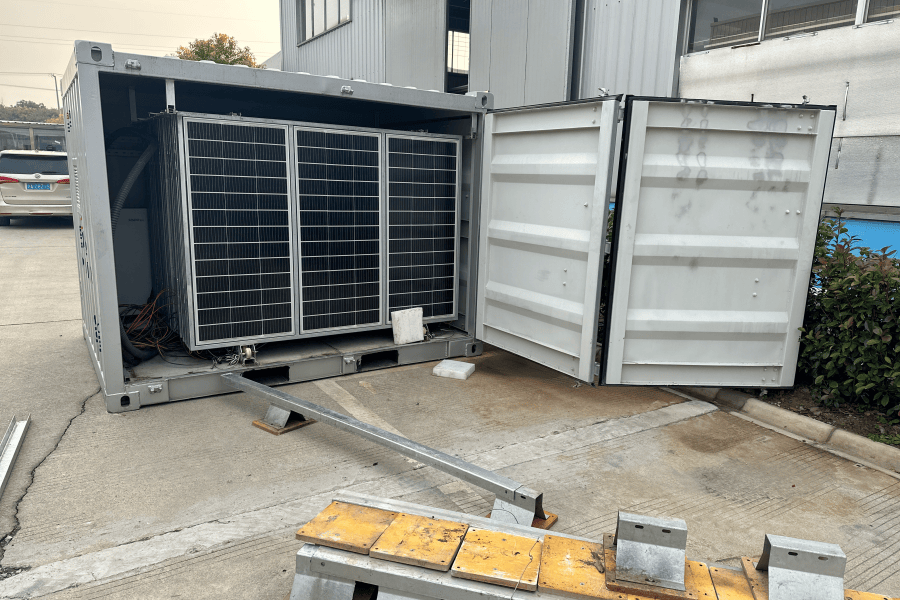
Table of Contents
- The Remote Power Problem Isn't Just About Fuel
- Why Traditional BESS Struggles in the Heat and Dust
- The Integrated Solution: More Than Just a Box
- A Step-by-Step Look at Deployment
- Real Numbers, Real Impact
- What Happens After the Installation?
The Remote Power Problem Isn't Just About Fuel
Let's be honest. If you're managing a mining operation in a place like Mauritania, or really any remote industrial site, your biggest headache isn't always the geology. It's the power. I've been on sites where the diesel bill reads like a national budget, and the constant hum of generators is the soundtrack to every cost-overrun meeting. The volatility of fuel prices alone can make a promising project uneconomical overnight. According to the International Energy Agency (IEA), energy costs can constitute up to 30% of total operating expenses in mining. That's a massive, unpredictable variable.
So, the move to solar-plus-storage is a no-brainer, right? Cut the fuel, lock in your energy costs, and maybe even earn some ESG points. But here's the catch I've seen firsthand: slapping together a solar farm and a battery energy storage system (BESS) in a harsh, remote environment is where good intentions often meet brutal reality.
Why Traditional BESS Struggles in the Heat and Dust
This is the part they don't always tell you in the glossy brochure. A standard air-cooled BESS unit, even a good one, faces a brutal enemy in the desert: heat. Ambient temperatures of 45C+ are a norm, not an exception. Thermal management becomes the single most critical factor for battery life and safety. High C-rate operations (that's the speed at which you charge and discharge the battery) needed for heavy machinery create immense internal heat. Air cooling simply can't keep up consistently, leading to accelerated degradation. You might be thinking you bought a 10-year asset, but with poor thermal management, its capacity could plummet in half that time, destroying your LCOE (Levelized Cost of Energy) calculations.
Then there's the "construction" phase. You're coordinating multiple vendors - civil teams for foundations, electrical crews for DC and AC wiring, specialists for the BESS and PV inverters. The logistics are a nightmare. A missing cable gland or a commissioning software hiccup can stall the project for weeks, with your team sitting on-site, burning money. The complexity is immense, and the window of optimal weather for this kind of work is always smaller than you plan.
The Integrated Solution: More Than Just a Box
This is where the concept of a Step-by-step Installation of Liquid-cooled Pre-integrated PV Container shifts the paradigm. It's not just a product; it's a deployment methodology. At Highjoule, we don't see it as shipping a container. We see it as shipping a power plant in a box, pre-engineered to solve the very problems I just described.
The "pre-integrated" part is key. Before it leaves our factory, the entire system - lithium-ion battery racks, liquid cooling loops, bi-directional inverters, MV transformers, and even the step-down transformers for the PV string inverters - is mounted, wired, and tested in a controlled environment. It's built to UL 9540 and IEC 62933 standards, so the core safety and performance certifications are locked in before it ever sees a desert storm. This factory integration is what slashes 40-60% off the on-site construction timeline.
And the liquid cooling? Honestly, it's a game-changer for these environments. Unlike air systems that fight the hot ambient air, a closed-loop liquid system precisely controls the temperature of each battery cell directly. It maintains optimal temperature even during high C-rate, midday charging from the solar field. This isn't just about performance; it's about safety and longevity, giving you a predictable, stable LCOE over the asset's life.
What's Inside the Box?
- Liquid-Cooled Battery Racks: For maximum lifespan and safety in high ambient temperatures.
- Pre-wired Power Conversion System (PCS): AC/DC bi-directional inverters, already connected.
- Integrated Medium-Voltage (MV) & Low-Voltage (LV) Switchgear: All protection and control in one place.
- Centralized Thermal Management Unit: The brain of the liquid cooling system.
- Factory-Fired Control System: Pre-programmed for the site's basic parameters, ready for fine-tuning.
A Step-by-Step Look at Deployment
So, how does this actually play out on a site in Mauritania? Let's walk through it.
Step 1: Site Prep & Foundation. While the container is en route, your local civil crew prepares a simple, level concrete pad. That's it. No need to build a separate equipment shelter or complex cable trenches. The simplicity here cannot be overstated.
Step 2: Drop and Place. The container arrives. Using a crane, it's placed directly onto the prepared pad. This is often a single-day operation. I've seen the look of relief on a project manager's face when this step is done - the single biggest, most complex component of the BESS is literally already in place.

Step 3: The "One Connection" Philosophy. This is the magic. Our teams focus on making minimal, robust connections:
- AC Connection: One primary MV cable from the container's switchgear to your mine's main distribution board.
- DC Connection: DC combiner boxes from the solar array feed into pre-designated points on the container.
- Auxiliary Power & Comms: Connect site power and fiber/ethernet for monitoring.
Step 4: Commissioning & Go-Live. Because the internal systems were pre-commissioned at the factory, the on-site process is about verification and integration. Our engineers, often working with local partners, bring the system online in a matter of days, not weeks. The focus is on testing the interfaces with your existing mine power infrastructure and the new PV field.
Real Numbers, Real Impact
Let's talk about a project in Nevada, USA, with similar challenges of heat, dust, and remote logistics. A gold mining operation needed to offset diesel for their processing plant. They deployed a 4MW/8MWh Highjoule pre-integrated, liquid-cooled system alongside a new solar array. The key metric? From container delivery to commercial operation was under 11 weeks. Their on-site construction labor was reduced by an estimated 70% compared to a traditional stick-build approach. The liquid cooling system has maintained cell temperature variance within 2C, which is what we aim for to ensure even aging across all battery modules.
This isn't just about speed. It's about risk reduction. By moving the complex integration work to a controlled factory, you eliminate countless weather, quality, and coordination risks from the critical path. For a CFO or Operations Director, that predictability is often more valuable than the technology itself.
What Happens After the Installation?
A system this integrated needs a different kind of support. You can't have a specialist for every component flying out. That's why our service model is built around remote monitoring and predictive analytics. Our team can see the same performance data you do - cell temperatures, voltage curves, efficiency metrics. We can often diagnose a potential issue before it causes downtime, and if a part needs replacing, we ship a pre-integrated sub-module. The local technician just swaps it out, following clear guides. It turns capex-intensive service into manageable opex.
So, when you look at your next remote power project, ask yourself: are you buying a list of components and a world of integration risk, or are you buying a guaranteed outcome and a clear, step-by-step path to get there? The difference isn't just in the cooling technology; it's in the entire philosophy of how reliable power gets built in the most demanding places on Earth.
What's the single biggest logistical hurdle you've faced in your last remote energy project?
Tags: UL Standard BESS LCOE Energy Storage PV Container Remote Mining
Author
James Zhang
20+ years agricultural energy storage engineer / Highjoule CTO