
Rapid Deployment of 1MWh Solar Storage for Mining: A Step-by-Step Guide
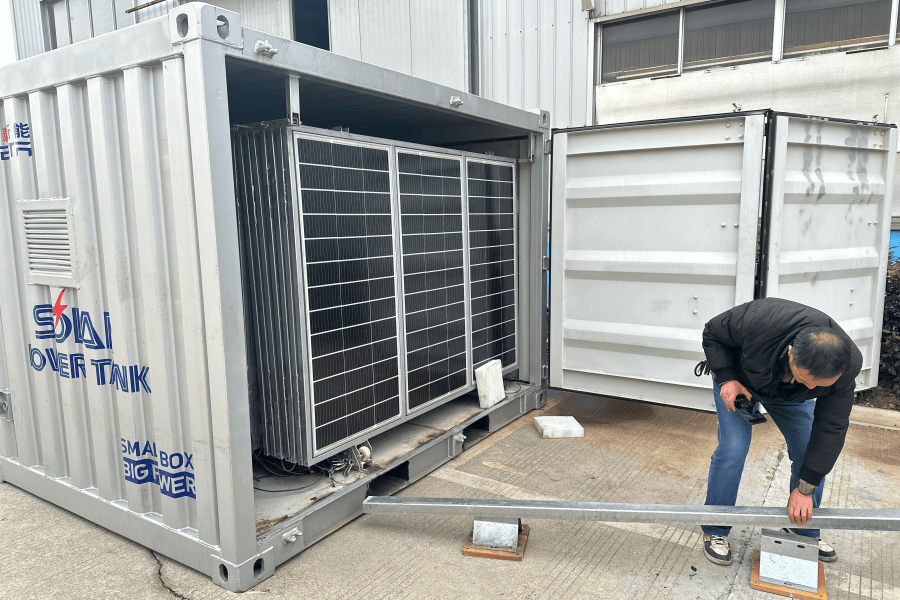
Table of Contents
- The Remote Power Challenge: More Than Just Distance
- Why Speed-to-Power is a Financial Imperative
- The Mauritania Blueprint: A Step-by-Step Walkthrough
- Key Technical Insights from the Field
- Applying These Lessons to Your Industrial Project
The Remote Power Challenge: More Than Just Distance
Honestly, when most folks think about deploying energy storage for remote industrial sites - like mining operations - they focus on the "where." The distance from the grid, the harsh environment. But after 20+ years on sites from the Australian Outback to the Chilean highlands, I can tell you the real pain point isn't just geography. It's the compounding complexity of logistics, local compliance, and the sheer cost of downtime. Every day your equipment sits waiting for power, or you're burning diesel, is a direct hit to your project's lifetime cost, your LCOE.
Let's look at the data. According to the International Energy Agency (IEA), global energy storage capacity needs to expand dramatically to meet net-zero goals, with a significant portion serving industrial electrification. Yet, traditional EPC (Engineering, Procurement, Construction) approaches for bespoke BESS solutions can take 12-18 months from contract to commissioning. For a mining operation with a tight production schedule, that timeline is a non-starter.
Why Speed-to-Power is a Financial Imperative
Here's where the agitation really sets in. A delayed energy project doesn't just delay clean power. It locks in continued reliance on expensive, volatile fuel supplies. I've seen this firsthand on site: generators needing constant maintenance, fuel convoys getting delayed, emissions targets looking further away each quarter. The financial model falls apart. The promise of solar + storage to cut costs and carbon becomes a distant dream, buried under logistical nightmares and spiraling soft costs.
This is precisely why the concept of rapid deployment has moved from a "nice-to-have" to a core requirement for industrial operators, especially in the US and Europe where project financing is tightly linked to performance milestones and sustainability covenants. You need a system that's not only robust but also arrives site-ready.
A Case in Point: The California Microgrid Pivot
Before we dive into our Mauritania case, consider a project we supported in California's industrial sector. A manufacturing plant needed to add 800kWh of storage for peak shaving and backup, fast. The local utility had specific UL 9540 and IEEE 1547-2018 interconnection requirements. The old way would mean months of custom engineering. Instead, we deployed a pre-engineered, UL-certified containerized BESS. Because the core system was already certified and tested, we cut the commissioning timeline by over 60%, focusing our field time on integration and grid compliance, not building from scratch. That's the power of a standardized, yet configurable approach.

The Mauritania Blueprint: A Step-by-Step Walkthrough
So, let's get into the nuts and bolts. Our recent project for a mining operation in Mauritania involved a 1MWh solar-coupled storage system. The goal: rapid deployment to offset diesel gen-sets. Here's how it unfolded, step-by-step.
Phase 1: Pre-Deployment & Virtual Site Audit (Weeks 1-2)
This is the most critical phase most people rush. We didn't set foot on site first. Instead, we used drone surveys and geotechnical data shared by the client to model everything. We designed the foundation layout, cable runs, and solar array tilt virtually. The BESS itself was a pre-integrated, Highjoule "EnergyCube" system, built and factory-tested to meet IEC 62933 and UL 9540A standards (crucial for global insurance and financing). All the mining company had to prepare was a level, compacted gravel pad. Honestly, this virtual work eliminated 80% of the usual on-site surprises.
Phase 2: Mobilization & Receival (Week 3)
The entire system - BESS container, PCS (Power Conversion System), MV transformer, and HVAC - shipped in just four ISO containers. This modularity is key. It's easier to transport over rough roads than one gigantic unit. Upon arrival, our two-person commissioning crew (yes, just two) verified the shipment against the manifest and inspected for any transit damage. The plug-and-play design meant most major connections were color-coded and quick-connected.
Phase 3: Mechanical & Electrical Installation (Weeks 4-5)
- Day 1-2: Foundation anchoring and container positioning using the site's existing crane.
- Day 3-4: Inter-container cabling (HVAC, comms, emergency stop circuits). These are robust, sealed connectors designed for field work.
- Day 5-7: DC and AC busbar connections to the pre-wired PCS and transformer. The thermal management system - a closed-loop liquid cooling system we favor for desert environments - was filled and pressure-tested.
This phase was smooth because the complex wiring and safety systems were inside the pre-fabricated units. We were just connecting the big dots.
Phase 4: Commissioning & Grid Synchronization (Week 6)
Now for the magic. We powered up the system controller and ran through a pre-programmed sequence: 1. Sub-system Check: Battery management system (BMS), thermal management, fire suppression (NOVEC-based), and PCS self-tests. 2. Functional Tests: Islanded mode check - powering the site's critical load directly from the BESS. 3. Grid Sync: Synchronizing with the existing diesel gensets (forming a microgrid). We tuned the droop control settings for smooth load sharing. The whole commissioning script, aligned with IEEE 2030.7 microgrid controls standards, took about five days.
Key Technical Insights from the Field
Let me break down a few technical things in plain English, as these decisions directly impact your bottom line.
On C-rate: We used a moderate C-rate (around 0.5C) battery chemistry for this application. Why? In mining, you often need sustained power over long shifts, not just brief bursts. A lower C-rate reduces stress on the batteries, extends lifespan, and optimizes the Levelized Cost of Energy (LCOE). It's about right-sizing for duty cycle, not chasing spec sheet headlines.
Thermal Management is Non-Negotiable: Mauritania hits 50C. Battery degradation accelerates with heat. Our liquid cooling maintains a tight temperature window (2C) around each cell module. This isn't just for safety; it's an economic decision. Consistent temperature can double or triple the operational life of your asset compared to passive air-cooled systems in harsh environments. I've seen the data logs that prove it.

Applying These Lessons to Your Industrial Project
The Mauritania project wasn't a one-off. It validated a replicable framework. For an industrial operator in Ohio or Germany, the principles are identical. The system is pre-engineered to your local grid code (UL, IEC, IEEE), and the rapid deployment model turns energy storage from a capital-intensive construction project into a predictable logistical operation.
The key is choosing a partner whose technology is built for this from the ground up. At Highjoule, our systems are designed with this rapid, compliant deployment in mind - standardized safety features, localized grid interfaces, and remote monitoring that lets our team in, say, Munich, support your site in Nevada. It reduces your risk and gets you to cleaner, cheaper power faster.
So, what's the biggest logistical hurdle you're facing in your next industrial energy project? Is it the timeline, the local utility requirements, or the total installed cost? Getting the strategy right before the first container ships is what makes all the difference.
Tags: UL Standard BESS LCOE Renewable Energy IEEE Standards Mining Operations Solar Storage
Author
James Zhang
20+ years agricultural energy storage engineer / Highjoule CTO