
Step-by-step Installation of Rapid Deployment Energy Storage Container for Telecom Base Stations
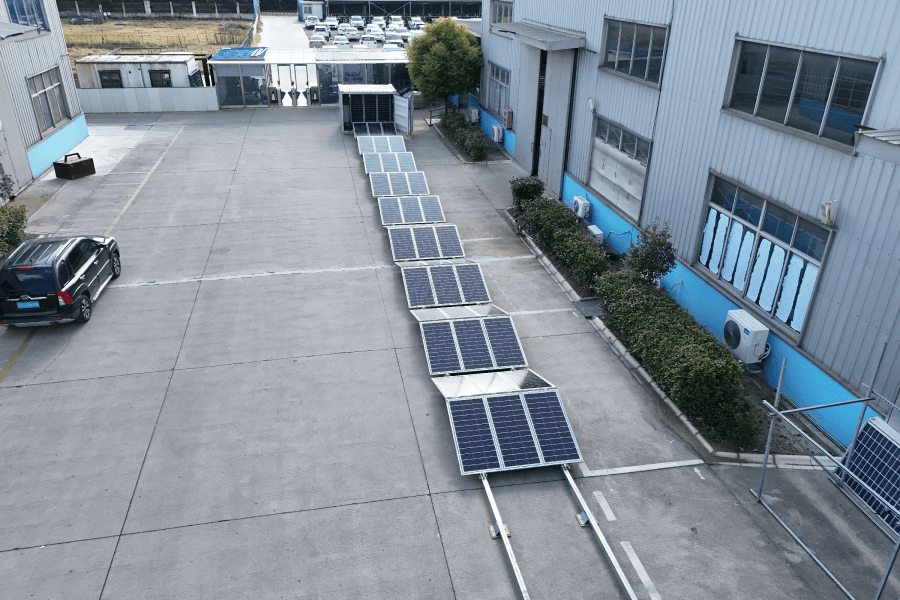
Table of Contents
- The Silent Grid Crisis at Your Base Station
- Why Traditional "Fixes" Fail (And Cost a Fortune)
- The Rapid Deployment Advantage: It's Not Just a Box
- The Installation Blueprint: A Site Engineer's Walkthrough
- Real Numbers, Real Case: From Blueprint to Power
- Your Next Step: Questions to Ask Your Vendor
The Silent Grid Crisis at Your Base Station
Let's be honest. If you're managing telecom infrastructure in North America or Europe right now, you're not just fighting for bandwidth. You're fighting for electrons. The grid is getting, well, moody. More renewables (a great thing!) mean more volatility. I've seen firsthand on site in California and Germany how a sudden cloud cover or a dip in wind can cause local frequency dips that make your backup gensets scream to life. And those public safety power shutoffs? They're not just a California problem anymore. A 2023 report from the International Energy Agency (IEA) highlights the increasing strain on grids from climate events and the electrification of everything. Your base station's reliability is only as good as the weakest link in its power chain.
Why Traditional "Fixes" Fail (And Cost a Fortune)
The old playbook is broken. Relying solely on diesel generators is a CAPEX and OPEX nightmare - fuel costs, maintenance contracts, noise complaints, and emissions regulations that are only getting stricter. I've been called to sites where the "backup solution" became the primary point of failure. Building a permanent BESS facility from scratch? That's a 12-18 month odyssey of civil engineering, permitting hell, and capital lock-up you probably don't have.
The real agitation point? It's the downtime cost. It's not just about dropped calls. It's about public safety networks going dark, financial transactions failing, and your brand's reputation taking a hit. Every minute of outage is a direct hit to the bottom line, and traditional approaches are too slow and too rigid to respond.
The Rapid Deployment Advantage: It's Not Just a Box
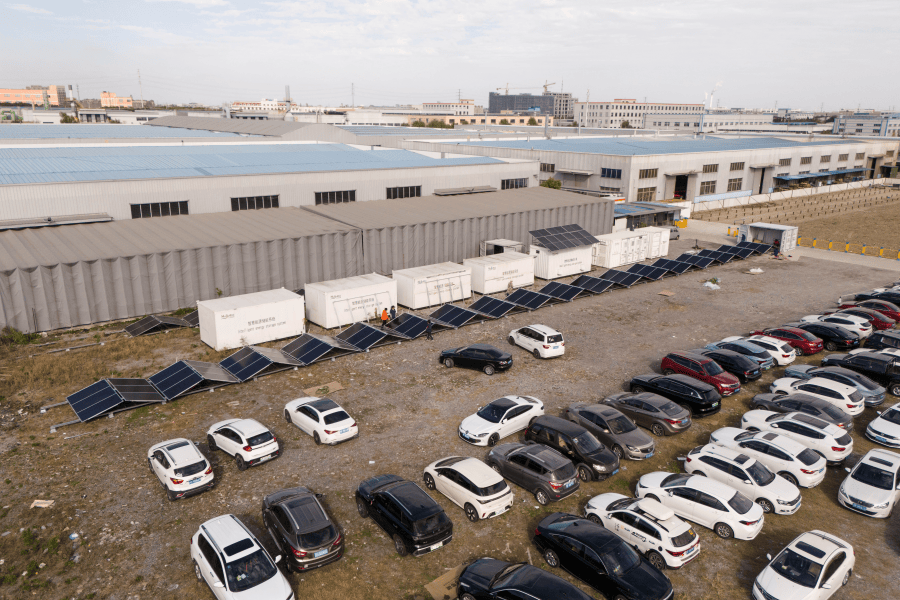
This is where the game changes. A Rapid Deployment Energy Storage Container isn't a magic trick, but it's the closest thing we have in our engineering toolkit. Think of it as a "power resilience module." The core solution isn't just the lithium-ion cells inside; it's the step-by-step installation methodology that turns a complex, high-stakes project into a predictable, repeatable process. At Highjoule, we've built our entire service model around this philosophy: pre-integrated, pre-tested, and compliant by design.

What's Inside the "Solution"?
- Safety First, Built to Code: Every unit we ship is designed from the ground up to meet UL 9540 and IEC 62933 standards. The thermal management system isn't an afterthought - it's engineered for the specific C-rate (charge/discharge speed) demands of telecom backup, preventing hotspots that degrade battery life. Honestly, seeing some off-the-shelf systems gives me chills; proper cell-level monitoring and fire suppression are non-negotiable.
- LCOE as a North Star: We talk a lot about Levelized Cost of Energy (LCOE) with clients. For you, it translates to total lifetime cost. A rapid-deploy container slashes soft costs (engineering, labor) and gets you earning - or saving - from day one. Faster deployment means faster ROI, period.
The Installation Blueprint: A Site Engineer's Walkthrough
So, what does this "rapid" process actually look like? Forget years. We're talking weeks. Here's the real-world sequence, stripped of marketing fluff:
- Site Prep & Foundation (Week 1): This is the most critical parallel path. While the container is in transit, your local crew (or our partners) prepare the pad. We provide the exact specs. It's usually a simple concrete slab or a pre-fabricated base. No extensive civil works.
- Delivery & Positioning (Day 1): The container arrives on a flatbed. It's a single lift with a crane. I've supervised this in a tight urban site in Chicago - with proper planning, it's a half-day operation. The container lands on its pre-designed interface points.
- Electrical Interconnection (Week 2): This is where pre-integration pays off. The AC/DC power conversion systems, switchgear, and grid interconnection points are all inside the container. Our team connects the main AC feed from your station and the critical load output. It's significantly fewer field connections than a built-in-place system, which means fewer potential failure points.
- Commissioning & Grid Sync (Final Days): We power up the system and run through a detailed protocol. We test the battery management system, validate the thermal controls, and simulate grid failure and recovery. The system is programmed to your specific needs - whether it's peak shaving, frequency regulation, or pure backup. Then, we sync with the local grid and hand over the controls.
The beauty is in the sequencing and the fact that 90% of the complex work is done in our factory, under controlled conditions, not in the rain on your site.
Real Numbers, Real Case: From Blueprint to Power
Let's talk data and a real project. According to the National Renewable Energy Lab (NREL), streamlined BESS deployment can reduce balance-of-system costs by up to 30%. I've seen it.
Case in Point: A Tier-1 Telecom Provider in Northern Germany.
- Challenge: A critical base station serving a port area needed enhanced resilience against grid fluctuations and a path to reduce diesel use. The permitting for a permanent structure was prohibitive.
- Solution: A Highjoule 500 kWh / 250 kW rapid-deploy container, pre-certified to IEC standards.
- Deployment: From signed contract to operational system: 11 weeks. Site prep ran in parallel with manufacturing. The actual on-site installation and commissioning took 8 working days.
- Outcome: The system now provides seamless backup during micro-grid transitions and participates in a local flexibility market, generating revenue. The diesel generator is now a last-resort backup, slashing fuel costs and maintenance.
Your Next Step: Questions to Ask Your Vendor
Don't just take my word for it. If you're evaluating a rapid deployment BESS, grab a coffee with your engineering team and ask these questions:
- "Can you show me the full, detailed step-by-step installation timeline for a site like mine?"
- "Where are the UL or IEC certification marks on the unit and its major subsystems?"
- "How is the thermal management system designed for my specific climate and duty cycle?"
- "What is your local service and maintenance footprint for the lifecycle of this asset?"
The right solution doesn't just solve today's outage. It builds a foundation for a more resilient, profitable, and sustainable power strategy for your entire network. What's the single biggest power reliability headache keeping you up at night?
Tags: UL Standard BESS Rapid Deployment Europe US Market Telecom Energy Storage Energy Container
Author
James Zhang
20+ years agricultural energy storage engineer / Highjoule CTO