
Wholesale Price of High-voltage DC Hybrid Solar-Diesel System for Public Utility Grids
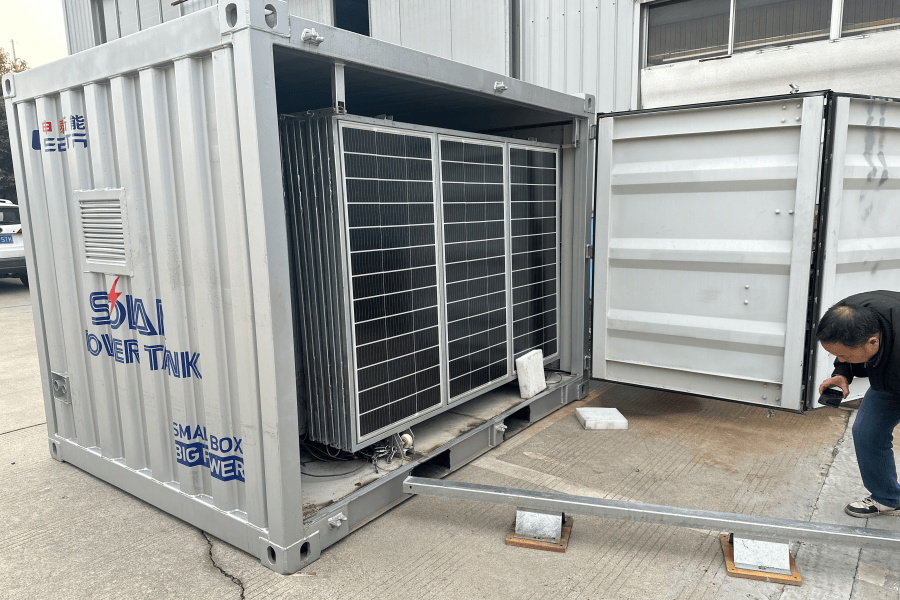
Table of Contents
- The Real Price Question for Utilities
- It's Never Just About the Sticker Price
- The High-Voltage DC Hybrid: A Different Kind of Math
- A Real-World Case: Grid Stability in the Midwest
- Making the Technology Work for You
The Real Price Question for Utilities
Let's be honest. When you, as a utility planner or commercial decision-maker, hear "wholesale price" for a major grid asset, your first thought isn't just the number on the quote. It's the mountain of hidden costs, operational headaches, and future liabilities hiding behind it. I've sat across the table from enough procurement teams to know the real question is: "What's this going to actually cost us over the next 20 years?"
This is especially true now. With the IEA reporting record global renewable capacity additions, the pressure is on to integrate solar and wind while maintaining rock-solid reliability. The old model of simply firing up more diesel gensets during peak demand or grid stress is becoming a financial and regulatory albatross. Fuel price volatility is a killer, and emissions targets are tightening. So, you're looking at hybrid systems. But then you get a quote for a Wholesale Price of High-voltage DC Hybrid Solar-Diesel System for Public Utility Grids, and the sticker shock can be real. I get it.
It's Never Just About the Sticker Price
Here's the aggravation, and I've seen this firsthand on site. A low upfront capital cost for a system can be the most expensive choice you ever make. The pain points usually show up in three areas:
- Efficiency Losses (The Silent Budget Drain): Many systems use a traditional AC-coupled architecture. You have solar inverters converting DC to AC, then the battery system converting AC back to DC to charge, and then back to AC to discharge. Every conversion loses 1.5-2% efficiency. Over a system's lifetime, that wasted energy is a massive, silent cost.
- Thermal Runaway & Safety Liabilities: This is the big one. Poor thermal management in a battery container isn't just an efficiency issue; it's a safety and capex disaster waiting to happen. Inadequate cooling forces you to de-rate the system (so you're not getting the power you paid for) and drastically shortens battery life. Worse, it elevates risk. Complying with UL 9540A and IEC 62933 isn't just about ticking a box - it's about avoiding a catastrophic write-off and the monumental liability that follows.
- The Operational Tug-of-War: Getting solar, diesel, and storage to play nice together with seamless dispatch control is harder than it looks. A clunky system leads to diesel gensets running sub-optimally, increasing fuel burn and maintenance intervals, which completely erodes the supposed savings from solar.
The true cost metric here is the Levelized Cost of Energy (LCOE) for the entire hybrid asset. A cheap system with high losses, short lifespan, and operational headaches will have a terrible LCOE. That's the number that keeps utility CFOs up at night.
The High-Voltage DC Hybrid: A Different Kind of Math
This is where the conversation around the Wholesale Price of High-voltage DC Hybrid Solar-Diesel System for Public Utility Grids needs to shift. The solution isn't about finding the cheapest component bid; it's about investing in an architecture designed to minimize LCOE from day one.
A modern high-voltage DC-coupled system attacks those pain points directly. By having solar arrays and battery strings feed into a common DC bus before a single, large-scale inverter, you cut out multiple conversion steps. Honestly, the efficiency gain is typically 3-5% overall. That's free energy, year after year. It also simplifies the control system - the battery can directly buffer solar fluctuations, allowing the diesel gensets to operate only at their most efficient, steady-state set points when absolutely needed.
At Highjoule, when we engineer these systems, we obsess over the thermal design. It's not an afterthought. We design for the specific C-rate (the speed of charge/discharge) required for grid services, ensuring the cooling system can handle peak loads without de-rating. This extends cycle life and is fundamental to meeting the stringent safety thresholds of UL and IEC standards. This upfront engineering is part of the wholesale price, but it's what protects the multi-million dollar asset for its full lifespan.

A Real-World Case: Grid Stability in the Midwest
Let me give you a non-proprietary example from a project we supported in the American Midwest. A municipal utility was facing peak demand charges and needed to shore up reliability for a critical feeder line. They had some existing diesel capacity and land for a solar farm.
The Challenge: They needed a system that could provide instantaneous frequency regulation, absorb solar curtailment, and kick in during outages - all while keeping long-term operational costs predictable.
The Solution & Outcome: We deployed a containerized high-voltage DC hybrid system. The DC-coupling meant that during sunny days, solar power directly charged the batteries or fed the grid with minimal loss. When a cloud passed, the batteries discharged to smooth the output without touching the diesel. The gensets now only start for prolonged outages or during winter peak. The result? Their effective cost per kWh delivered from the entire hybrid asset (the LCOE) dropped by over 30% compared to a traditional AC-coupled design they had initially considered. The "wholesale price" of the right system paid for itself in under 7 years through fuel savings, reduced genset maintenance, and grid service revenues.
Making the Technology Work for You
So, how do you evaluate that next wholesale price quote? Don't just look at the bottom line. Tear into the technical specs:
- Ask about the system architecture: Is it AC- or DC-coupled? Request an estimated round-trip efficiency comparison.
- Demand details on thermal management: How is the battery container cooled? What is the guaranteed maximum operating temperature at the project site's peak ambient temp? Ask for the UL 9540A test report summary.
- Analyze the control logic: How does the system prioritize energy sources? Can it be configured for your specific grid service needs (frequency response, peak shaving, black start)?
- Scrutinize the lifecycle support: What's the degradation warranty? What does the O&M package include? A system without local, expert support is a stranded asset.
Our approach at Highjoule has always been to partner on these details from the feasibility study onward. The goal is to build a system where the wholesale price reflects a 20-year asset, not just a one-time purchase. Because in this business, the cheapest system upfront is usually the one that costs you the most in the long run.
What's the biggest operational cost surprise you've encountered with your current grid assets?
Tags: UL Standard BESS LCOE Grid Resilience IEEE
Author
James Zhang
20+ years agricultural energy storage engineer / Highjoule CTO