
20ft BESS Container Solutions for Eco-Resorts: Cutting Costs & Ensuring Safety
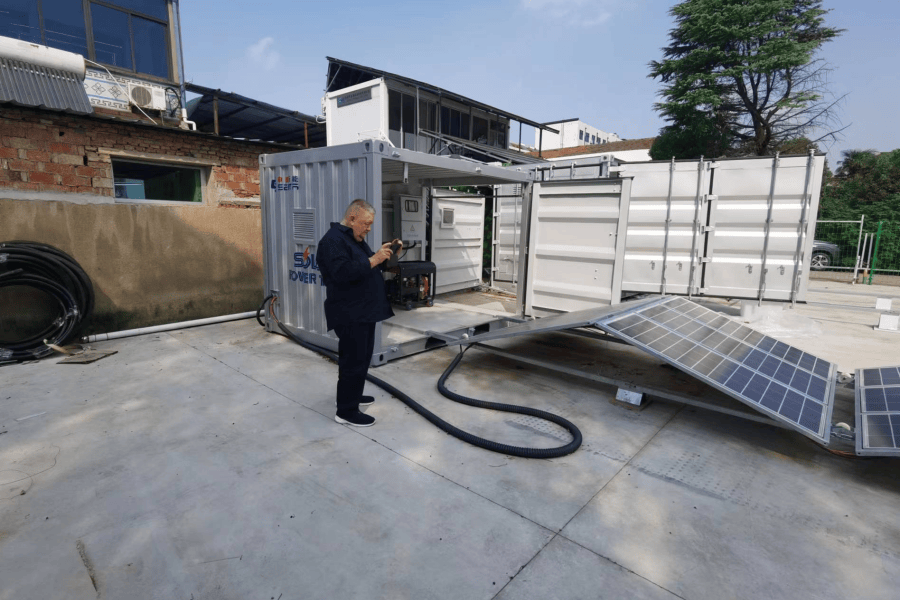
Your Eco-Resort's Power Problem? We've Seen It. Here's a Smarter BESS Approach.
Hey there. Let's talk about powering paradise. Over the last two decades, from California vineyards turned luxury retreats to remote lodges in the Scottish Highlands, I've sat across the table from countless developers and operators. The conversation always starts with a vision - 100% renewable, off-grid resilience, a pristine environmental footprint. But it almost always hits the same wall when we get down to the brass tacks of the battery energy storage system (BESS). Honestly, the excitement about solar panels and wind turbines often meets a cold, hard reality when we open the spec sheets for the storage backbone. The dream is clear; the path to get there feels unnecessarily complicated and risky.
Quick Navigation
- The "Real" Cost That Keeps You Up at Night
- Safety First Isn't Just a Slogan On Site
- Why This 20ft Container Spec Changes the Game
- Beyond the Specs: Making It Work in the Real World
The "Real" Cost That Keeps You Up at Night
When you're evaluating a BESS for an eco-resort, the sticker price of the container is just the beginning. The real metric, the one that determines your ROI and long-term viability, is the Levelized Cost of Storage (LCOS) or, more broadly, the Levelized Cost of Energy (LCOE). It's the total cost of owning and operating the system over its lifetime, divided by the total energy it dispatches. A cheap upfront unit with poor efficiency or a short lifespan will have a terrible LCOE.
I've seen this firsthand. A project in the Mediterranean opted for a low-cost, non-integrated system. Within 18 months, inverter mismatches and passive cooling struggles in the 40C+ heat led to a 15% capacity degradation. They were constantly cycling batteries harder (a high C-rate) to meet demand, which accelerated wear. According to the National Renewable Energy Laboratory (NREL), improper thermal management can increase degradation rates by up to 200% in some climates. Suddenly, that "bargain" unit needed a major mid-life refurbishment, destroying the financial model. The true cost wasn't on page one of the quote; it was hidden in the technical specifications for thermal management, cycle life, and system integration.
Safety First Isn't Just a Slogan On Site
Let's be blunt: a thermal event in a battery system is a catastrophe, full stop. For an eco-resort, it's not just an asset loss; it's a reputational and existential crisis. The industry has learned hard lessons. Standards like UL 9540 for the overall system and UL 1973 for the batteries aren't just nice-to-haves for the US market - they are the baseline for insurability and permitting, especially in wildfire-prone areas like California or Colorado.
In my early days, I witnessed a near-miss at an industrial site using a system not designed for its specific climate. The cooling failed, alarms were ignored, and we were hours from a serious incident. It changed how I view every spec sheet. Compliance is binary; design philosophy is everything. Does the container have active, liquid-based thermal management that maintains cell temperature within a tight 3C band? Are the fire suppression systems inert gas-based and integrated with compartmentalized design to isolate a single module? These aren't checkboxes. They are the difference between a close call and a headline.

Why This 20ft Container Spec Changes the Game
So, when we at Highjoule developed our 20ft High Cube Energy Storage Container platform for applications like eco-resorts, we started with these two pain points: total lifetime cost (LCOE) and absolute safety. The technical specification isn't just a list of features; it's a direct answer to the problems we've encountered in the field.
The core of a good LCOE is longevity and efficiency. We specify lithium iron phosphate (LFP) chemistry not because it's trendy, but because its inherent stability and longer cycle life directly combat degradation. We pair it with a 1C continuous discharge rating. In simple terms, C-rate is how fast you can pull energy out. A 1C rate means the system can deliver its full rated power in a balanced, sustainable way without the excessive stress that kills battery life. It's the difference between a sprinter and a marathon runner - your resort needs the latter for decades of reliable service.
On safety and compliance, the spec is unambiguous. The system is engineered to meet and exceed:
- UL 9540 / IEC 62933-5-2 for the overall BESS
- UL 1973 / IEC 62619 for the battery cells and modules
- IEEE 1547 for grid interconnection (critical for hybrid microgrids)
A Real-World Fit: The Case of Cedar Pine Lodge
Take our deployment at Cedar Pine Lodge, a high-end, off-grid resort in the Pacific Northwest. Their challenge was classic: replace diesel generators with solar + storage, but ensure 24/7 power for guest comfort and safety through long, cloudy winters.
The winning solution was a 20ft High Cube container, but the devil was in our tailored details:
- Climate-Adaptive Thermal System: We didn't just provide cooling. The system automatically switches between cooling and heating modes to maintain optimal battery temperature during freezing mountain nights, something many standard units overlook.
- Grid-Forming Capability: This technical term means the BESS can "create" a stable grid from scratch, seamlessly picking up the resort's critical loads if clouds cover the solar array, with no flicker in the lights.
- Localized Service: We didn't just ship and leave. Our North American team handled the interconnection studies and works with a local electrical partner for biannual health checks, feeding data back to our engineers.
Beyond the Specs: Making It Work in the Real World
Here's my final insight, the thing you only learn on site. A perfect technical specification is useless if it lands on your property and the local crew has no idea how to integrate it with your existing solar inverters, or if a minor fault requires a specialist to fly in from another continent.
The value of a partner like Highjoule isn't just in the steel container. It's in the pre-configured, factory-tested power blocks inside that slash installation time. It's in the system design that considers the specific C-rate and discharge depth needed for your load profile - are you running a spa with heat pumps or just lighting? It's in having a regional support network that speaks your language, both technically and literally, ensuring the system on your spec sheet becomes the reliable, silent workhorse behind your resort.
So, when you're looking at that Technical Specification of a 20ft High Cube Energy Storage Container for your Eco-resort, look past the kWh and kW numbers. Ask: How does this design actively lower my real costs over 15 years? How does it prove its safety beyond a certificate? The right spec sheet tells that story before you even make the call.
What's the one operational headache in your resort's power system that a truly smart battery should solve?
Tags: Energy Storage Container UL Standard BESS LCOE Europe US Market Renewable Energy Eco-Resort
Author
James Zhang
20+ years agricultural energy storage engineer / Highjoule CTO