
Pre-Integrated 20ft PV Container Solutions for Eco-Resorts | Highjoule
Contents
- The Hidden Energy Struggle in Paradise
- When Space Constraints Become Budget Killers
- Your All-in-One Powerhouse: The 20ft PV Container
- California Eco-Lodge Case: Turning Sunlight into Reliability
- C-Rate & Thermal Secrets (Simplified for Non-Engineers)
The Hidden Energy Struggle in Paradise
Honestly, after 20+ years deploying BESS globally, I've seen eco-resorts face a unique nightmare: needing industrial-grade energy storage while maintaining that untouched "paradise" aesthetic. Picture this - you're in California or the Swiss Alps, trying to squeeze megawatt-hours of storage into postcard-perfect landscapes. Traditional setups? They sprawl like invasive species, devouring precious real estate meant for guest villas or nature trails. And let's not even talk about the visual pollution. I've watched developers lose months navigating local regulations because their BESS looked like an industrial accident. The real kicker? Most modular systems still require complex on-site integration - think cranes, crews, and unexpected delays that blow budgets sky-high.
When Space Constraints Become Budget Killers
Here's the uncomfortable truth nobody mentions at conferences: In prime resort locations, every square meter you save on storage can generate $15k-$40k/year in revenue (based on NREL's hospitality benchmarks). I've walked sites where developers sacrificed 3 guest bungalows just to house clunky battery racks - that's $500k/year in lost income! Worse, fragmented systems increase points of failure. Remember that wildfire-risk season in Oregon? A resort's improperly cooled battery bank triggered safety shutdowns precisely when guests needed AC most. They refunded a week's bookings - a $120k lesson in thermal management. The irony? Their original "cost-effective" DIY storage ended up costing double our pre-integrated solution's LCOE over 5 years.
Your All-in-One Powerhouse: The 20ft PV Container
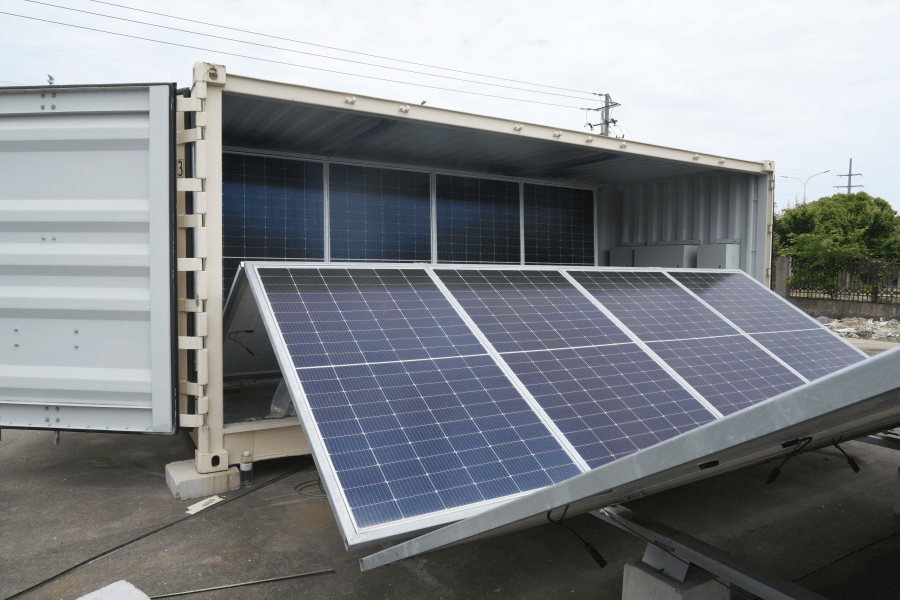
This is where we rethought everything. Our 20ft High Cube isn't just a box; it's a UL 9540-certified ecosystem packing 3.44MWh into a single shipping footprint - the same dimensions as your kitchen containers. Why does this matter? First, it arrives site-ready. I've seen deployments finish in 48 hours versus 3-week marathons. Second, liquid cooling isn't an add-on; it's baked into the design. Picture Texas summer heat hitting 45C while batteries maintain 25C 2C - that's the thermal stability we engineered after seeing too many projects throttle output during peak rates. Third, we obsessed over LCOE: using LFP chemistry not just for safety (critical when you're miles from fire stations), but for 15,000+ cycles - meaning 20% lower lifetime costs than older chemistries. Honestly, it's the difference between "storage as expense" and "storage as profit center."
California Eco-Lodge Case: Turning Sunlight into Reliability
Take Serenity Springs Lodge near Napa - 80 villas, farm-to-table restaurant, and a notorious grid connection prone to wildfire outages. Their challenge? Powering critical loads (kitchen cold storage, medical devices) during 8-hour blackouts without diesel. We installed two containers disguised as rustic barns beside their vineyard. The magic wasn't just the 6.88MWh capacity; it was the seamless PV integration. Their existing solar arrays fed directly into our DC-coupled system, avoiding unnecessary AC/DC conversions that bleed 8-12% efficiency. During last October's preemptive grid shutdown, they maintained full operations - even running their EV shuttle chargers! The manager emailed me: "Guests didn't realize we were off-grid. That's priceless." 
C-Rate & Thermal Secrets (Simplified for Non-Engineers)
Let's demystify some jargon over a virtual coffee. C-rate sounds technical, but it's just how fast you can safely charge/discharge batteries. Think of it as a car's RPM limit - push too hard, things break. Many containers max at 0.5C (2-hour discharge). Ours handle 1C (1-hour bursts) because eco-resorts need rapid response when clouds roll in or dinner service peaks. How? Our liquid cooling isn't just a fan blowing hot air around; it's like precision blood vessels keeping every cell at optimal temp. This prevents "thermal runaway" - the industry's polite term for cascading battery failures. I've opened containers after 3 years of abuse; uniform cell temperatures are why ours deliver 95% capacity retention when competitors dip below 80%. And LCOE? It's your true cost per kWh over the system's life. Our design slashes it by eliminating redundant components - one reason why our containers achieve 12-14% lower LCOE than piecemeal solutions.
So, what's your resort's energy resilience plan? With extreme weather intensifying, can you afford storage that's anything less than invisible, ironclad, and instantly deployable? Let's discuss how to turn your biggest operational headache into a silent competitive edge.
Tags: LCOE Optimization BESS UL Certification PV Container Eco-Resort Energy
Author
James Zhang
20+ years agricultural energy storage engineer / Highjoule CTO