
215kWh Military BESS: Solving Grid Stability & Cost for US/EU Bases
Table of Contents
- The Silent Challenge: More Than Just Backup Power
- When the Lights (and Budgets) Go Out: Amplifying the Costs and Risks
- The 215kWh Cabinet: A Tailored Solution for Tactical Energy Independence
- Beyond the Spec Sheet: What Really Matters On-Site
- A Glimpse from the Field: Real-World Deployment Logic
- Your Next Step: From Specification to Operational Reality
The Silent Challenge: More Than Just Backup Power
Let's be honest. When we talk about energy storage for military installations, most folks immediately think of emergency backup for a few critical loads. And sure, that's part of it. But having spent over two decades on sites from Texas to Bavaria, I can tell you the real problem is far more nuanced. It's about strategic energy resilience. Military bases are essentially small cities with incredibly dynamic, mission-critical loads - command centers, comms, surveillance, barracks, you name it. The grid, frankly, wasn't built for this modern, high-stakes demand profile.
The core pain point isn't just an outage; it's the volatility and vulnerability of the energy supply. According to a NREL analysis, critical infrastructure faces increasing risks from both extreme weather and cyber-physical threats. A base's operational readiness can hinge on a stable microgrid that can island itself, manage peak loads to avoid punitive utility demand charges, and seamlessly integrate on-site generation like solar. The old-school diesel genset solution? It's loud, has a slow response time, and creates a visible fuel logistics trail - a tactical disadvantage.
When the Lights (and Budgets) Go Out: Amplifying the Costs and Risks
I've seen this firsthand. A temporary dip in grid frequency or a sudden spike in demand can trigger cascading issues in sensitive equipment. The financial side is just as critical. In many regions, especially in parts of Europe and California, demand charges can constitute up to 70% of a commercial electricity bill. For a 24/7 military facility, that's a massive, recurring operational cost sinkhole.
Then there's the safety and compliance maze. Deploying any energy system on a base means navigating a gauntlet of standards: UL 9540 for energy storage systems, UL 1973 for batteries, IEC 62619 for safety, and a slew of local fire codes. Choosing a system that isn't designed from the ground up for these standards isn't just a paperwork headache - it's a genuine safety risk and a project showstopper. The wrong thermal management design in a container can lead to premature degradation or, worse, a thermal event.

The 215kWh Cabinet: A Tailored Solution for Tactical Energy Independence
This is where the specification of a 215kWh Cabinet BESS stops being just a datasheet and starts being a strategic playbook. This isn't a one-size-fits-all grid-scale monster. It's a modular, deployable asset. Think of it as an energy squad - scalable, resilient, and tactically smart.
How does it directly address those pains?
- Grid-Forming & Black Start: It can create a stable electrical "island" during a grid outage, allowing critical operations to continue without a blink.
- Peak Shaving: It automatically discharges during periods of high base-wide demand, slashing those crippling demand charges. Honestly, the ROI here alone often justifies the deployment.
- Renewables Integration: It soaks up excess solar generation during the day and dispatches it at night, maximizing your on-site energy use and reducing your fossil fuel footprint.
- Standards-Built: A proper spec, like the ones we engineer at Highjoule, bakes in compliance with UL, IEC, and IEEE standards from the initial design phase. It's not an afterthought.
Beyond the Spec Sheet: What Really Matters On-Site
Let me translate some jargon into field reality. When we look at the Technical Specification of a 215kWh Cabinet BESS for Military Bases, three things matter more than anything else:
1. C-Rate is About Responsiveness: The C-rate tells you how fast the battery can charge or discharge relative to its capacity. A 1C rate means the 215kWh unit can deliver 215kW of power. For a base needing to handle a sudden large load or stabilize frequency, a higher discharge C-rate (like 0.5C to 1C) is crucial. It's the difference between a seamless transition and a stutter.
2. Thermal Management is About Longevity & Safety: This is the unsung hero. Batteries generate heat. In a sealed cabinet, in a desert or a cold climate, managing that heat is everything. An advanced liquid-cooling or forced-air system isn't a luxury; it's what ensures cell-level temperature uniformity. I've seen poorly managed systems lose 20% of their capacity in a few years. A well-designed system maintains performance and safety for its entire lifecycle, directly lowering your Levelized Cost of Energy (LCOE) - the true total cost of ownership.
3. Cybersecurity & Controls: The BESS isn't just a battery; it's a connected energy asset. The system's EMS (Energy Management System) must have hardened, NIST-aligned cybersecurity protocols. You need granular control over who can access it and how it's dispatched.
A Glimpse from the Field: Real-World Deployment Logic
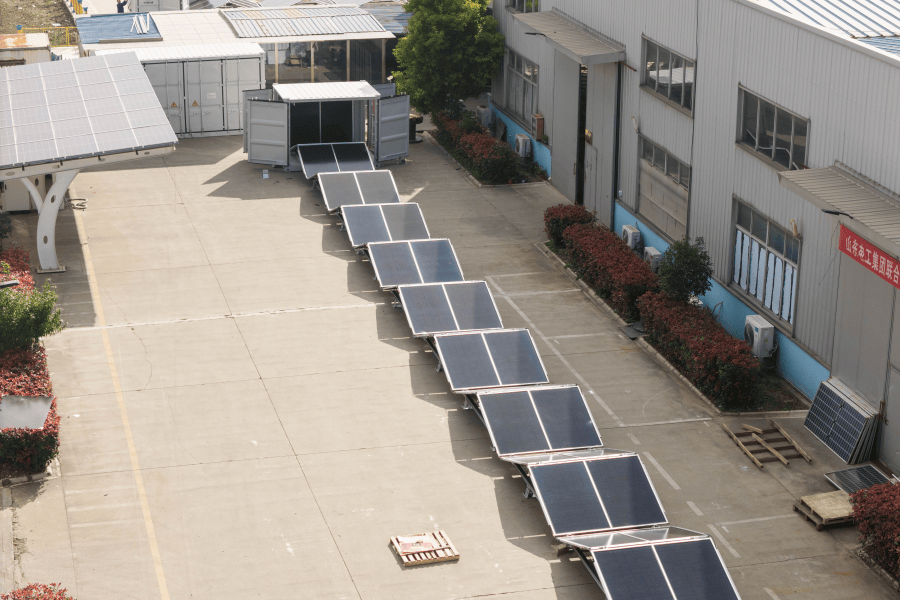
Let's take a project we supported in Northern Germany. The challenge was a forward-operating site needing to reduce its diesel reliance and ensure silent, emissions-free power for extended periods. The solution wasn't one giant battery. It was a cluster of 215kWh cabinet-style BESS units, paired with a solar canopy.
Why cabinets? They were pre-fabricated and pre-tested at our facility to meet VDE (German) and IEC standards. They shipped as secure, plug-and-play units. On-site, they were connected in parallel to scale the energy capacity precisely to the mission's needs. The thermal system was rated for the local climate, and the UL/IEC dual-certification core meant no regulatory surprises. The deployment was fast, secure, and the site now runs essential loads for hours on a silent, renewable microgrid.
Your Next Step: From Specification to Operational Reality
So, you're looking at a spec sheet for a 215kWh Military BESS. The numbers are important, but they're just the start. The real question is: does this specification reflect a deep understanding of the on-site operational, financial, and safety realities of a military base?
At Highjoule, our approach has always been to start with the end-user's mission and work backwards. That's how we've built our reputation for safe, compliant, and high-performance BESS solutions that don't just sit there - they actively work to cut costs and bolster security. The right cabinet isn't just a product; it's a force-multiplier for your energy strategy.
What's the one energy resilience challenge on your site that keeps you up at night? Is it the demand charge on last month's utility bill, or the contingency plan for a prolonged grid outage? Let's talk specifics.
Tags: UL Standard BESS LCOE Europe US Market Grid Resilience Military Energy Security
Author
James Zhang
20+ years agricultural energy storage engineer / Highjoule CTO